Best Essay Collections: Essential Non-Fiction Reading
The best essay collections — from Notes of a Native Son and Slouching Towards Bethlehem to Consider the Lobster and Men Explain Things to Me. The essay at its finest.
By Aisha Patel
The essay is the most honest literary form — a single mind working through a problem in public, without the cover of fiction. The best essay collections are not journalism, not argument, and not memoir, though they may contain elements of all three. They are demonstrations of what a distinctive intelligence can do with a subject — which is why reading the best essayists is like having a conversation with someone who has thought more carefully about something than you have.
The American Masters
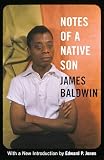
Notes of a Native Son — James Baldwin (1955)
The finest American essay collection. Nine essays on race, identity, literature, and Baldwin’s experience as a Black man in America and abroad — written with a precision and structural control that places them among the great prose works of the twentieth century. The title essay, which weaves together his father’s death, the 1943 Harlem riots, and Baldwin’s own coming of age, is the model for the personal essay that uses private experience to illuminate public history. Nothing in American letters has surpassed it.
Slouching Towards Bethlehem — Joan Didion (1968)
Didion’s first essay collection established a voice that defined American cultural journalism — precise, slightly cold, attentive to the gap between what things mean and what they claim to mean. The title essay on Haight-Ashbury in 1967 is one of the great pieces of American reporting; the essays on California, on American myths, and on her own life in Los Angeles are among the most intelligent readings of 1960s American culture available.
Contemporary Masters
Consider the Lobster — David Foster Wallace (2005)
Eight essays that demonstrate the form can do anything a novel can. Wallace’s essay on the Maine Lobster Festival begins with the lobster question (can they suffer?) and reasons through it until it becomes a serious engagement with how we avoid uncomfortable truths; his essay on John McCain’s 2000 campaign is simultaneously a political profile, a meditation on cynicism and sincerity, and one of the funniest pieces of political journalism written. The footnotes are not annotations — they are a second layer of argument.
A Supposedly Fun Thing I’ll Never Do Again — David Foster Wallace (1997)
Wallace’s first collection — including his essay on television and American fiction, his report on a professional tennis tournament, and the extraordinary title essay on taking a Caribbean cruise. The title essay is the best thing he wrote about American consumer culture: what it promises, what it delivers, what the gap between the two reveals about loneliness and the desire for the experience of luxury rather than luxury itself.
Men Explain Things to Me — Rebecca Solnit (2014)
Seven essays that coined a term and made an argument. The title essay theorised mansplaining before the word existed; the subsequent essays examine the broader phenomenon of women’s voices being systematically disbelieved, dismissed, and overridden, and connect it to patterns of violence against women. Short, essential, and more rigorously argued than its reputation as a feminist think-piece suggests.
What the Essay Can Do That Nothing Else Can
The essay occupies a unique position among literary forms, and the collections on this list are demonstrations of its particular powers. Unlike fiction, the essay does not hide behind invented characters; unlike journalism, it does not pretend to objectivity; unlike the formal argument, it does not need to reach a settled conclusion. What it offers instead is the spectacle of a distinctive mind working through a problem in real time, in public, with all its associations, doubts, and turns of thought left visible. This is why reading a great essayist feels less like being informed than like being in conversation with someone who has thought harder about something than you have. The form’s flexibility is its glory: Baldwin can weave his father’s death together with a Harlem riot and his own coming of age into a single essay that is simultaneously memoir, history, and moral argument; Wallace can begin with the question of whether a lobster feels pain and reason his way into a meditation on how we avoid uncomfortable truths; Didion can report on a San Francisco neighborhood and produce a diagnosis of an entire culture’s unraveling. The essay’s freedom to move between the personal and the analytical, the concrete and the abstract, is what allows it to capture the texture of thought itself. These collections are not loose assemblages of articles; they are sustained demonstrations of what happens when a genuine intelligence is given room to range.
The Personal and the Political
A thread running through the finest essay collections — and prominently through this list — is the way the form fuses private experience with public meaning, using the self as an instrument for understanding the world. The model is Baldwin, whose Notes of a Native Son perfected the technique of letting intensely personal material illuminate large historical and social truths, so that the death of his father becomes a lens on race in America without ever ceasing to be the death of his father. This fusion is the essay’s distinctive ethical and artistic achievement: it insists that the individual life is not a distraction from serious thought about society but a privileged route into it. Solnit works in this tradition, beginning Men Explain Things to Me with a particular, almost comic personal anecdote and expanding it into a rigorous argument about the systematic silencing of women. Didion turns her own migraines, her packing lists, her California childhood into readings of American myth. Wallace implicates himself relentlessly, making his own discomfort and ambivalence part of the evidence. The lesson these writers teach is that honesty about the self, far from being self-indulgent, is the essayist’s most powerful tool — that the willingness to expose one’s own confusion, complicity, and feeling is precisely what gives the form its authority to speak about anything larger. The personal essay is not the opposite of serious argument; in the right hands, it is the most persuasive form serious argument can take.
Building an Essay Reading Habit
For readers who have mostly encountered essays as isolated assignments or magazine pieces, the discovery that the essay collection is one of the most rewarding forms to read can be transformative — and it suits modern reading life unusually well. Unlike a novel, a collection does not demand sustained continuous attention; each essay is a complete experience that can be read in a sitting, making the form ideal for fragmented time, yet the best collections accumulate into something larger than their parts, a portrait of a mind and its preoccupations. The writers on this list are the ideal foundation, but each opens onto a wider tradition worth pursuing. Readers who love Baldwin should explore the broader canon of the American essay, from Emerson and Thoreau through Susan Sontag and Zadie Smith, whose Changing My Mind and Feel Free carry the literary essay into the present. Those drawn to Wallace’s maximalism and footnoted intelligence will find kindred spirits in writers like John Jeremy Sullivan and Leslie Jamison. Didion devotees have her later work and the whole tradition of literary reportage. And the contemporary essay is flourishing, from personal-and-political collections to the lyric essay’s experiments with form. The habit of reading essayists, of returning to a great mind in its own voice working through subject after subject, is among the most durable pleasures available to a serious reader, and these collections are the place to begin cultivating it.
Reading Order
Start with Baldwin: Notes of a Native Son → Slouching Towards Bethlehem → Consider the Lobster.
DFW double: A Supposedly Fun Thing → Consider the Lobster.
Contemporary: Men Explain Things to Me → Consider the Lobster → Slouching Towards Bethlehem.
Frequently Asked Questions
What is the best essay collection ever written?
Notes of a Native Son by James Baldwin is arguably the greatest American essay collection — nine essays on race, identity, and American culture written with precision, passion, and structural elegance. Slouching Towards Bethlehem by Joan Didion defined a generation of cultural journalism and remains the finest account of California in the 1960s. Consider the Lobster by David Foster Wallace demonstrates that the essay form can do anything a novel can — argument, comedy, structural experimentation, emotional range — with complete originality.
What is Notes of a Native Son about?
Notes of a Native Son (1955) by James Baldwin collects nine essays written between 1948 and 1955 — on race in America (his account of his father's death, the Harlem riots, discrimination in the military), on Black American literature, and on his experience of living in Europe as an exile from America. Baldwin's prose is elegant, structurally precise, and enraged — the anger controlled and directed into an argument that never loses its form. The essays read as urgently today as when they were written.
What is Slouching Towards Bethlehem about?
Slouching Towards Bethlehem (1968) by Joan Didion collects essays from the mid-1960s — on the Haight-Ashbury hippie scene, on California's social fragmentation, on American myths, and on her own life in Los Angeles. Didion's method is to observe cultural phenomena with meticulous attention and to notice the gap between what they claim to be and what they reveal. The title essay — her immersive report on Haight-Ashbury in 1967 — is one of the great pieces of American journalism.
What is Consider the Lobster about?
Consider the Lobster (2005) by David Foster Wallace collects eight essays — on attending the Adult Video News Awards in Las Vegas, on John McCain's 2000 presidential campaign, on the Maine Lobster Festival and whether lobsters can suffer, on Kafka's humor, on usage and prescriptive grammar. Wallace's essays are formally inventive (the footnotes are doing separate argumentative work), intellectually serious, and often very funny. The title essay — on whether boiling lobsters alive is morally defensible — is the purest example of his method: starting with a trivial cultural event and reasoning until it becomes something much larger.