Best Southern Literature: Essential Novels from the American South
The best Southern literature — from Faulkner and Flannery O'Connor to Toni Morrison and Marilynne Robinson. Essential novels from the American South.

Southern literature — fiction rooted in, and shaped by, the American South — constitutes one of the richest traditions in American writing. From William Faulkner’s Yoknapatawpha County to Toni Morrison’s haunted Ohio borderlands, the South’s history of slavery, segregation, and violence has produced fiction of extraordinary moral intensity. The tradition is Gothic in sensibility, pastoral in landscape, and obsessed with the past.
The best Southern novels are not regional curiosities but essential works of world literature — Faulkner was the first American to win the Nobel Prize in Literature primarily for novels set in a fictional Mississippi county.
The Essential List
To Kill a Mockingbird — Harper Lee (1960)
The most widely read American novel of the twentieth century and the most accessible entry point into Southern literature. Atticus Finch’s defence of Tom Robinson — a Black man falsely accused of raping a white woman in a small Alabama town in the 1930s — is narrated through the eyes of his daughter Scout, giving the novel the clarity and moral directness that has made it a school text across the English-speaking world. Lee’s accomplishment is in making racial injustice legible to readers who have never encountered it directly.
Beloved — Toni Morrison (1987)
The greatest American novel of the second half of the twentieth century and the essential response to the Southern tradition. Set in Ohio in the years after the Civil War, the novel follows Sethe, a formerly enslaved woman haunted by the ghost of the infant daughter she killed rather than allow to be returned to slavery. Morrison’s prose is deliberately difficult — dense, fragmented, refusing the consolations of linear narrative — because the experience it describes cannot be made comfortable or legible. Won the Pulitzer Prize.
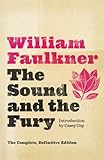
The Sound and the Fury — William Faulkner (1929)
Faulkner’s masterpiece and the defining novel of the Southern tradition. The decline of the Compson family — once wealthy Mississippi gentry, now disintegrating — is narrated through four radically different perspectives: Benjy (intellectually disabled, moving between past and present without distinction), Quentin (suicidal, obsessed with his sister), Jason (bitter and mercenary), and Dilsey (the family’s Black servant). The past in Faulkner is not history but atmosphere — it surrounds and permeates the present, unable to be escaped.
Their Eyes Were Watching God — Zora Neale Hurston (1937)
Hurston’s masterpiece and one of the most distinctive novels in American literature. Janie Crawford’s journey through three marriages in rural Florida is a story of self-determination — of a Black woman insisting on the right to live on her own terms. Hurston’s prose draws on African American vernacular English and the oral traditions of the South in ways that were ahead of their time; the novel was rediscovered in the 1970s after decades of neglect.
As I Lay Dying — William Faulkner (1930)
More accessible than The Sound and the Fury and equally powerful. The Bundren family’s journey to bury their matriarch Addie in her home town — narrated through fifteen different characters in short, fragmented sections — is simultaneously a dark comedy, a meditation on mortality, and a study of Southern poverty. Faulkner claimed to have written it in six weeks without changing a word; whatever its origins, it is a formally audacious achievement.
In Cold Blood — Truman Capote (1966)
The founding text of literary journalism and one of the defining American books of the 1960s. Capote’s account of the 1959 murder of the Clutter family in Holcomb, Kansas — and the subsequent capture, trial, and execution of their killers Perry Smith and Dick Hickock — is the first sustained attempt to apply novelistic technique to nonfiction. The book is set in Kansas rather than the Deep South, but Capote was a Southerner by formation, and the book’s attention to the specificities of rural American life is characteristic of the tradition.
Light in August — William Faulkner (1932)
Faulkner’s most accessible major novel and the best starting point for readers new to his work. Joe Christmas — a man of uncertain racial identity who may or may not be part Black — arrives in a small Mississippi town and, over three weeks, moves toward violent catastrophe. The novel is Faulkner’s most direct engagement with race and violence; the parallel story of the pregnant Lena Grove provides a counterpoint of patience and continuity.
Other Voices, Other Rooms — Truman Capote (1948)
Capote’s debut novel and one of the earliest significant works of Southern Gothic fiction. Thirteen-year-old Joel Knox travels to a crumbling Louisiana mansion to meet the father he has never known and discovers a world of decay, eccentricity, and suppressed desire. The novel’s portrait of queerness and of the Gothic South established Capote as a significant literary voice before he was twenty-five.
The Weight of Place
Southern literature is, above all, a literature of place — a body of writing in which the American South is not merely a setting but a powerful and pervasive presence, shaping the characters, the stories, and the very sensibility of the work — and this profound rootedness in a distinctive place is among the defining features of the tradition. Few regional literatures are as deeply marked by their setting as Southern literature, in which the American South, with its particular landscape, climate, history, and culture, saturates the writing and shapes everything within it. The South of Southern literature is a place of powerful and distinctive character: the heat and lushness of the landscape, the weight of a particular and troubled history, the intensity of a culture marked by tradition, religion, family, and the long shadow of slavery and racial conflict, and a sense of place so strong that it becomes almost a character in its own right. This profound rootedness in place gives Southern literature its distinctive atmosphere and sensibility, the unmistakable quality that marks the tradition and sets it apart from other American writing. The Southern writers are deeply attuned to their place, to the landscape, history, and culture of the South, and their work is saturated with a sense of place so strong that the South becomes a pervasive presence, shaping the characters, the stories, and the sensibility of the writing. To read Southern literature is to enter a distinctive and powerfully realized place, to feel the weight and presence of the American South, and to encounter a body of writing in which place is not mere setting but a pervasive and shaping force. This weight of place is among the defining features of Southern literature, lending the tradition its distinctive atmosphere and sensibility, and marking it as one of the most powerfully rooted of all regional literatures.
Haunted by History
A defining preoccupation of Southern literature, flowing directly from the region’s particular and troubled past, is its profound engagement with history — the sense that the past is never dead, that it weighs heavily on the present, and that the South is haunted by its history in ways that shape the lives and consciousness of its people. The American South carries a particular and troubled history, marked above all by slavery, the Civil War, defeat, and the long aftermath of racial conflict and injustice, and Southern literature is profoundly preoccupied with this history and its weight on the present. The Southern writers return again and again to the past and its hold on the present, to the way that history, particularly the history of slavery and its aftermath, continues to shape the lives, the relationships, and the consciousness of the region and its people. There is in Southern literature a pervasive sense that the past is not past, that it lives on in the present, haunting and shaping the lives of those who inherit it, and that the South in particular is burdened by a history it cannot escape or forget. This preoccupation with history gives Southern literature much of its depth and its tragic weight, for the tradition grapples with the legacy of slavery and racial injustice, the trauma of defeat and the loss of an old order, and the way that the burdens of the past continue to shape the present. The Southern writers explore this haunting of the present by the past with insight and power, illuminating the weight of history on the region and its people, and the impossibility of escaping a past that continues to shape the present. This engagement with history, with the past that is never dead and that haunts and shapes the present, is among the deepest preoccupations of Southern literature, lending the tradition its tragic depth and its profound concern with the weight of history on the lives of those who inherit it.
The Gothic and the Grotesque
A distinctive and often startling feature of Southern literature is its embrace of the gothic and the grotesque — its fascination with the dark, the strange, the violent, and the deformed, and its use of these elements to illuminate deeper truths about the human condition and the particular realities of the South. Southern literature is famous for its gothic and grotesque dimension, its preoccupation with the dark and the strange, the violent and the deformed, the decaying and the macabre, and its creation of characters and situations marked by extremity, distortion, and a haunting strangeness. This embrace of the gothic and the grotesque is not mere sensationalism but a meaningful artistic strategy, for the Southern writers use these elements to illuminate deeper truths, to expose the realities beneath the surface of Southern life, and to explore the extremes of human experience and the human condition. The grotesque characters and gothic situations of Southern literature serve to reveal the hidden realities of the region, the violence and decay beneath the genteel surface, the moral and spiritual distortions wrought by the region’s troubled history, and the extremes of human nature and experience. There is, too, a religious and moral dimension to the Southern grotesque, for the distortion and extremity often serve to startle the reader into a deeper awareness of moral and spiritual realities, to reveal the workings of sin, grace, and judgment beneath the surface of ordinary life. The Southern writers’ embrace of the gothic and the grotesque is among the most distinctive features of the tradition, lending it a haunting strangeness and a fascination with the dark and the extreme that set it apart from other American writing. Far from mere sensationalism, this dimension serves to illuminate deeper truths about the human condition and the particular realities of the South, using the dark, the strange, and the deformed to expose the hidden realities and explore the moral and spiritual extremes that lie beneath the surface of Southern life. The gothic and the grotesque are among the defining and most powerful features of Southern literature, lending the tradition its distinctive strangeness and its capacity to illuminate the darkest and deepest truths.
Why These Books
The Southern literary tradition is not merely geographical — it is thematic, defined by its preoccupation with history, guilt, and the impossibility of escaping the past. Faulkner established the tradition’s formal ambitions; Morrison extended and transformed it; Hurston provided its most distinctive alternative voice. Collectively, these novels constitute an essential account of American history as lived from below, from the margins, and from the haunted interior of a region that has never fully reckoned with its own past.
Frequently Asked Questions
What is the best Southern novel to start with?
To Kill a Mockingbird (1960) is the most accessible starting point — Atticus Finch defending a Black man wrongly accused of rape in a small Alabama town, narrated through the eyes of his daughter Scout. The Sound and the Fury (1929) is Faulkner's masterpiece but is challenging for first-time readers; begin with As I Lay Dying if you want Faulkner first. Beloved (1987) is Toni Morrison's response to the Southern tradition — a ghost story about the legacy of slavery, set in Ohio but rooted in the Southern experience.
What makes Southern literature distinctive?
Southern literature is distinguished by a preoccupation with history — specifically the history of slavery, the Civil War, and their aftermath — and by a Gothic sensibility that treats the past as something that cannot be escaped or transcended. Faulkner's formulation ('The past is never dead. It's not even past') is the governing principle of the tradition. The region's literature is also marked by a particular relationship to place: the land itself as a moral presence, and community as both sustaining and suffocating.
What is Faulkner's most important novel?
The Sound and the Fury (1929) is Faulkner's most formally ambitious and generally considered his greatest achievement — the decline of the Compson family narrated through four radically different perspectives, including the first section narrated by the intellectually disabled Benjy. As I Lay Dying (1930) and Light in August (1932) are more accessible and nearly as powerful. Absalom, Absalom! (1936) is Faulkner's other masterpiece — the story of Thomas Sutpen's attempt to found a dynasty in antebellum Mississippi, told through multiple unreliable narrators decades after the fact.
What is Their Eyes Were Watching God about?
Their Eyes Were Watching God (1937) by Zora Neale Hurston follows Janie Crawford, a Black woman in rural Florida, through three marriages — from a loveless arranged marriage to an older man, to a more prosperous but controlling relationship, to a passionate love with Tea Cake, a younger man. The novel is about self-determination and the right to live on one's own terms; Hurston's prose style, drawing on African American vernacular English, is among the most distinctive in American literature. Ignored for decades after publication, it was recovered in the 1970s by Alice Walker.