Best Debut Novels: The Greatest First Books in Literature
The best debut novels — from The Great Gatsby and To Kill a Mockingbird to Normal People and Shuggie Bain. The greatest first books ever written.
The greatest debut novels in literary history share a quality that is difficult to achieve a second time: the urgency of a writer who has spent their entire life preparing for this one statement. Some of the greatest novels in the English language — The Great Gatsby, Invisible Man, To Kill a Mockingbird — were written by authors who never equalled or never attempted to equal their first major work.
The list below includes both classic debuts (works that have accumulated decades of critical attention) and recent debuts (published since 2000) that have already demonstrated lasting importance.
The Essential List
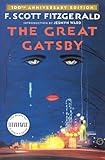
The Great Gatsby — F. Scott Fitzgerald (1925)
The essential American novel of the twentieth century. Nick Carraway’s narration of Jay Gatsby’s obsession with Daisy Buchanan — and his attempt to recapture the green light of the past — is simultaneously a love story, a satire of the Jazz Age’s materialism, and a meditation on the gap between the American Dream and American reality. Fitzgerald’s prose is incandescent; the novel’s final paragraph is the finest in American fiction. Though Fitzgerald had published earlier, Gatsby represents the first appearance of his fully matured voice.
To Kill a Mockingbird — Harper Lee (1960)
Lee’s only significant novel — she published Go Set a Watchman in 2015 but it is an earlier draft of the same material — and the most widely read American novel of the twentieth century. Atticus Finch’s defence of Tom Robinson in a small Alabama town in the 1930s, narrated through the eyes of his daughter Scout, established the template for the courtroom drama and the coming-of-age novel simultaneously. Lee never tried to do it again; she didn’t need to.
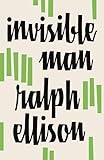
Invisible Man — Ralph Ellison (1952)
The most important debut novel by an African American writer. Ellison’s unnamed narrator’s journey from Southern optimism to Northern disillusion — and his retreat to a basement apartment in Harlem — is simultaneously a Bildungsroman, a political satire, and a formal experiment in prose style. Ellison spent the rest of his life failing to complete a second novel; the fragments published after his death are substantial but do not approach the achievement of the first. Won the National Book Award.
Normal People — Sally Rooney (2018)
The defining debut novel of the twenty-first century so far. Rooney’s account of Connell and Marianne’s relationship — from their last year in a small Irish school through their years at Trinity College Dublin — is written in a prose style of almost clinical precision that somehow produces extraordinary emotional intensity. The novel is about class, power, and the gap between feeling and expression; it established Rooney as the most important Irish novelist of her generation at twenty-seven.
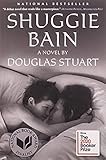
Shuggie Bain — Douglas Stuart (2020)
Stuart’s debut — rejected by forty agents before finding a publisher — won the Booker Prize and sold over a million copies. The novel follows Shuggie Bain, a sensitive, gay boy growing up in 1980s Glasgow, and his relationship with his alcoholic mother Agnes. Stuart based the novel on his own childhood; the autobiographical source gives the novel its devastating specificity. One of the most emotionally demanding novels of recent years, and one of the most technically accomplished.
The Catcher in the Rye — J.D. Salinger (1951)
Salinger’s only novel — he published short stories before and after it, but Catcher is his sole sustained fictional achievement — follows Holden Caulfield’s days in New York after being expelled from prep school. Holden’s voice (sardonic, perceptive, self-defeating, genuinely funny) is one of the most distinctive in American fiction; the novel has been a touchstone for adolescent alienation since publication. Salinger spent the rest of his life in seclusion, not attempting to repeat or follow it.
The Bell Jar — Sylvia Plath (1963)
Plath’s only novel — published under a pseudonym one month before her suicide — follows Esther Greenwood, a brilliant young woman whose nervous breakdown and hospitalisation are drawn directly from Plath’s own experience. The novel is the defining American account of female depression and the mental health system in the 1950s; its voice (sardonic, observant, unreliable in a way that reflects rather than conceals its protagonist’s condition) has influenced every subsequent first-person account of mental illness.
One Flew Over the Cuckoo’s Nest — Ken Kesey (1962)
Kesey’s debut — written partly while working as a night attendant in a psychiatric ward — follows Randle McMurphy, a criminal who feigns mental illness to avoid prison and encounters the oppressive Nurse Ratched and the patients under her control. The novel’s portrait of institutional power and the destruction it inflicts on individuality made it one of the defining counter-cultural texts of the 1960s. The Jack Nicholson film adaptation (1975) is one of the few film adaptations that equals its source.
Catch-22 — Joseph Heller (1961)
Heller’s debut is the definitive American novel about World War II and the most sustained satirical attack on bureaucratic logic in American fiction. Yossarian’s attempts to be grounded from further bombing missions founder on the catch-22: if he claims to be crazy, the act of claiming it proves he is sane. The novel’s circular logic, its black humour, and its genuine horror at the waste of war have made it one of the most important American novels of the twentieth century.
On the Road — Jack Kerouac (1957)
Kerouac’s account of his travels across America with Neal Cassady — fictionalised as Sal Paradise and Dean Moriarty — established the template for American road fiction and became the defining text of the Beat Generation. The novel is about movement, freedom, and the American West as a space of possibility; its spontaneous prose style (the manuscript was typed on a continuous scroll of paper) influenced American literature’s relationship to voice and rhythm. Kerouac published more novels, but none achieved the cultural impact of his debut.
Why These Books
The greatest debut novels share the conviction that what the writer had to say was worth saying — that the urgency behind the book was sufficient to sustain its ambition. What they do not share is style, form, or subject: from Fitzgerald’s incandescence to Rooney’s clinical precision, from Ellison’s formal experimentation to Plath’s autobiographical intensity, the debut novel’s defining quality is not technique but necessity. These writers wrote because they had to, and their first books remain, for many of them, the fullest expression of that necessity.
Frequently Asked Questions
What is the greatest debut novel ever written?
The Great Gatsby (1925) by F. Scott Fitzgerald is arguably the greatest debut novel in American literature — though Fitzgerald had published This Side of Paradise (1920) five years earlier, Gatsby is so far superior to it that it functions as a de facto debut of his mature voice. To Kill a Mockingbird (1960) by Harper Lee — which remained Lee's only novel for over fifty years — and Invisible Man (1952) by Ralph Ellison, whose second novel remained unfinished at his death, are the other great one-or-two-novel careers in American fiction. Among recent debut novels, Normal People (2018) by Sally Rooney and Shuggie Bain (2020) by Douglas Stuart stand above all others.
Why are some authors' best work their debut?
The debut novel sometimes benefits from a peculiar advantage: the writer has had their entire life to prepare it, accumulating experiences, observations, and the specific urgency that comes from having a story to tell rather than a career to maintain. Subsequent novels must be written under different conditions — on deadline, with an audience's expectations, with the awareness of critical reception. Some writers (Fitzgerald, Ellison, Harper Lee, J.D. Salinger in the novel form) essentially used their debut to say what they had to say and spent subsequent decades either refining the statement or failing to improve on it.
What makes a great debut novel?
The greatest debut novels share a quality of urgency — the sense that the writer had something specific and pressing to say, rather than a set of writerly skills to demonstrate. They are often autobiographical in source (Catcher in the Rye, The Bell Jar, Normal People) but transformed into something beyond personal record. They tend to arrive with a fully formed voice rather than an emerging one. And they often establish a fictional world or perspective so distinctive that the writer spent subsequent decades either elaborating it or, in a few cases, unable to escape its shadow.
What is Normal People about?
Normal People (2018) by Sally Rooney is Rooney's second novel but the one that established her internationally. Connell and Marianne meet in their final year at a small-town Irish school — he is popular, she is ostracised — and their relationship continues through their years at Trinity College Dublin, where their social positions have reversed. The novel is about power, class, and the specific difficulty of two people who clearly love each other but cannot communicate that love directly. Rooney's stripped-down prose and her psychological precision make it the defining Irish novel of its decade.