Books Like Small Things Like These: 10 Quiet Novels
If Small Things Like These moved you with its restraint and moral weight, these quiet literary novels ask the same questions about silence, complicity, and what it costs to do the right thing.

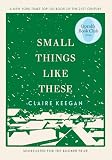
Small Things Like These is 120 pages that feel like they contain more than most novels three times their length. Claire Keegan’s novella — set in an Irish town in the winter of 1985, in the weeks before Christmas — follows Bill Furlong, a coal merchant and father of five, who discovers a young woman locked in an outbuilding at the local convent. What he knows and what everyone around him knows they know, what he does and what it costs him: Keegan handles this in prose so controlled and precise that the emotional force accumulates without the reader quite noticing.
The books below are chosen for the same combination: restraint, prose that earns its effects, and an interest in the moral weight of ordinary lives — the question of what we owe to strangers when doing the right thing requires something from us.
The Closest Parallels
#1 — The Remains of the Day — Kazuo Ishiguro
An aging English butler travels across the country to visit a former colleague and spends the journey narrating — or failing to narrate — the story of his life: his service to a nobleman who turned out to be a Nazi sympathiser, his suppression of what might have been love, and his choice to define himself entirely through professional duty. Ishiguro’s novel is the masterclass in the literary technique Keegan uses: the narrator who tells you less than they know, whose silences are the real text. The novel won the Booker Prize in 1989 and has not dated. For anyone moved by Small Things Like These, this is the essential companion.
#2 — Brooklyn — Colm Tóibín
Eilis Lacey leaves a small Irish town in the 1950s for Brooklyn, where she builds a life, falls in love, and is recalled home by a death in the family. Tóibín’s novel is set in the same milieu as Keegan’s — mid-century Catholic Ireland, the weight of community expectation, the cost of individual desire — but reaches a different conclusion about whether escape is possible. The prose shares Keegan’s quality of appearing plain while being precisely calibrated. One of the finest Irish novels of the past twenty years.
Quiet Novels About Moral Reckoning
#3 — Stoner — John Williams
An English professor at a midwestern university lives an ordinary life — a failed marriage, a difficult career, one transformative love affair — and the novel makes this ordinary life feel like it contains everything. Williams’s 1965 novel was largely forgotten until it was rediscovered in the 2000s as a masterpiece of American literary restraint: it refuses to dramatise, insists on the dignity of a quiet life, and ends with a scene of self-assessment that is among the most affecting in American fiction. For readers who respond to Keegan’s refusal of melodrama.
#4 — The Crossing — N/A
See also: A Month in the Country by J.L. Carr — a novella about a shell-shocked WWI veteran who spends a summer uncovering a medieval church mural. Carr’s novel, like Keegan’s, uses restraint as its primary technique: the narrator understands, in retrospect, the full significance of what he was feeling at the time, and the gap between the experiencing self and the narrating self is where the novel’s emotion lives.
Sally Rooney’s Irish Novels
#5 — Conversations with Friends — Sally Rooney
Frances — a university student in Dublin — becomes romantically involved with a married older man she meets through a friendship with his wife. Rooney’s debut novel is cooler in register than Keegan’s work (Frances is more analytically detached than emotionally expressive), but it shares the interest in what people know and refuse to say, what desire costs, and how class and power operate through social surfaces. For readers who want contemporary Irish literary fiction after Keegan’s historical lens.
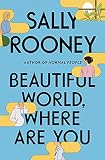
#6 — Beautiful World, Where Are You — Sally Rooney
Rooney’s fourth novel — a correspondence-driven meditation on friendship, meaning, and the difficulty of living in the present — is her most directly philosophical work. The conversations between Alice and Eileen (the two female protagonists, in letters that are explicitly the best writing in the book) engage with questions about what a life should be oriented around, what we owe each other, and whether paying attention to small things is enough. The question Keegan raises — whether ordinary goodness is possible and sufficient — is the question Rooney’s characters are also asking.
Historical Fiction with Moral Seriousness
#7 — Silence — Shusaku Endo
A Portuguese Jesuit missionary travels to Japan in the seventeenth century during the persecution of Christians, and is confronted with an impossible demand: apostatise publicly or watch his converts be tortured to death. Endo’s 1966 novel is the most serious treatment of conscience under extreme pressure in twentieth-century fiction — a novel about what faith requires and what it cannot require — that shares Keegan’s interest in whether doing the right thing is always possible. Deeply uncomfortable, deeply rewarding.
#8 — Room — Emma Donoghue
Narrated by a five-year-old boy who has never known any world but the single room where his mother is held captive, Donoghue’s novel is about the experience of surviving something that shouldn’t be survived and finding, afterward, that the world is larger and stranger than either captivity or freedom. A different angle on the Magdalene Laundries theme (institutional captivity, complicit communities), told from inside the experience rather than from the perspective of a bystander.
The Essay Tradition Behind Keegan
#9 — The Remains of the Day — already listed above
For the thematic strand specifically — the question of complicity and what ordinary people owe to historical crimes occurring around them — The Diary of a Young Girl (Anne Frank), Ordinary Men (Christopher Browning), and Hannah Arendt’s Eichmann in Jerusalem form the nonfiction tradition that Keegan is writing into and extending through fiction. All three take the same question seriously: how does complicity happen, and what does it require of ordinary people to resist it?
The books above are not, for the most part, comfortable reads. They share Keegan’s conviction that the most important moral questions don’t announce themselves as important — they arrive in the middle of ordinary lives, quietly, as small things.
Frequently Asked Questions
Is Small Things Like These based on a true story?
The novel is set against the historical reality of the Magdalene Laundries — Irish Catholic institutions where tens of thousands of women and girls were incarcerated and forced to labour, often for having children outside of marriage. The laundries operated from the 18th century until the last one closed in 1996. Claire Keegan's novella fictionalises the experience of a townsperson discovering one of these institutions and having to decide what to do with that knowledge.
What else has Claire Keegan written?
Keegan's body of work is small and concentrated: Foster (2010) is a novella about a child sent to stay with relatives for a summer that is widely considered one of the finest pieces of Irish prose fiction since the mid-20th century. So Late in the Day (2023) is a short story collection. Antarctica (1999) is her early story collection. Keegan publishes rarely and carefully; every piece of fiction she releases is worth reading.
What is the difference between Small Things Like These and Foster by Claire Keegan?
Both novellas are set in small-town Ireland and told in Keegan's characteristic precise, unadorned prose. Foster is a child's-eye view of a summer with kind strangers — quiet, hopeful, and profoundly moving. Small Things Like These takes on a harder moral subject (the Magdalene Laundries) through the perspective of an adult man who has to decide whether to act on what he knows. Foster is the more purely beautiful work; Small Things Like These is the more morally complex one.