Cormac McCarthy Books in Order: Complete Bibliography & Best Starting Points (2026)
Cormac McCarthy wrote twelve novels across six decades, from Appalachian Gothic to the Pulitzer Prize-winning The Road. This guide covers the complete bibliography, the two phases of his career, and where new readers should begin.
Cormac McCarthy published his first novel in 1965 and his last in 2022. In between, he wrote some of the most violent, beautiful, and philosophically serious fiction in the history of American literature. He died in June 2023, having spent his final years in Santa Fe working on a pair of linked novels that arrived, without fanfare, in the final months of his life. He was eighty-nine years old and had never really stopped working.
The case for McCarthy is the case for American literature at its most uncompromising. His prose dispenses with quotation marks, most punctuation, and conventional scene-setting. His subjects — violence, death, the indifference of the natural world, the persistence of evil in human history — are among the darkest that fiction has ever confronted. And yet his sentences are, at their best, among the most beautiful written in English in the twentieth century. He is not an acquired taste so much as a writer who requires a particular mode of attention, and once that attention is established, his books are impossible to forget.
This guide covers where to start, how his career divides into two distinct phases, and which novels reward which kind of reader.
Cormac McCarthy’s Complete Bibliography in Order
| # | Title | Year | Award / Note |
|---|---|---|---|
| 1 | The Orchard Keeper | 1965 | Debut; William Faulkner Foundation Award |
| 2 | Outer Dark | 1968 | Appalachian Gothic |
| 3 | Child of God | 1973 | Based on a true case |
| 4 | Suttree | 1979 | His most personal novel |
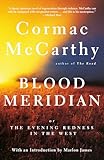
| 5 | Blood Meridian | 1985 | Widely considered his masterpiece |
| 6 | All the Pretty Horses | 1992 | National Book Award |
| 7 | The Crossing | 1994 | Border Trilogy Part II |
| 8 | Cities of the Plain | 1998 | Border Trilogy Part III |
| 9 | No Country for Old Men | 2005 | Coen Brothers film adaptation (2007) |
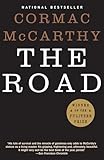
| 10 | The Road | 2006 | Pulitzer Prize for Fiction |
| 11 | The Passenger | 2022 | Late-career return |
| 12 | Stella Maris | 2022 | Companion to The Passenger |
Best starting point: The Road for most readers; All the Pretty Horses for those who want something less bleak.
Where to Start: The Essential Decision
McCarthy’s career splits into two phases so distinct that they almost read like the work of different writers. The early Appalachian novels (1965–1979) are dense, allusive, and deeply indebted to Faulkner. The Western novels (1985–2022) are more spare, more mythic, and operating in a landscape that McCarthy made entirely his own. For most new readers, the Western phase is the right entry point.
The best starting point: The Road
The Road (2006) is McCarthy’s most accessible novel and his most emotionally immediate. A man and his young son walk south through a post-apocalyptic America, pushing a shopping cart, surviving on scavenged food, avoiding the roving bands of cannibals who have replaced any functioning society. The landscape is ash and darkness. The prose is stripped to its essentials. The relationship between the father and the son is among the most moving McCarthy ever wrote.
The Road won the Pulitzer Prize in 2007 and reached a readership far beyond McCarthy’s previous work. It has been translated into dozens of languages and adapted into a film starring Viggo Mortensen. It is the novel where McCarthy’s bleakness and his tenderness exist in their most concentrated form, and the ending — one of the most discussed endings in contemporary American fiction — rewards every page of attention given to it.
First-time McCarthy readers who start here typically want to read everything else immediately.
The warm alternative: All the Pretty Horses
All the Pretty Horses (1992) is McCarthy’s most accessible novel in a different sense: it is the one that most resembles a conventional coming-of-age story. John Grady Cole, sixteen years old, loses his family’s Texas ranch and rides south into Mexico with his friend Lacey Rawlins, looking for a world in which horses and horsemanship still matter. He finds it, briefly, before violence destroys it.
It won the National Book Award in 1992 and represents McCarthy at his most novelistically generous — there are sections of extraordinary lyrical beauty, there is a love story, there is horse-breaking described with a precision that readers who know horses and readers who don’t both find astonishing. It is often called McCarthy’s warmest book, which is a relative designation: this is still McCarthy, and the warmth is earned against considerable darkness.
Why Not to Start with Blood Meridian
Blood Meridian, or the Evening Redness in the West (1985) is widely considered McCarthy’s greatest achievement, and possibly one of the greatest American novels ever written. It is also the worst possible starting point for readers new to his work.
The novel is set in the 1840s and follows a nameless teenager called the Kid as he joins a scalp-hunting gang operating along the Texas-Mexico border. The violence is unrelenting and presented without moral framing. The central figure, Judge Holden — a vast, hairless, philosophically voracious man who may or may not be a supernatural force — is the most terrifying character in American fiction since Captain Ahab. The prose is dense with biblical cadence, historical detail, and a gnostic philosophy of violence that requires full engagement to understand.
All of this is to say: Blood Meridian needs to be read when you already know what McCarthy can do, and when you are prepared for the full weight of what he is attempting. Read The Road or All the Pretty Horses first. Come to Blood Meridian when you are ready, and read it slowly.
Phase One: The Appalachian Novels
McCarthy’s first four novels are set in the Tennessee and North Carolina mountains and are written in a style heavily influenced by William Faulkner: long, subordinate-clause-heavy sentences, dialect rendered phonetically, rural communities living at the margins of American prosperity.
The Orchard Keeper (1965) is a first novel — unmistakably apprentice work in some passages, unmistakably gifted in others. It follows three characters in a small Tennessee community over several decades, linked by a murder that none of them fully understands. McCarthy won the William Faulkner Foundation Award for it, which is the right recognition: it is the work of a Faulkner student who has already found his own subject matter.
Outer Dark (1968) is bleaker and more controlled. A woman gives birth to her brother’s child; he abandons the infant in the woods. The novel follows her search for the child through a Southern landscape that is almost allegorical in its darkness. Three strangers move through the narrative like figures from a nightmare or a fairy tale, and McCarthy never explains what they represent.
Child of God (1973) is the most disturbing of the early novels — a study of a dispossessed man who descends into necrophilia and murder, based loosely on a real case. McCarthy presents his protagonist with a curious refusal to judge: here is a man who has been dispossessed of everything, and this is what dispossession does. It is not an easy novel to defend, but it is impossible to forget.
Suttree (1979) is the great Appalachian novel — McCarthy’s longest book and, by most accounts, his most autobiographical. It follows Cornelius Suttree, a man from a respectable family who has chosen to live on a houseboat in Knoxville among the poor and the marginalised. It is funnier than anything else McCarthy wrote, and more humanistically warm. Long sections read like American picaresque. If you want to understand the early phase of his career, this is where to go.
Phase Two: The Westerns
With Blood Meridian (1985), McCarthy’s fiction moved west — geographically, tonally, and philosophically. The Appalachian claustrophobia gave way to vast open landscapes. The Faulknerian sentences gave way to something more elemental and more biblical. He was no longer writing about the failure of community; he was writing about the nature of evil, the possibility of goodness, and the indifference of the universe to either.
The Border Trilogy
The three Border Trilogy novels follow the twentieth-century American West as it transitions from the world of horses and open range to the modern era. They are best read in order.
All the Pretty Horses (1992) — Start here. John Grady Cole is sixteen, and the novel is about what the world does to a young person who loves beauty and tries to live according to it.
The Crossing (1994) — Billy Parham attempts to return a captured wolf to the mountains of Mexico, and the novel opens into a meditation on fate, loss, and the impossibility of protecting anything you love. The central wolf episode, which occupies the first hundred pages, is among the most extraordinary things McCarthy wrote.
Cities of the Plain (1998) — Brings John Grady Cole and Billy Parham together on a New Mexico ranch in 1952, shortly before the ranching world they both know will disappear. The novel is elegiac in tone and the darkest of the three.
No Country for Old Men
No Country for Old Men (2005) began as a screenplay and was adapted into the 2007 Coen Brothers film that won four Academy Awards, including Best Picture. The novel follows three figures through the West Texas desert: Llewelyn Moss, who finds a drug deal gone wrong and takes the money; Anton Chigurh, the hitman sent to recover it; and Sheriff Ed Tom Bell, who is too old for the world he’s policing and knows it.
Chigurh — who decides life and death by coin flip and has a philosophical certainty about violence that makes him genuinely terrifying — is one of McCarthy’s greatest creations. The novel is propulsive in a way his other books are not, almost a genre thriller in structure, though the themes it carries are anything but genre. Bell’s narration, in monologue chapters that run parallel to the main action, gives the novel its true subject: the sense that America has become something that the old moral frameworks can no longer interpret.
The Final Two: The Passenger and Stella Maris
McCarthy’s last two novels, published in November and December 2022, arrived after a sixteen-year silence and surprised readers expecting something like The Road. They are stranger, more philosophical, and more directly engaged with mathematics, quantum physics, and the ethics of scientific knowledge.
The Passenger follows Bobby Western, a salvage diver and son of a physicist who worked on the Manhattan Project, through a fragmented series of events in 1980. His dead sister, Alicia, haunts the novel’s edges. It is McCarthy’s most explicitly intellectual book, and the least narratively satisfying for readers who want conventional plot.
Stella Maris is Alicia’s novel: a series of dialogues between her and a psychiatrist in a mental institution in 1972, set before the events of The Passenger. She is a mathematics prodigy, suicidal, and more interested in the philosophy of mathematics than in the therapy she is ostensibly receiving. It reads like late Beckett — stripped, relentless, beautiful in its way.
Both novels are best approached by readers who have spent time with McCarthy’s earlier work. They are not where to begin.
McCarthy’s Death in June 2023
Cormac McCarthy died on June 13, 2023. He had published twelve novels, won the Pulitzer Prize and the National Book Award, and become one of the most discussed and debated American writers of his generation. He had also given almost no interviews, avoided literary culture entirely, and spent decades working in solitude in El Paso and Santa Fe.
The tributes that followed his death were the kind that most writers never receive: serious, extended engagements with his work by other writers and critics who had spent years thinking about what he had done. The question of how to read him — how to hold his violence alongside his beauty, his nihilism alongside his tenderness — is one that his readers will keep working on for a very long time.
A Suggested Reading Order
For readers who want to work through McCarthy systematically:
- The Road — begin here; the most accessible and most immediately devastating
- All the Pretty Horses — the best of the Border Trilogy and his warmest novel
- No Country for Old Men — propulsive, morally serious, the most thriller-shaped
- The Crossing — the lyrical peak of the Border Trilogy
- Suttree — the best of the Appalachian phase
- Blood Meridian — when ready; save it; it earns the wait
Affiliate disclosure: Links on this site are affiliate links. We earn a small commission at no extra cost to you. This does not influence our editorial recommendations.
Frequently Asked Questions
What is the best Cormac McCarthy book to start with?
The Road is the best starting point for most readers — it is McCarthy's most emotionally direct novel, structurally his clearest, and the one that demonstrates his power most immediately. All the Pretty Horses is the alternative for readers who want something warmer and more conventionally novelistic. Both are excellent entry points. Do not start with Blood Meridian: it is his greatest achievement but also his most demanding, and without prior experience of his prose it can be alienating.
Do Cormac McCarthy books need to be read in order?
The Border Trilogy — All the Pretty Horses, The Crossing, and Cities of the Plain — shares its protagonist John Grady Cole and forms a loose narrative sequence, so reading those three in order is worthwhile. Otherwise, McCarthy's novels are standalone and can be read in any order. His two phases (Appalachian Gothic and Western) are thematically distinct, but neither phase requires knowledge of the other.
What is the Border Trilogy by Cormac McCarthy?
The Border Trilogy consists of All the Pretty Horses (1992), The Crossing (1994), and Cities of the Plain (1998). The first two novels follow different protagonists (John Grady Cole and Billy Parham respectively), while Cities of the Plain brings them together. All the Pretty Horses won the National Book Award and is the natural starting point. The Crossing is widely considered the most ambitious and most lyrical of the three.
When did Cormac McCarthy die?
Cormac McCarthy died on June 13, 2023, at the age of eighty-nine. He had published his final two novels — The Passenger and Stella Maris — just months earlier, in late 2022. His death was announced by his publisher, Alfred A. Knopf. He had given very few interviews over his career and was known for his extreme privacy.