Priory of the Orange Tree vs The Fifth Season: Read First?
The Priory of the Orange Tree and The Fifth Season are two acclaimed modern epic fantasies. Here's how they differ and which to read first.
By Marcus Webb
Two acclaimed modern epic fantasies are frequently mentioned together by readers seeking ambitious, character-rich world-building: Samantha Shannon’s The Priory of the Orange Tree (2019) and N.K. Jemisin’s The Fifth Season (2015). Both are landmarks of the genre’s recent renaissance, but they could hardly be more different in form, tone, and difficulty. Here is what sets them apart.
The Short Version
| The Priory of the Orange Tree | The Fifth Season | |
|---|---|---|
| Author | Samantha Shannon | N.K. Jemisin |
| Published | 2019 | 2015 |
| Format | Standalone | Trilogy opener |
| Style | Traditional high fantasy | Innovative, experimental |
| Hook | Dragons, queens, and a feminist epic | Apocalyptic geology and oppression |
| Read first? | For accessible epic fantasy | For groundbreaking SFF |
Inside The Priory of the Orange Tree
The Priory of the Orange Tree is a sweeping, feminist standalone epic set in a divided world where an ancient draconic enemy is stirring. Across multiple viewpoints — a queen without an heir, a secret mage sworn to protect her, a dragon-rider in the East — Shannon weaves politics, religion, and romance into a richly imagined high fantasy with dragons at its heart. Accessible, satisfying, and complete in a single (very large) volume, it is a modern crowd-pleaser for readers who love traditional epic fantasy done with fresh, inclusive sensibilities.
Inside The Fifth Season
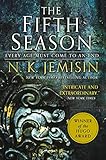
The Fifth Season opens N.K. Jemisin’s Broken Earth trilogy on a world plagued by apocalyptic geological catastrophes, where people called orogenes can control seismic forces — and are enslaved and feared for it. Told through an unusual, braided structure that includes a striking second-person narration, it follows a woman searching for her daughter as the world ends again. Innovative, furious, and emotionally devastating, it explores oppression and survival with such power that Jemisin won the Hugo Award for Best Novel three years running across the trilogy — an unprecedented feat.
Where the Two Split
The biggest difference is form. Priory is a self-contained standalone you can finish in one volume; The Fifth Season is the first of a trilogy that builds across three books. If you want a complete story now, Shannon; if you want a saga, Jemisin.
A second is accessibility versus innovation. Priory is traditional high fantasy — familiar pleasures, beautifully executed. The Fifth Season is structurally experimental, with a fractured timeline and second-person narration that demand more of the reader but reward that effort enormously. One welcomes; the other challenges.
Then there is tone and theme. Priory is sweeping and ultimately hopeful, with dragons, romance, and grand adventure. The Fifth Season is darker and angrier, a searing examination of oppression, exploitation, and rage. Both have serious themes, but they sit at different emotional temperatures.
Which Comes First?
Start with The Priory of the Orange Tree if you want accessible, satisfying epic fantasy with dragons, political intrigue, and a complete arc in one book. It is the gentler, more familiar entry point, and its standalone nature means no multi-book commitment.
Start with The Fifth Season if you want the most acclaimed, boundary-pushing fantasy of the past decade and you do not mind a challenging structure or a trilogy commitment. Its innovation and emotional force make it essential reading for anyone serious about modern SFF.
A Note on Commitment and Difficulty
The practical considerations cut in opposite directions. Priory asks for no series commitment but is physically enormous — a single 800-plus-page volume that requires stamina in one sitting-down sense. The Fifth Season is shorter per book but demands a three-book investment and a willingness to work through an unconventional structure that only fully clicks partway in. Knowing your appetite — for length versus innovation, for a one-and-done epic versus a trilogy that rewards patience — is the clearest guide to where to begin. Neither difficulty should deter you; both are among the finest fantasy of their decade.
Where to Head Next
Once you have read both, our best epic fantasy series and best fantasy books of all time roundups gather more landmark worlds, from traditional sagas to genre-bending experiments in the mould of these two.
So where to land? Read The Priory of the Orange Tree first for the accessible, dragon-filled standalone, or The Fifth Season first for the groundbreaking, award-sweeping trilogy — and either way, you will be reading modern fantasy at the height of its powers.
Frequently Asked Questions
Should I read The Priory of the Orange Tree or The Fifth Season first?
Either works, since they are unconnected. The Priory of the Orange Tree is a more traditional, accessible standalone epic with dragons, so it is the easier entry point. The Fifth Season is a groundbreaking, structurally innovative trilogy opener that is more challenging. Start with Priory for accessible high fantasy; start with The Fifth Season for award-winning, boundary-pushing SFF.
Which is better, The Priory of the Orange Tree or The Fifth Season?
The Fifth Season is the more acclaimed — N.K. Jemisin won three consecutive Hugo Awards for the Broken Earth trilogy, and it is celebrated for its innovation and emotional power. The Priory of the Orange Tree is a beloved, sweeping, feminist standalone that many find more immediately enjoyable. The Fifth Season is the critical favourite; Priory is the more accessible crowd-pleaser.
Are The Priory of the Orange Tree and The Fifth Season similar?
Both are ambitious modern epic fantasies with rich world-building, strong female characters, and serious themes, which is why they are often recommended together. But they differ sharply: Priory is a traditional, dragon-filled high-fantasy standalone, while The Fifth Season is a structurally experimental, apocalyptic trilogy about oppression and a world wracked by catastrophic geology.