Where to Start with Burton Malkiel: A Reading Guide
Where to start with Burton Malkiel — how to approach A Random Walk Down Wall Street, his landmark investment guide arguing that passive index fund investing beats active stock picking over the long term. A complete reading guide.
By Marcus Webb

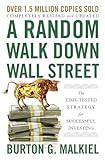
Burton Malkiel (born 1932 in Boston) is an American economist, Princeton professor emeritus, and one of the most influential voices in the debate over active versus passive investing. His 1973 book A Random Walk Down Wall Street popularised the efficient market hypothesis for general readers and made the case for index fund investing a decade before index funds were widely available to retail investors. Now in its thirteenth edition, it remains the most thoroughly updated and empirically grounded popular argument for passive investing. Malkiel has also written The Elements of Investing (2009) with Charles Ellis, a short distillation of his core principles, and has served on the boards of several major financial institutions.
Where to Start: The Elements of Investing (2009)
In under 200 pages, Malkiel and Ellis compress fifty years of investment research into a readable case for why most individual investors lose to index funds and what to do instead — more authority-dense per page than most full-length investing books. The Elements of Investing compresses two lifetimes of investment expertise into 150 pages. Malkiel and Charles Ellis — author of Winning the Loser’s Game and one of the most respected investment consultants in the United States — agree on every fundamental question, which itself is worth noting: these are not theoretical positions but the convictions of people who have watched markets across decades.
The save first principle is the book’s foundation and its most important message for readers at early life stages. Malkiel and Ellis argue — correctly — that the gap between income and expenditure is more important to wealth accumulation than any investment decision made with what remains. The mathematics of compound interest are presented simply and concretely: money saved at 25 in a tax-advantaged account has roughly twice the final value of the same money saved at 35, without any difference in investment return.
The index argument is where Malkiel’s lifelong work is most present. The case is empirical: over any ten-year period, the majority of actively managed funds underperform their benchmark index after fees. Over twenty or thirty years, the proportion that underperform grows. The consistent factor is cost — management fees, transaction costs, and tax inefficiency compound against the investor in the same way that returns compound for them. Index funds eliminate most of these costs; the investor captures the market return minus a very small annual fee.
The diversification principle addresses the specific risk management available to individual investors without specialised knowledge: owning a broad market index across asset classes and geographies eliminates company-specific risk without requiring research into individual securities. An investor who owns the entire US market through a single index fund is protected against any individual company’s failure in ways that a concentrated stock picker is not.
The behavioural section addresses the most common way technically sound strategies fail in practice: investors make emotional decisions at market peaks and troughs that permanently destroy the returns available from a passive approach. Market timing, performance chasing, and panic selling are identified not as character failures but as predictable responses to emotional stimuli that the investment environment constantly provides.
Why The Elements of Investing Is an Ideal First Book
For a reader new to Burton Malkiel, The Elements of Investing is an ideal first book because it is a concise, accessible distillation of his investing wisdom and a clear introduction to his distinctive, influential approach, the case for simple, low-cost, long-term index investing. The Elements of Investing, written with Charles Ellis, presents the essential principles of sensible investing in a short, clear, and practical form, covering saving, diversification, costs, and the power of low-cost index funds. As an entry point it is ideal, for it offers Malkiel’s core ideas in their most concise and accessible form, a perfect introduction before his longer classic. It welcomes the newcomer with its simple principles, its clarity, and its practical guidance, drawing the reader into his sensible investment philosophy. It is a fine representation of his influential thinking, so the new reader encounters Malkiel’s approach directly. For the newcomer seeking sound investing fundamentals, then, The Elements of Investing is an excellent starting point.
What to Expect as a New Reader
As a new reader, you can expect The Elements of Investing to be a concise, clear, and practical guide to sensible investing. You can expect essential principles, for the book distills the fundamentals of sound investing into a short, accessible form. You can expect a focus on simplicity and low cost, for Malkiel and Ellis champion simple, low-cost, long-term investing, especially through index funds. You can expect core lessons on saving, diversification, keeping costs low, and avoiding common mistakes. You can expect an emphasis on the difficulty of beating the market and the wisdom of broad, low-cost index investing. You can expect a clear, no-nonsense, and practical style. You can expect a brief book that conveys a great deal of sound wisdom. Expect, in short, a concise, clear, and practical guide to sensible investing, a fine introduction to Malkiel’s approach.
Going Deeper After Your First Book
Once The Elements of Investing has introduced you to Malkiel’s approach, the natural next step is his influential classic, A Random Walk Down Wall Street, which presents his ideas in full, including his famous case that markets are largely efficient and that most investors are best served by low-cost index funds. The classic deepens and elaborates the principles introduced in the shorter book. Beyond Malkiel, the reader can explore the wider literature of index and passive investing, much of it in conversation with his ideas, including the writings of other champions of low-cost investing. Reading more widely deepens your engagement with Malkiel’s distinctive approach, the case for simple, low-cost, long-term index investing. His characteristic principles run through his work. Building your reading journey from The Elements of Investing is a matter of moving into A Random Walk Down Wall Street and the wider index-investing literature. The reader who begins here will have a clear and trustworthy foundation in sensible investing.
Reading Burton Malkiel
The Elements of Investing is the ideal entry point for new investors. A Random Walk Down Wall Street is Malkiel’s comprehensive statement — the full empirical and academic case — for readers who want the argument at length. Both reach the same destination.
For the full Burton Malkiel bibliography, reviews, and biography, visit the Burton Malkiel author page on Editors Reads.
Affiliate disclosure: Links to Amazon on this page are affiliate links. We earn a small commission at no extra cost to you.
Frequently Asked Questions
Where should I start with Burton Malkiel?
A Random Walk Down Wall Street (1973, now in its thirteenth edition) is Malkiel's essential and most influential book — the academic economist's case for passive index fund investing that has sold over 1.5 million copies and been continuously updated across five decades. For readers who want the full argument at length, it remains the definitive statement. For readers who want the same wisdom in a much shorter form, The Elements of Investing (2009), co-authored with Charles Ellis, distils the core principles into 150 pages with equal authority but less academic depth. Both books reach the same conclusions: save early, index broadly, minimise costs, and ignore the noise.
What is The Elements of Investing about?
The Elements of Investing presents five foundational principles of sound personal investing, structured as a short, accessible guide designed to be read in a single sitting. Save as much as possible, as early as possible — compounding rewards patience above all else. Index the portfolio's core using low-cost funds that track broad markets. Diversify across asset classes and geographies. Avoid complexity — complicated investment products almost always serve the seller better than the buyer. Keep costs relentlessly low, because fees compound against you just as returns compound for you. The book also covers tax efficiency, rebalancing, and the specific behavioural mistakes — market timing, chasing performance, panic selling — that destroy the returns of technically sound investors.
What is the random walk hypothesis that Malkiel argues in his main work?
The random walk hypothesis holds that stock price movements are essentially unpredictable because current prices already reflect all available information — meaning that tomorrow's price change is as likely to be caused by new, unknowable information as by any pattern a chartist or analyst might identify in historical data. The practical implication is that active stock picking and market timing, pursued with great effort and expense, do not reliably beat a passive strategy of holding a diversified index. Malkiel's contribution was to take this academic argument — developed by economists including Eugene Fama — and test it empirically against the actual performance records of professional fund managers, finding that most underperform their benchmark indices after fees.
What should I read after The Elements of Investing?
After The Elements of Investing, Malkiel's A Random Walk Down Wall Street provides the full academic and empirical case for everything The Elements summarises. John Bogle's The Little Book of Common Sense Investing covers the same ground with the authority of the man who built Vanguard and created the first index fund available to retail investors. William Bernstein's The Four Pillars of Investing provides the most complete treatment of investment history, theory, psychology, and portfolio construction for readers who want depth beyond either Malkiel or Bogle.