Where to Start with Charles Duhigg: A Reading Guide
Where to start with Charles Duhigg — whether to begin with The Power of Habit or Supercommunicators. A complete reading guide to the Pulitzer Prize-winning journalist.
By Lena Fischer
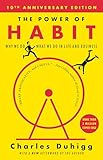
Charles Duhigg (born 1974) is the American journalist and author who spent over a decade at the New York Times, winning a Pulitzer Prize as part of a team investigating Apple’s global supply chain, before writing The Power of Habit (2012) — one of the most influential popular psychology books of its decade, selling over three million copies. His books combine rigorous journalistic research with narrative storytelling to explain the science of human behaviour in terms directly applicable to everyday life.
Where to Start: The Power of Habit (2012)
The essential Duhigg — and one of the most widely read books on behaviour change of the past fifteen years. The book’s central thesis is that habits — the automatic patterns of behaviour that account for roughly forty percent of our daily actions — are not fixed: they follow a neurological loop that can be understood, modified, and deliberately redesigned.
The habit loop has three components: a cue (the trigger that initiates the behaviour), a routine (the automatic response), and a reward (the reinforcement that makes the loop self-perpetuating). Duhigg’s argument is that willpower-based attempts to change habits fail because they try to eliminate the routine without addressing the cue or substituting a different reward. The successful approach — demonstrated through AA’s twelve-step model, corporate turnarounds, and sports coaching — works by keeping the cue and reward but inserting a different routine.
The book’s scope extends from individual habit change to organisational and social habits — how corporations cultivate consumer habits, how social movements spread through communities, why some organisations are capable of institutional change and others are not. Each section is built around a central case study: Alcoa’s safety culture under Paul O’Neill, Target’s customer habit prediction, the Montgomery bus boycott’s community activation.
For readers interested in behaviour change, productivity, or the science of self-improvement, The Power of Habit is the most substantive accessible treatment of the subject.
Supercommunicators (2024)
Duhigg’s investigation into exceptional communication — what makes some people uniquely effective in conversation and how those skills can be learned. Same methodology as The Power of Habit: research-grounded, case-driven, practical. Can be read independently.
Why The Power of Habit Is the Ideal First Book
For a reader new to Charles Duhigg, The Power of Habit is the ideal first book because it is his breakthrough work and the fullest expression of his distinctive approach, the investigation of how things work, in this case habits, through engaging storytelling grounded in science and research. The Power of Habit explores the science of how habits form and how they can be changed, presenting the influential model of the habit loop, the cycle of cue, routine, and reward through which habits operate, and illustrating it with vivid stories drawn from individuals, businesses, and societies. As an entry point, it is ideal because it lays out this influential and immediately useful framework clearly and engagingly, combining genuine science with the compelling storytelling that is Duhigg’s hallmark. It welcomes the newcomer with its fascinating subject, its clear model, and its practical relevance to anyone seeking to understand or change their habits. It is his best-known book and the one that best represents his approach, so that the new reader encounters Duhigg at his most characteristic. For the newcomer, then, The Power of Habit is the natural and ideal starting point.
What to Expect as a New Reader
As a new reader, you can expect The Power of Habit to be an engaging and practical exploration of the science of habit, combining genuine research with compelling storytelling to explain how habits form and how they can be changed. You can expect Duhigg’s influential framework, the habit loop, the cycle of cue, routine, and reward through which habits operate, and you can expect this model to be explained clearly and illustrated with vivid examples. You can expect compelling storytelling, for Duhigg is a skilled narrative journalist who illustrates his ideas with engaging stories drawn from individuals, businesses, and societies, making the science vivid and memorable. You can expect practical relevance, for understanding how habits work offers real insight into how to change them, in your own life and in organizations. You can expect an accessible and engaging style that makes the science approachable. Expect, in short, an engaging and practical exploration of the science of habit, combining research with storytelling, an immediately useful introduction to Duhigg’s approach.
Going Deeper After Your First Book
Once The Power of Habit has introduced you to Duhigg’s approach, the reader who wishes to go deeper can explore his other work, which applies the same combination of science and storytelling to related questions of productivity, performance, and communication. His subsequent books investigate the science of productivity and what makes people and teams more effective, and the art of communication and connection, in the same engaging, research-grounded, story-driven style. Reading these after The Power of Habit deepens your engagement with Duhigg’s distinctive method, the combination of genuine research with compelling storytelling to illuminate how things work and how we can do them better. His characteristic approach runs through his work, and the reader who has enjoyed The Power of Habit will find the same engaging insight in his other books. Building your reading journey through Duhigg’s work is a matter of following his investigations of habit, productivity, and communication across his books. The reader who begins with The Power of Habit and continues through his work will find a consistently engaging and practical guide to understanding and improving how we live and work.
Reading Charles Duhigg
Begin with The Power of Habit — it is his most influential book and the best introduction to his method. Read Supercommunicators after for a different application of the same research-driven approach. Both books are standalone.
For the full Charles Duhigg bibliography, reviews, and biography, visit the Charles Duhigg author page on Editors Reads.
Affiliate disclosure: Links to Amazon on this page are affiliate links. We earn a small commission at no extra cost to you.
Frequently Asked Questions
Where should I start with Charles Duhigg?
The Power of Habit (2012) is the essential starting point — Duhigg's examination of how habits form, how they can be changed, and how organisations and societies are shaped by collective habit patterns. The book's framework — the habit loop of cue, routine, and reward — became one of the most widely cited models in popular psychology and self-help. Grounded in neuroscience research and illustrative case studies; the most practically influential book on habit formation of its decade.
What is The Power of Habit about?
The Power of Habit is organised in three parts: individual habits, organisational habits, and societal habits. The central framework is the habit loop — a neurological cycle of cue (a trigger), routine (the automatic behaviour), and reward (the reinforcement signal) — and Duhigg's argument that changing habits requires identifying and modifying the loop rather than relying on willpower. Case studies include Alcoholics Anonymous's habit-change model, the turnaround of Alcoa under Paul O'Neill, and the Montgomery bus boycott's social habit dynamics.
What is Supercommunicators about?
Supercommunicators (2024) is Duhigg's investigation into what makes some people extraordinarily effective communicators — drawing on research in neuroscience, psychology, and linguistics, as well as profiles of skilled negotiators, therapists, and conversationalists. The book's central finding is that effective communication depends on recognising what kind of conversation is happening (practical, emotional, or social) and matching your communication to that register. A different subject from The Power of Habit but the same methodology: research-grounded, case-study-driven.
Are Duhigg's books suitable for non-specialist readers?
Both books are written for general audiences — Duhigg's background is as a New York Times journalist, and his prose is clear and narrative-driven. The Power of Habit uses case studies to make the neuroscience accessible; Supercommunicators similarly grounds its research in specific conversational scenarios. Neither requires scientific background; both are substantially more research-grounded than most popular psychology books.


