Where to Start with Chimamanda Ngozi Adichie: A Reading Guide
Where to start with Chimamanda Ngozi Adichie — whether to begin with Americanah, Half of a Yellow Sun, or We Should All Be Feminists. A complete reading guide.
Chimamanda Ngozi Adichie (born 1977) is the Nigerian novelist and essayist who has become one of the most widely read and most culturally influential writers in the world — not only through her fiction (Purple Hibiscus, Half of a Yellow Sun, Americanah) but through her TED Talks and essays on feminism and race that have reached audiences far beyond the usual literary readership. Her fiction is concerned with Nigeria — its colonial history, its civil war, its contemporary middle class — and with the experience of Nigerians in the diaspora, navigating the racial categories of America and Britain while carrying a sense of identity formed before those categories applied.
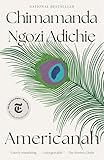
Where to Start: Americanah (2013)
The essential Adichie — her most ambitious and most fully realised novel, and the one that best represents the full range of her concerns. Ifemelu, a young Nigerian woman, emigrates to America for university and spends fifteen years navigating a country in which she is, for the first time, Black — a category that did not apply to her in Nigeria, where she was simply a person. She writes a blog about race in America from the perspective of a ‘Non-American Black’; she has relationships that illuminate different aspects of American racial anxiety; she builds a life and then, unexpectedly, decides to return to Nigeria. Meanwhile, her childhood love Obinze lives an illegal immigrant’s existence in London before eventually returning to Lagos and building a successful but emotionally hollow life.
The novel is funny, precise, and deeply observant about how race is constructed differently in America, Britain, and Nigeria — and about what it means to carry a Nigerian identity into a world that will not see it.
Half of a Yellow Sun (2006)
Adichie’s most emotionally intense and most historically serious novel — set during the Nigerian Civil War (1967–1970), in which the Igbo people’s attempt to create the Republic of Biafra ended in defeat, starvation, and the death of between one and three million people. The novel follows three characters through the years before, during, and after the war: Ugwu, a village boy who becomes a houseboy for a leftist university professor; Olanna, the professor’s beautiful partner; and Richard, a British journalist writing a book about Igbo art. The war destroys the world they have built and tests everyone in it.
Adichie renders the catastrophe with restraint and precision — she does not describe atrocity for shock but shows, in the gradual degradation of daily life, what blockade and starvation actually do to communities and relationships.
We Should All Be Feminists (2014)
Adichie’s essay-manifesto — originally a TED Talk, published as a standalone book — making the case for feminism as a necessity for everyone. Drawing on her experiences growing up in Nigeria, where gender roles begin at childhood (boys are expected to lead, girls to follow; boys’ achievements are praised, girls’ are questioned), she argues that the world’s assignment of different roles and different values to men and women diminishes everyone. The essay became internationally famous after Beyoncé sampled it in ‘***Flawless’ and has been translated into dozens of languages.
Short (50 pages) and immediate; an excellent companion to the fiction rather than a substitute for it.
Reading Chimamanda Ngozi Adichie
Adichie’s fiction is built on careful, unsentimental observation — of how race is constructed and enforced differently in different contexts, how gender roles limit both the people who enforce them and the people they limit, and how the experience of Nigeria (its intellectual middle class, its colonial history, its civil war) shapes identity in ways that the diaspora experience both confirms and complicates. Begin with Americanah for the most immediate and most widely applicable of her concerns; read Half of a Yellow Sun for the most historically grounded and most emotionally sustained. Both are essential.
Frequently Asked Questions
Where should I start with Chimamanda Ngozi Adichie?
Americanah (2013) is both the most widely read and the essential starting point — the novel following Ifemelu, a young Nigerian woman who emigrates to America for university and spends fifteen years navigating the particular experience of being Black in America (as distinct from being Black in Nigeria, where Blackness is not a daily political category), while her childhood love Obinze attempts to build a life in London. It is Adichie's most ambitious novel, richest in observation, and most directly engaged with her central concerns: race, gender, immigration, and the complicated relationship between Africa and its diaspora. Half of a Yellow Sun is the best alternative for those who want her most emotionally intense and most historically grounded novel.
What is Americanah about?
Americanah (2013) follows two Nigerian childhood sweethearts — Ifemelu and Obinze — whose lives diverge when Ifemelu emigrates to America for university and Obinze attempts illegal immigration to England. The novel traces Ifemelu's fifteen years in America — her relationships (with an African American boyfriend, with a white liberal boyfriend), her blog about race in America (written as a Nigerian outsider who can see what Americans cannot see about themselves), and her eventual return to Nigeria — alongside Obinze's successful but emotionally hollow life in Lagos. The novel is simultaneously a love story, a portrait of immigrant experience, and an extraordinarily precise account of how race works in America.
What is Half of a Yellow Sun about?
Half of a Yellow Sun (2006) is set during the Nigerian Civil War (1967–1970) — the conflict in which the breakaway Republic of Biafra, created by the Igbo people of southeastern Nigeria, was defeated by the Nigerian government in a war that killed between one and three million people, many from starvation and blockade. The novel follows three characters — Ugwu, a village boy who becomes a houseboy for a university professor; Olanna, the professor's partner; and Richard, a British journalist in love with Olanna's twin sister Kainene — through the years before, during, and after the war. Adichie renders the war's destruction with great restraint and great moral seriousness.
Is We Should All Be Feminists a book or an essay?
We Should All Be Feminists (2014) is a short published essay — originally delivered as a TED Talk in 2012 and then published as a standalone book of about 50 pages. In it, Adichie makes the case for feminism as a necessity for everyone, drawing on her own experiences growing up in Nigeria, where gender roles are enforced rigidly from childhood. It became internationally famous after a passage from it was sampled in Beyoncé's song '***Flawless.' It is not a novel but is an excellent and immediate introduction to Adichie's thinking about gender, and is often recommended as a companion to her fiction.