Where to Start with Douglas Stuart: A Reading Guide
Where to start with Douglas Stuart — whether to begin with Shuggie Bain or Young Mungo. A complete reading guide to the Scottish Booker Prize-winning author.
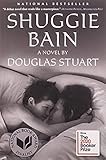
Douglas Stuart (born 1976) is the Scottish novelist whose debut Shuggie Bain (2020) — written over ten years while working as a fashion designer in New York, rejected by multiple publishers, and finally published by Grove Atlantic — won the Booker Prize and was immediately recognised as one of the most powerful British debuts in recent memory. Stuart grew up in 1980s Glasgow in circumstances closely paralleling those of his novel’s protagonist; his writing draws directly on the experience of a working-class childhood shaped by poverty, sectarianism, and a parent’s alcoholism. His second novel, Young Mungo (2022), confirmed him as one of the most significant new voices in British literary fiction.
Where to Start: Shuggie Bain (2020)
The essential Stuart — and one of the great debuts of the decade. Agnes Bain is thirty-eight years old, separated from her husband, living on a Glasgow housing estate, and drinking herself to death. She is also funny, beautiful, vain, desperately romantic, and capable of extraordinary kindness — when she is sober enough.
Her son Shuggie — Hugh junior, youngest child — is ten years old when the novel begins. He worships his mother. He is also, unmistakably, gay: too sensitive, too careful, too interested in the wrong things in a place where being wrong in this particular way is dangerous. The novel traces their relationship across a decade: Agnes’s deterioration, Shuggie’s devotion, the cycle of hope and collapse.
Stuart writes Agnes and Shuggie with equal clarity. Agnes is not romanticised — the destruction she visits on her children is rendered without excuse — but she is completely understood, and her self-destruction is traced to the specific social and emotional circumstances that produced it. Shuggie’s love for her is presented as the condition he was born with, not as a choice that can be unmade.
The novel was rejected by over forty publishers before Grove Atlantic accepted it. It won the Booker Prize at the first submission.
Young Mungo (2022)
Stuart’s second novel — a Protestant boy and a Catholic boy falling in love across 1990s Glasgow’s sectarian divide, while a parallel narrative builds dread. His most structurally tense work; equally essential.
Why Shuggie Bain Is the Ideal First Book
For a reader new to Douglas Stuart, Shuggie Bain is the ideal first book because it is his acclaimed debut, a winner of the Booker Prize, and the fullest expression of his distinctive achievement, a tender and harrowing portrait of love, poverty, and addiction. Shuggie Bain tells the story of a boy growing up in 1980s Glasgow and his devoted love for his mother, whose struggle with addiction shapes and shadows their lives, rendering their world with unflinching honesty and profound tenderness. As an entry point, it offers his most celebrated and accomplished work, combining an unflinching portrait of hardship with a deep tenderness and emotional power that have moved readers and won the highest acclaim. It welcomes the newcomer with its emotional power, its vivid rendering of a world, and its profound humanity, drawing the reader into a story of love amid hardship. It is his acclaimed, prize-winning debut and the one that best represents his gifts, so that the new reader encounters Stuart at his most powerful. For the newcomer, then, Shuggie Bain is the natural and ideal starting point, the Booker-winning debut that announced a major new voice.
What to Expect as a New Reader
As a new reader, you can expect Shuggie Bain to be a tender and harrowing novel, an unflinching but deeply compassionate portrait of love, poverty, and addiction in 1980s Glasgow. You can expect emotional power and unflinching honesty, for the novel confronts the realities of poverty, addiction, and hardship without flinching, rendering the difficult world of its characters with vivid and painful truth. You can expect, alongside the hardship, profound tenderness, for at the novel’s heart is a boy’s devoted love for his mother, whose struggle with addiction shapes their lives, and this love gives the novel its deep tenderness and emotional power. You can expect a vivid rendering of a world, the working-class Glasgow of the 1980s, brought to life with intimate and authentic detail. You should be prepared for difficult and painful material, handled with compassion and emotional honesty. Expect, in short, a tender and harrowing novel of love, poverty, and addiction, unflinching but deeply compassionate, a powerful and moving introduction to Stuart’s acclaimed fiction.
Going Deeper After Your First Book
Once Shuggie Bain has introduced you to Stuart’s powerful fiction, the reader who wishes to go deeper can turn to his other novel, which continues his distinctive achievement, the tender and unflinching rendering of love, hardship, and working-class Glasgow life. His other novel returns to a similar world, exploring love, masculinity, and danger amid the hardships of working-class Glasgow, with the same combination of unflinching honesty and profound tenderness that marks his debut. Reading it after Shuggie Bain deepens your appreciation of Stuart’s distinctive gifts, the unflinching portrait of hardship combined with deep tenderness and emotional power, and his vivid rendering of working-class Glasgow life. His characteristic concerns, love amid hardship, the realities of poverty and struggle, and the world of working-class Glasgow, run through his work, and the reader who has been moved by Shuggie Bain will find them in his other novel. Building your reading journey through Stuart’s work is a matter of following his tender and unflinching fiction from his Booker-winning debut to his other novel. The reader who begins with Shuggie Bain and continues through his work will encounter a major contemporary voice of rare tenderness and honesty.
Reading Douglas Stuart
Begin with Shuggie Bain — it is his most personal and most immediately devastating novel. Read Young Mungo as a companion piece; both novels are set in the same Glasgow world and share Stuart’s dual focus on queer experience and working-class survival.
For the full Douglas Stuart bibliography, reviews, and biography, visit the Douglas Stuart author page on Editors Reads.
Affiliate disclosure: Links to Amazon on this page are affiliate links. We earn a small commission at no extra cost to you.
Frequently Asked Questions
Where should I start with Douglas Stuart?
Shuggie Bain (2020) is the essential starting point — Stuart's debut novel about Hugh 'Shuggie' Bain, a gay working-class boy in 1980s Glasgow, and his fierce, beautiful, alcoholic mother Agnes. The novel won the 2020 Booker Prize on its debut and was recognised for its unflinching portrayal of addiction, poverty, and the specific love between a child and a parent who is destroying herself. Based largely on Stuart's own childhood; the most emotionally direct debut novel in recent British literary fiction.
What is Shuggie Bain about?
Shuggie Bain follows Agnes Bain — vain, charming, funny, desperately alcoholic — and her youngest son Shuggie, who is too gentle, too sensitive, and unmistakably gay in a Glasgow housing estate in the 1980s. The novel covers a decade of Agnes's alcoholism and Shuggie's devotion to her: the cycle of sobriety and relapse, the men who pass through her life, the siblings who eventually abandon hope, and the boy who cannot. Stuart writes with complete unsentimental sympathy for both his characters; the novel's final section is among the most devastating in contemporary British fiction.
What is Young Mungo about?
Young Mungo (2022) is Stuart's second novel — set in the same Glasgow milieu as Shuggie Bain, following Mungo Hamilton, a working-class Protestant boy who falls in love with James, a Catholic boy, across the sectarian divide of 1990s Glasgow. The novel alternates between Mungo's courtship of James and a disturbing camping trip Mungo is sent on by his mother with two strangers. Stuart's most structurally tense novel; the threat of violence and the tenderness of the love story are in constant counterpoint.
Are Stuart's novels difficult to read?
Stuart's novels are emotionally difficult — both Shuggie Bain and Young Mungo deal with addiction, violence, poverty, and the suffering of children in failing families without softening any of it. They are not difficult in terms of prose style: Stuart writes with clarity and directness, and his narrative pacing keeps the reader forward-moving even through painful material. Readers who find depictions of alcoholism and childhood suffering too painful may struggle; readers who can sit with that difficulty will find both novels extraordinary.


