Where to Start with Isaac Asimov: A Reading Guide
Where to start with Isaac Asimov — whether to begin with Foundation, I Robot, or The Caves of Steel. A complete reading guide to the classic sci-fi author.

Isaac Asimov (1920–1992) was the Russian-born American science fiction writer who, alongside Arthur C. Clarke and Robert Heinlein, is considered one of the ‘Big Three’ of science fiction’s Golden Age. His Foundation series — the story of a mathematician who predicts the fall of a galactic civilisation and devises a plan to shorten its dark age — won the Hugo Award for Best All-Time Series in 1966 and remains one of the most influential works in the genre’s history. His Robot stories, introducing the Three Laws of Robotics, created the ethical framework that has shaped how science fiction thinks about artificial intelligence ever since. He published over 500 books in his lifetime.
Where to Start: Foundation (1951)
The essential Asimov — and the most celebrated series in the history of science fiction. Hari Seldon has discovered psychohistory: a mathematical framework for predicting the behaviour of large human populations over long timescales. His calculations show that the Galactic Empire, which has endured for 12,000 years, will fall within 500 years, leaving a dark age of 30,000 years. By establishing a Foundation of scholars on the galaxy’s edge, he can reduce the dark age to 1,000 years.
The novel is episodic — each of its five stories spans decades and follows different characters — and is more interested in ideas (how does a small Foundation navigate the political crises of a collapsing empire?) than in conventional character development. This is intentional: Seldon’s psychohistory operates on populations, not individuals, and Asimov’s novel mirrors that scale. The central concept is one of science fiction’s great original ideas.
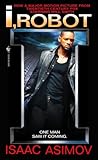
I, Robot (1950)
Asimov’s linked short story collection introducing the Three Laws of Robotics — the ethical framework that has shaped how science fiction (and increasingly AI ethics) thinks about machine behaviour. Each story in the collection tests the Three Laws against increasingly complex and paradoxical situations, demonstrating systematically that no finite set of rules is sufficient to cover the full complexity of reality. Robopsychologist Susan Calvin frames the collection.
The most immediately accessible of Asimov’s works — the short story format means each piece stands alone — and one of the most intellectually stimulating. Its questions about AI ethics are more relevant now than when Asimov wrote them.
Foundation and Empire (1952)
The second book of the Foundation Trilogy — and the one that introduces the Mule, the novel’s greatest creation. The Foundation has survived two centuries of Seldon’s planned crises through the mathematics of psychohistory. But the Mule is a mutant with the power to mentally alter human emotional responses — and he is the one event that psychohistory, which predicts the behaviour of populations rather than individuals, could not foresee. A genuine thriller as well as a novel of ideas.
Must be read after Foundation.
Second Foundation (1953)
The conclusion of the original trilogy — the search for the mysterious Second Foundation, whose existence is the final mystery of Seldon’s plan. The novel has two separate storylines: the Mule’s search for the Second Foundation after his defeat, and the First Foundation’s own search decades later. The location of the Second Foundation, and what it means, is the trilogy’s final revelation.
Best read immediately after Foundation and Empire.
The Caves of Steel (1954)
Asimov’s fusion of science fiction and classic detective fiction — set in a future New York where eight million people live in an enclosed arcology and venture outside only reluctantly. Detective Elijah Baley must investigate a murder at a Spacer enclave, partnered with R. Daneel Olivaw, a humanoid robot. The first book in Asimov’s Robot novel series, which eventually connects to the Foundation universe.
His most immediately readable novel for readers who want character and plot alongside ideas.
Why Foundation Is the Ideal First Book
For a reader new to Isaac Asimov, one of the grand masters of science fiction, Foundation is the ideal first book because it is the opening of his celebrated Foundation series and a fine expression of his distinctive gifts, the grand visionary scope, the fascination with ideas, and the sweeping vision of history and civilization. Foundation imagines the fall of a vast galactic empire and the effort, guided by the science of predicting the future of civilizations, to preserve knowledge and shorten the coming dark age, in a visionary, idea-driven epic. As an entry point it is ideal, for it launches one of his most famous works and a perfect introduction to his grand, ideas-driven science fiction. It welcomes the newcomer with its grand scope, its fascinating ideas, and its sweeping vision, drawing the reader into his distinctive imagination. It is among his most celebrated works and a fine representation of his gifts, so the new reader encounters Asimov at his most characteristic. For the newcomer, then, Foundation is the natural and ideal starting point.
What to Expect as a New Reader
As a new reader, you can expect Foundation to be a grand, visionary, and idea-driven work of science fiction. You can expect a grand scope, for the novel imagines the fall of a vast galactic empire across thousands of years. You can expect a fascination with ideas, for the story turns on a science of predicting and shaping the future of whole civilizations. You can expect a sweeping vision of history and civilization, for Asimov is concerned with the rise and fall of societies on an epic scale. You can expect a focus on ideas, society, and grand events over individual character or action. You can expect a structure of linked stories spanning generations. You can expect classic, foundational science fiction. Expect, in short, a grand, visionary, and idea-driven work of science fiction, a fine introduction to Asimov’s gifts.
Going Deeper After Your First Book
Once Foundation has introduced you to Asimov’s gifts, the natural next step is to continue the Foundation series, following the sweeping story of the fall and renewal of galactic civilization across its subsequent volumes, which Asimov later connected to his other major works. Beyond Foundation, the reader who has enjoyed Asimov’s gifts can explore his celebrated Robot stories and novels, which introduced his famous laws of robotics and explore the relationship between humans and intelligent machines, and which he ultimately linked to the Foundation saga in a vast future history. His many other novels, stories, and his enormous body of science writing reveal the range of one of the most prolific authors in history. Reading these after Foundation deepens your appreciation of Asimov’s distinctive gifts, the grand scope, the fascination with ideas, and the sweeping vision. Building your reading journey through Asimov is a matter of continuing the Foundation series and exploring his Robot stories and beyond. The reader who begins here will find one of the grand masters of science fiction to follow.
Reading Isaac Asimov
Asimov’s fiction is distinguished by its intellectual ambition — the ideas in Foundation and I, Robot are genuinely original contributions to human thinking about social history and machine ethics — and by its clarity: he was one of science fiction’s great popularisers, committed to making complex ideas accessible to any reader. He is not a stylist; his prose is functional and his characterisation is often thin. But his ideas are extraordinary, and the Foundation series in particular represents one of science fiction’s most sustained thought experiments. Begin with Foundation for the most celebrated; begin with I, Robot for the most immediately accessible.
Frequently Asked Questions
Where should I start with Isaac Asimov?
Foundation (1951) is the most celebrated starting point — the first of Asimov's Foundation series and the winner of the Hugo Award for Best All-Time Series, in which mathematician Hari Seldon predicts the fall of the Galactic Empire and sets in motion a thousand-year plan to preserve civilisation. It is episodic in structure and more concerned with ideas than with conventional character development, but the central concept (psychohistory — the mathematics of social history) is one of science fiction's great original ideas. I, Robot is the best alternative for readers who want Asimov's most immediately accessible work — a linked collection of short stories about robots and the Three Laws of Robotics.
What is Foundation about?
Foundation (1951) is set at the end of the Galactic Empire, which has endured for 12,000 years. Hari Seldon, a mathematician who has developed 'psychohistory' — a statistical method for predicting the behaviour of large populations over long periods — determines that the Empire will fall, leaving a dark age of 30,000 years. By establishing the Foundation on the edge of the galaxy, he can reduce the dark age to 1,000 years. The novel is episodic, spanning 150 years of Foundation history through five separate stories, each showing how the Foundation navigates the crises Seldon predicted. It is a novel of ideas rather than of characters.
What are the Three Laws of Robotics?
The Three Laws of Robotics are Asimov's famous ethical framework for robot behaviour, introduced in I, Robot (1950): (1) A robot may not injure a human being or, through inaction, allow a human being to come to harm; (2) A robot must obey orders given by human beings except where such orders would conflict with the First Law; (3) A robot must protect its own existence as long as such protection does not conflict with the First or Second Law. The stories in I, Robot systematically explore the paradoxes, ambiguities, and failures that arise from these apparently simple laws — demonstrating that no ethical framework is sufficient against the full complexity of reality.
Should I read Foundation in order?
Yes — the original Foundation trilogy (Foundation, Foundation and Empire, Second Foundation) should be read in order: the plot develops continuously across all three books. Foundation and Empire introduces the Mule, the mutant who represents the one event psychohistory could not predict, which is the central crisis of the trilogy. Second Foundation resolves the Mule problem and reveals the location of the Second Foundation. The three books form a complete narrative arc. The Robots series (I, Robot, The Caves of Steel) is set in a separate but eventually interconnected future history and can be read independently.