Editors Reads Verdict
The foundational text of AI ethics in science fiction. Asimov's Three Laws are perhaps the most influential framework for thinking about robot behaviour ever devised — and this collection systematically shows why they are insufficient.
What We Loved
- The Three Laws of Robotics is one of the most generative thought experiments in science fiction history
- Each story explores a different logical implication of the laws with puzzle-like precision
- The framing device (a robot psychologist's career told in retrospect) gives it coherence
- Still directly relevant to contemporary AI safety debates
Minor Drawbacks
- The science of positronic brains is thoroughly dated
- Character development is limited — the robots are more interesting than the humans
- Some stories are stronger than others
Key Takeaways
- → Three Laws: (1) Don't harm humans; (2) Obey humans unless this conflicts with Law 1; (3) Protect yourself unless this conflicts with Laws 1 or 2
- → Any sufficiently specific rule system for AI behaviour will have edge cases and logical conflicts
- → Robot psychology emerges naturally from the complexity of rule-following in ambiguous situations
- → The desire to make robots safe produces robots that are constrained in ways that create new problems
- → Asimov's central insight: alignment is harder than it looks
| Author | Isaac Asimov |
|---|---|
| Publisher | Bantam Books |
| Pages | 253 |
| Published | December 2, 1950 |
| Language | English |
| Genre | Science Fiction, Classic, Short Stories |
| Difficulty | Beginner |
| Best For | Science fiction readers interested in AI ethics, the foundational texts of robot fiction, and classic Golden Age science fiction. |
How I, Robot Compares
I, Robot at a glance against 3 similar books readers weigh alongside it.
| Book | Author | Rating | Best for |
|---|---|---|---|
| I, Robot (this book) | Isaac Asimov | ★ 4.5 | Science fiction readers interested in AI ethics, the foundational texts of |
| Flowers for Algernon | Daniel Keyes | ★ 4.6 | Readers of both literary fiction and science fiction who can handle deep |
| Foundation | Isaac Asimov | ★ 4.6 | Science fiction readers interested in big ideas, galactic-scale history, and |
| Neuromancer | William Gibson | ★ 4.3 | Science fiction readers interested in the foundational texts of cyberpunk and |
The Foundation of Robot Fiction
Isaac Asimov was twenty-one when he published the first story that would eventually become I, Robot. He had grown up reading science fiction in which robots were either slavish tools or dangerous monsters, and he found both tropes tiresome and unimaginative. He invented the Three Laws of Robotics as a framework for more interesting stories: stories in which robots were safe by design and the interesting questions arose from the logical implications of that safety.
The Three Laws are deceptively simple: (1) A robot may not injure a human being or, through inaction, allow a human being to come to harm. (2) A robot must obey orders given by human beings except where such orders would conflict with the First Law. (3) A robot must protect its own existence as long as such protection does not conflict with the First or Second Law.
The Puzzle Structure
Each story in I, Robot presents a scenario in which the Three Laws produce unexpected behaviour, create apparent paradoxes, or interact with each other in ways that require the robot psychologist Susan Calvin (or the robot engineers Powell and Donovan) to diagnose and resolve.
The stories are structured like logic puzzles. “Runaround” — in which a robot is caught in a feedback loop between the Second and Third Laws — is one of Asimov’s most elegant puzzles. “Liar!” — in which a telepathic robot discovers that hearing the truth causes human distress and therefore withholds it to comply with the First Law — anticipates debates about AI honesty and helpful deception.
Susan Calvin
The framing device of a journalist interviewing the retired robot psychologist Susan Calvin is one of Asimov’s most useful storytelling inventions. Calvin is cold, brilliant, more comfortable with robots than people, and the most interesting human character in the collection. Her career arc — from the earliest robots to the near future in which robots have become indistinguishable from society — gives the collection a historical sweep beyond its individual stories.
Relevance to Contemporary AI
The collection’s deepest contribution to contemporary AI safety debates is the demonstration that any rule system for safe AI will have edge cases. The Three Laws seem complete and sufficient when first stated; each story reveals new failure modes. This observation — that specifying safe AI behaviour is harder than it looks — is the central challenge of modern AI alignment research, stated in parable form by Asimov in 1950.
Asimov and the Golden Age
The stories collected in I, Robot first appeared in the science-fiction magazines of the 1940s—most of them in John W. Campbell’s Astounding Science Fiction, the magazine at the center of what is now called the Golden Age of the genre. Campbell was an exacting editor, and the term “robotics” itself, along with the famous Three Laws, emerged from the working relationship between him and the young Asimov. When the stories were gathered into a single volume in 1950 and given the framing interviews with Susan Calvin, a loose sequence of magazine puzzles became something closer to a future history of humanity’s first century living alongside thinking machines.
Asimov went on to become one of the most prolific authors of the twentieth century, writing or editing hundreds of books across science fiction, popular science, history, and even annotated guides to Shakespeare and the Bible. The robot stories did not end here: he returned to the U.S. Robots universe in later collections such as The Rest of the Robots and The Complete Robot, and in the novels The Caves of Steel and The Naked Sun he fused the robot premise with the detective story, pairing a human investigator with the humaniform robot R. Daneel Olivaw. Late in his career he stitched the robot books together with his sprawling Foundation series, so that the Three Laws became part of a single connected cosmos spanning twenty thousand years.
Cultural Afterlife
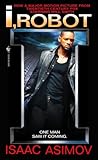
Few invented ideas in genre fiction have escaped their original pages as thoroughly as the Three Laws. They are routinely cited in real engineering ethics courses, parodied in cartoons, and invoked—usually too optimistically—whenever a new wave of automation reaches the headlines. The 2004 film starring Will Smith borrowed the title and the name Susan Calvin but invented an action plot of its own; purists noted, fairly, that it kept little of the puzzle-box spirit that makes the book endure. Harlan Ellison wrote a now-famous unproduced screenplay that hewed far closer to Asimov’s structure, and it remains a fascinating “what if” for fans of the original.
What keeps the book alive is not its dated hardware but its method. Asimov treats ethics as an engineering problem with bugs, and each story is essentially a debugging session. That framing—rules that look airtight until reality finds the gap—maps so cleanly onto present-day questions of machine alignment that the collection reads less like a museum piece than like a set of design notes written decades early.
Who Should Read It
I, Robot is an ideal entry point for newcomers to classic science fiction: the prose is clean and unfussy, the stories are short and self-contained, and no prior reading is required. It will reward anyone curious about the origins of how we talk about artificial intelligence, from students of AI safety to general readers who want to see where the cultural conversation began. Approach it as a sequence of linked thought experiments rather than a character-driven novel, and don’t expect rich human interiority—the pleasures here are conceptual. Read in order, the stories build a quiet argument that grows more persuasive with each apparent solution, and the final pieces, set when robots have begun to manage the world’s economy, land with a force the early puzzles only hint at.
Final Verdict
I, Robot is essential science fiction — the text that established robot fiction as an ethical thought experiment rather than a monster story, and that anticipated contemporary AI alignment debates by seventy years.
Our rating: 4.5/5 — Foundational and still directly relevant. The Three Laws are a 70-year-old contribution to the AI safety debate.
Frequently Asked Questions
What is "I, Robot" about?
Isaac Asimov's linked short story collection introducing the Three Laws of Robotics and exploring their logical implications in a series of increasingly complex scenarios.
Who should read "I, Robot"?
Science fiction readers interested in AI ethics, the foundational texts of robot fiction, and classic Golden Age science fiction.
What are the key takeaways from "I, Robot"?
Three Laws: (1) Don't harm humans; (2) Obey humans unless this conflicts with Law 1; (3) Protect yourself unless this conflicts with Laws 1 or 2 Any sufficiently specific rule system for AI behaviour will have edge cases and logical conflicts Robot psychology emerges naturally from the complexity of rule-following in ambiguous situations The desire to make robots safe produces robots that are constrained in ways that create new problems Asimov's central insight: alignment is harder than it looks
Is "I, Robot" worth reading?
The foundational text of AI ethics in science fiction. Asimov's Three Laws are perhaps the most influential framework for thinking about robot behaviour ever devised — and this collection systematically shows why they are insufficient.
Ready to Read I, Robot?
Check the current price on Amazon.
Check Price on Amazon (paid link)Prices and availability are subject to change. See Amazon for current price.
Review last updated: