Russian-American science fiction grandmaster whose Foundation series and robot stories helped define the genre's intellectual ambitions and remain foundational texts today.
Isaac Asimov was one of the most prolific and influential science fiction writers of the twentieth century, producing over five hundred books across science fiction, popular science, and literary criticism. His Foundation series — beginning with the novels collected in Foundation — imagines a mathematician who predicts the fall of a galactic empire and works to shorten the ensuing dark age. It is rightly counted among the most ambitious thought experiments in genre fiction: a meditation on history, free will, and the limits of prediction that draws directly on Edward Gibbon’s Decline and Fall of the Roman Empire.
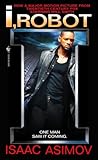
I, Robot collects Asimov’s early robot stories and introduces the Three Laws of Robotics, a framework that has shaped how people think and write about artificial intelligence for seven decades. The stories are puzzle-driven and cerebral — Asimov uses his robots as philosophical instruments more than emotional characters — and they reward readers who enjoy ideas more than atmosphere. Critics have noted that his prose is functional rather than beautiful and that his characters, particularly women, are often thinly drawn by contemporary standards.
Asimov’s great strength was the quality of his thinking. He wrote to illuminate ideas, and the ideas in Foundation and I, Robot are genuinely big: the tractability of the future, the ethics of programming minds, the relationship between individual agency and social forces. These books remain worth reading not as period pieces but as living intellectual arguments.
A Titan of Science Fiction
Isaac Asimov was one of the most important, influential, and prolific writers in the history of science fiction, a towering figure whose visionary ideas shaped the entire genre. A biochemist by training and a writer of astonishing range and productivity, Asimov authored or edited hundreds of books across science fiction and an enormous range of nonfiction. Within science fiction, his Foundation and Robot stories established concepts and frameworks that have influenced generations of writers and thinkers, and his clear, rational, idea-driven approach to the genre helped define what science fiction could be. He remains one of its most revered and foundational masters.
The Foundation Series
Asimov’s most celebrated achievement is the Foundation series, an epic saga chronicling the fall of a vast Galactic Empire and the efforts of a group of scientists to preserve knowledge and shorten the coming dark age. Built around the invented science of “psychohistory,” which uses mathematics to predict the broad future of human societies, the series is a landmark of science fiction renowned for its sweeping scope and its grand ideas about history, civilization, and human destiny. Honored as one of the greatest works in the genre, Foundation remains the cornerstone of Asimov’s reputation and a profound influence on science fiction.
The Three Laws of Robotics
Asimov’s robot stories introduced one of the most influential concepts in all of science fiction: the Three Laws of Robotics, a set of ethical rules governing the behavior of intelligent machines. Through stories collected in I, Robot and other works, Asimov explored the logical and moral implications of these laws, treating robots not as menacing monsters but as devices whose programmed ethics could produce fascinating dilemmas. This thoughtful, rational approach to artificial intelligence and robot ethics has profoundly shaped how the genre, and even real-world thinkers, consider the relationship between humans and intelligent machines.
Ideas Over Action
A defining feature of Asimov’s science fiction is its emphasis on ideas, logic, and intellectual problem-solving rather than action or spectacle. His stories frequently turn on a puzzle, a logical paradox, or the working-out of the implications of a scientific or social premise, and his characters often solve problems through reason and deduction. This cerebral, idea-driven approach, reflecting his scientific background and his faith in rationality, gave his fiction its distinctive character and helped establish the tradition of intelligent, concept-focused science fiction that prizes thought over thrills.
A Connected Universe
Late in his career, Asimov worked to connect his major series, weaving his Robot, Empire, and Foundation stories into a single vast future history spanning thousands of years. This grand unification, linking his robot stories to the galactic sweep of the Foundation saga, created an ambitious and coherent fictional universe and reflected his lifelong interest in the broad patterns of history and the long-term destiny of humanity. For dedicated readers, exploring the connections across this vast body of work offers the pleasure of a single immense and interconnected vision of the future.
A Prolific Popularizer
Beyond his fiction, Asimov was one of the most prolific and effective popularizers of science in history, writing hundreds of nonfiction books and essays explaining science, history, and many other subjects to general readers with remarkable clarity. His boundless curiosity, his gift for lucid explanation, and his sheer productivity made him a beloved educator as well as a storyteller. This vast body of accessible nonfiction, alongside his science fiction, reflects his deep faith in knowledge and reason and his lifelong commitment to making ideas comprehensible and exciting to everyone.
The Lasting Legacy of Isaac Asimov
Isaac Asimov’s influence on science fiction is incalculable, and his concepts of psychohistory and the Three Laws of Robotics have become permanent parts of the genre’s vocabulary and the wider culture. For newcomers, Foundation is the essential starting point for his galactic saga, while I, Robot offers the ideal introduction to his robot stories and his exploration of artificial intelligence. For readers seeking intelligent, idea-rich science fiction grounded in reason and grand in vision, Isaac Asimov remains one of the foundational and most rewarding masters of the genre.
Reading Guides