Where to Start with James Clavell: A Reading Guide
Where to start with James Clavell — whether to begin with Shogun, Tai-Pan, or Noble House. A complete reading guide to the Asian Saga and its best entry point.

James Clavell (1921–1994) was the Australian-born British novelist who created the Asian Saga — a series of six epic historical novels set in Asia across five centuries — of which Shōgun (1975) is the acknowledged masterpiece. A former prisoner of war in Changi Prison during the Second World War (his experience became the basis for King Rat), Clavell brought to his fiction both a meticulous researcher’s commitment to getting Asia right and a storyteller’s gift for immersive, page-turning narrative. His novels are among the longest and most ambitious in twentieth-century popular fiction; Shōgun is one of the finest historical novels in the English language.
Where to Start: Shōgun (1975)
The essential Clavell — and one of the great historical novels of the twentieth century. John Blackthorne, an English navigator, is shipwrecked on the coast of Japan in 1600 and immediately caught in the political struggle between samurai lords competing for supreme power. He is captured, becomes the property of the daimyo Toranaga, learns Japanese, and falls in love with the noblewoman Mariko — his translator, and the person who begins to make the world around him legible.
At over 1,100 pages, Shōgun demands a commitment; the reward is a depth of immersion in feudal Japan that few historical novels have achieved. Clavell renders a world built on entirely different premises — honour, loyalty, duty, and the aesthetics of controlled violence — from the inside, with complete seriousness. The 2024 FX television adaptation is superb; the novel is deeper, richer, and fully its own experience.
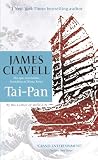
Tai-Pan (1966)
The founding of Hong Kong — and Clavell’s most energetic novel. Dirk Struan, the Tai-Pan (supreme leader) of a powerful Scottish trading company, fights to establish the British colony of Hong Kong in 1841, battling commercial rivals, Chinese secret societies, and the forces that want to destroy everything he has built. Hong Kong in 1841 — a malaria-ridden island of limited strategic value that Britain acquired as an afterthought following the First Opium War — is the perfect Clavell setting: a place where Eastern and Western worlds collide under commercial pressure.
Shorter than Shōgun and faster-paced, with a protagonist of considerable dramatic force. The direct ancestor of Noble House, which follows the Struan company 120 years later.
Noble House (1981)
Clavell’s most ambitious novel — and the longest, at over 1,300 pages. Set in Hong Kong in 1963, it follows Ian Dunross, the current Tai-Pan of the Noble House (descended from Dirk Struan), through a single tumultuous week as he battles a hostile takeover bid, Communist Chinese agents, the KGB, American businessmen, and internal family conflict. A panoramic portrait of Hong Kong at a pivotal moment in its history.
Best read after Tai-Pan, whose founding story it continues and whose characters’ descendants populate the novel. Clavell’s most politically complex work.
Why Shōgun Is the Ideal First Book
For a reader new to James Clavell, Shōgun is the ideal first book because it is his most famous and beloved novel and the fullest expression of his distinctive gifts, the sweeping historical epic, the immersive sense of place, and the gripping storytelling. Shōgun follows an English navigator shipwrecked in feudal Japan, who becomes entangled in its politics, culture, and power struggles, in a vast, immersive epic of a clash and meeting of civilizations. As an entry point it is ideal, for it is his best-known work and the most celebrated of his Asian Saga, a perfect example of his absorbing, large-scale historical fiction. It welcomes the newcomer with its gripping story, its rich immersion in feudal Japan, and its memorable characters, drawing the reader into one of the great epic page-turners. It is his most famous work and a fine representation of his gifts, so the new reader encounters Clavell at his most characteristic. For the newcomer, then, Shōgun is the natural and ideal starting point.
What to Expect as a New Reader
As a new reader, you can expect Shōgun to be a sweeping, immersive, and gripping historical epic. You can expect a grand story, for the novel follows an English navigator shipwrecked in feudal Japan who is drawn into its politics and power struggles. You can expect immersive historical detail, for Clavell vividly evokes the culture, customs, and world of feudal Japan, immersing the reader in an unfamiliar civilization. You can expect a clash and meeting of cultures, for much of the novel’s power lies in the encounter between the European outsider and Japanese society. You can expect gripping storytelling, for Clavell is a master of the absorbing, large-scale page-turner. You can expect memorable characters, political intrigue, danger, and romance. You can expect a long but immersive and rewarding read. Expect, in short, a sweeping, immersive, and gripping historical epic, a captivating introduction to Clavell’s gifts.
Going Deeper After Your First Book
Once Shōgun has introduced you to Clavell’s gifts, the reader who wishes to go deeper can explore his other novels, especially the rest of his Asian Saga, which continues his sweeping, immersive historical fiction across different times and places in Asia. The other novels of the saga follow trade, power, and culture in Hong Kong, the Middle East, and beyond, each an absorbing epic in its own right, loosely connected to the others. Reading these after Shōgun deepens your appreciation of Clavell’s distinctive gifts, the sweeping historical epic, the immersive sense of place, and the gripping storytelling. His characteristic strengths run through his work, and the reader gripped by Shōgun will find them across his novels. Building your reading journey through Clavell is a matter of following his epics from Shōgun into the rest of the Asian Saga. The reader who begins here and continues will find one of the great writers of sweeping, immersive historical fiction.
Reading James Clavell
Clavell’s fiction is distinguished by its ambition — the willingness to render whole civilisations, to take Asian cultures seriously as complex systems of value rather than exotic backgrounds for Western adventurers — and by its narrative energy, which sustains thousands of pages without flagging. He is not a literary novelist; his prose is functional and his psychology is sometimes thin. But his world-building is exceptional, and Shōgun in particular achieves something rare: a portrait of a foreign culture that is simultaneously intimate and accurate in its essential spirit. Begin with Shōgun; nothing else needs to be read first.
Frequently Asked Questions
Where should I start with James Clavell?
Shogun (1975) is the essential starting point — Clavell's masterpiece and one of the finest historical novels of the twentieth century. An English navigator is shipwrecked in feudal Japan in 1600 and drawn into the deadly rivalry between samurai lords competing for supreme power. At over 1,100 pages, it is long and deliberately paced, but it rewards patience with a depth of world-building and cultural immersion that few historical novels have achieved. Tai-Pan is the best alternative for readers who want a shorter and more energetic Clavell — the founding of Hong Kong in 1841, told through the company known as the Noble House.
What is Shogun about?
Shogun (1975) follows John Blackthorne, an English navigator who is shipwrecked on the coast of Japan in 1600 and becomes entangled in the political struggle between rival warlords competing for supreme power — power that would eventually lead to the Tokugawa Shogunate that unified Japan for two and a half centuries. Blackthorne is captured, learns Japanese, falls in love with a noblewoman named Mariko, and gradually comes to understand a culture built on entirely different premises from his own. The novel renders feudal Japan — its honour codes, its political structures, its aesthetic sensibility, its violence — with extraordinary depth and authenticity.
What is the Asian Saga and do I need to read it in order?
James Clavell's Asian Saga is a series of six novels set in Asia across five centuries: Shogun (Japan, 1600), Tai-Pan (Hong Kong, 1841), Gai-Jin (Japan, 1862), King Rat (Singapore, 1945), Noble House (Hong Kong, 1963), and Whirlwind (Iran, 1979). The novels are not strictly sequential — each can be read independently — but Noble House is the direct sequel to Tai-Pan (following the descendants of the Noble House through the 1960s), and reading Tai-Pan first enriches Noble House. Shogun stands completely alone. Most readers begin with Shogun, then read Tai-Pan, then Noble House.
Is Shogun historically accurate?
Shogun is based on real historical events — the 1600 arrival of the English navigator William Adams in Japan is the factual basis for the novel — but Clavell changed names, condensed timelines, and invented characters and events freely. His portrait of feudal Japan is generally praised by historians for capturing the spirit and atmosphere of the period authentically, even if specific details are invented. The 2024 FX television series, which is closer to the historical record than the novel, has renewed interest in the book. Clavell's Japan feels lived-in and real in a way that matters more, for most readers, than strict historical accuracy.