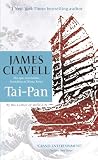
Editors Reads Verdict
Clavell's most energetic novel — the founding of Hong Kong is the perfect backdrop for his blend of action, intrigue, and cross-cultural immersion, and Dirk Struan is among his most compelling protagonists.
What We Loved
- The historical backdrop — the founding of Hong Kong — is perfectly chosen for Clavell's themes of Eastern and Western collision
- Dirk Struan is a more nuanced protagonist than the usual historical adventure hero
- The trading company politics are rendered with detail and authenticity
Minor Drawbacks
- The novel's length and episodic structure test patience in the middle sections
- Some of Clavell's characterizations of Chinese culture reflect period assumptions
Key Takeaways
- → The founding of Hong Kong was an act of commercial opportunism as much as imperial policy
- → Cross-cultural understanding requires more than tolerance — it requires active effort to understand a worldview formed by entirely different premises
- → Commercial empires and political empires are different things, though they depend on each other
| Author | James Clavell |
|---|---|
| Publisher | Dell |
| Pages | 736 |
| Published | January 1, 1966 |
| Language | English |
| Genre | Historical Fiction, Epic Fiction |
How Tai-Pan Compares
Tai-Pan at a glance against 3 similar books readers weigh alongside it.
| Book | Author | Rating | Best for |
|---|---|---|---|
| Tai-Pan (this book) | James Clavell | ★ 4.2 | Historical Fiction |
| Gai-Jin | James Clavell | ★ 3.9 | Readers of sweeping historical epics and Clavell's Asian Saga who enjoy |
| Noble House | James Clavell | ★ 4.1 | Historical Fiction |
| Shōgun | James Clavell | ★ 4.6 | Fans of epic historical fiction, viewers of the acclaimed 2024 FX series |
Tai-Pan Review
Tai-Pan is the second novel in James Clavell’s Asian Saga — though it was published second, it is set chronologically earlier than Shogun, in 1841, at the founding of the British colony of Hong Kong. It is Clavell’s most energetically plotted novel, a book that combines the commercial and political intrigue of a business thriller with the historical ambition of a colonial epic.
Dirk Struan is the Tai-Pan — the supreme leader — of the Noble House, a powerful British trading company based in the Pearl River Delta. When the British seize the island that will become Hong Kong after the First Opium War, Struan recognizes the opportunity: a deep-water harbor that could become the greatest trading post in Asia. The novel follows his efforts to establish the colony, build his commercial empire, and defend both against the enemies — British rivals, Chinese merchants, Triads, and the shadowy Portuguese pirate Gorth — who want to destroy what he is building.
Clavell’s great subject is the collision and partial interpenetration of Eastern and Western cultures, and Tai-Pan gives him the founding moment of one of that collision’s most important sites. Struan is not a simple imperialist — he has a Chinese mistress whom he loves and respects, he speaks Cantonese, and he has a deeper understanding of Chinese culture than almost any of his contemporaries. But he is also an agent of commercial imperialism who profits from the opium trade, and Clavell doesn’t paper over this contradiction.
The commercial and political maneuvering — between trading houses, between nationalities, between the overt economy and the criminal networks underneath it — is rendered with the detail of someone who has done the research and finds the subject genuinely interesting. Tai-Pan is the novel that established the template for Clavell’s saga at its most ambitious.
The Feud That Drives the Book
At the novel’s core is a blood feud as elemental as anything in epic fiction: the hatred between Dirk Struan and Tyler Brock, his great rival among the China traders. Brock is everything Struan is and more ruthless — a former shipmate turned mortal enemy whose ambition is to break the Noble House and seize the title of Tai-Pan for himself. Their rivalry plays out across boardrooms, ballrooms, and the decks of clipper ships racing tea and opium home, and it gives the sprawling plot its spine. Clavell complicates it with the next generation: Struan’s son Culum and Brock’s daughter Tess fall in love, a Romeo-and-Juliet entanglement that binds the two houses together even as their patriarchs try to destroy each other. It is melodrama, unapologetically, but melodrama executed with enormous narrative drive.
May-may and the Theme of Fusion
Struan’s relationship with his Chinese mistress, May-may, is the emotional center of the novel and the vehicle for Clavell’s abiding theme: the collision and partial fusion of East and West. Through May-may, Struan absorbs Chinese ways of thinking — above all the concept of “joss,” the fate or luck that governs all things — and Clavell uses their relationship to argue that real understanding between cultures requires more than tolerance; it requires adopting, at least partly, the other’s view of the world. The portrayal carries the period assumptions of a 1966 novel, and modern readers will notice them. But the relationship is written with genuine respect and tenderness, and May-may is among the most fully realized characters in the book, sharp-tongued and formidable rather than decorative.
Joss and the Typhoon
Clavell builds the entire novel toward one of the most famous climaxes in popular fiction: a colossal typhoon that descends on the fledgling colony of Hong Kong. Without spoiling its full force, the storm is where the theme of joss pays off — where all of Struan’s cunning, wealth, and will are measured against a fate indifferent to any of them. It is a bravura set piece, and it resolves the Struan-Brock conflict in a way no boardroom maneuver could, while passing the saga forward to the next generation and the second Tai-Pan of the Noble House. The ending lands with genuine tragic weight, the more so for how completely Clavell has made us live inside Struan’s grand ambitions.
Cornerstone of the Asian Saga
Tai-Pan is the foundation stone of Clavell’s six-novel Asian Saga, and the Noble House it founds echoes across the later books, most directly in the contemporary sequel Noble House. It is less revered than Shogun and arguably less disciplined, with an episodic middle that tests patience over its 700-plus pages. But it is Clavell at his most energetic and propulsive, and the founding of Hong Kong is a near-perfect canvas for his obsessions: commerce as warfare, culture as a code to be cracked, and the self-made man who bends history to his will until history bends back. For readers who loved Shogun, it is the essential next step.
Final Assessment
Tai-Pan is a big, ripe, immensely entertaining historical epic — part business thriller, part colonial adventure, part cross-cultural romance — anchored by one of Clavell’s most compelling protagonists. Its length and melodrama won’t suit every reader, and its depiction of nineteenth-century China carries the assumptions of its era. But few novels capture the raw, opportunistic energy of empire-building as vividly, and fewer still build to so satisfying and tragic a climax. It earns its place as one of the cornerstones of modern historical fiction.
Our rating: 4.2/5 — Clavell’s most energetic epic: the founding of Hong Kong rendered as business thriller, colonial adventure, and cross-cultural romance, building to an unforgettable climax.
Reading Guides
Frequently Asked Questions
What is "Tai-Pan" about?
The second volume of Clavell's Asian Saga follows Dirk Struan — the Tai-Pan, supreme leader of a powerful trading company — as he fights to establish the British colony of Hong Kong in 1841, battling rivals, Chinese tongs, and the forces that seek to destroy everything he has built.
What are the key takeaways from "Tai-Pan"?
The founding of Hong Kong was an act of commercial opportunism as much as imperial policy Cross-cultural understanding requires more than tolerance — it requires active effort to understand a worldview formed by entirely different premises Commercial empires and political empires are different things, though they depend on each other
Is "Tai-Pan" worth reading?
Clavell's most energetic novel — the founding of Hong Kong is the perfect backdrop for his blend of action, intrigue, and cross-cultural immersion, and Dirk Struan is among his most compelling protagonists.
Ready to Read Tai-Pan?
Check the current price on Amazon.
Check Price on Amazon (paid link)Prices and availability are subject to change. See Amazon for current price.
Review last updated: