Where to Start with Joe Navarro: A Reading Guide
Where to start with Joe Navarro — how to approach What Every Body Is Saying, his guide to reading nonverbal communication based on 25 years as an FBI counterintelligence agent, grounding body language in the limbic system's comfort and discomfort responses. A complete reading guide.
By Lena Fischer
Joe Navarro (born 1953 in Cuba) is a Cuban-American former FBI special agent, behavioural analyst, and author who emigrated to the United States as a child and joined the FBI in 1979. He spent 25 years as an agent and supervisor specialising in counterintelligence and behavioural assessment — reading nonverbal communication in interrogation, surveillance, and threat assessment contexts — before retiring and writing What Every Body Is Saying (2008). The book was a major bestseller and has been followed by several further works applying the same framework to specific contexts and problems.
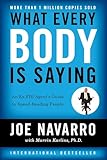
Where to Start: What Every Body Is Saying (2008)
Navarro spent twenty-five years reading body language for the FBI — in interviews, interrogations, and counter-intelligence operations — before writing What Every Body Is Saying, a practical manual grounded in field experience rather than academic theory. What Every Body Is Saying distinguishes itself from the body language genre it inhabits by its explanatory framework: rather than cataloguing gestures and their supposed meanings in the manner of pop psychology, Navarro grounds everything in the limbic system — the brain’s ancient, emotionally reactive system that generates nonverbal behaviour as an involuntary response to comfort or discomfort.
The limbic system framework is the book’s central contribution. The limbic brain responds to perceived threats and opportunities before the cortex (conscious thinking) has processed what is happening; the nonverbal responses it generates — the freeze, flight, or fight reactions, the comfort-seeking and pacifying behaviours — are therefore more reliable indicators of genuine emotional state than consciously controlled speech or facial expressions. This is why body language works at all: we simply cannot monitor and control all of the signals our bodies generate, particularly under conditions of stress or strong emotion.
The feet-first approach is Navarro’s most practically distinctive contribution and the one that most surprises general readers. He argues that the feet and legs are the most honest and least consciously monitored part of the body: people pay attention to their facial expressions, and they may manage their hand gestures, but few people think about what their feet are doing. Yet feet consistently point toward what we want to approach and away from what we want to avoid. The person whose feet are pointing toward the door is ready to leave regardless of what their face is doing; the person whose feet point toward another person in a group conversation is more engaged with that person than their gaze suggests.
The deception detection section is where the book is most useful as a corrective to popular misconceptions. Navarro is explicit: there is no single nonverbal tell that reliably indicates deception. Liars do not consistently touch their nose or break eye contact; they may do the opposite. What can be identified is stress and discomfort — the physiological signatures of a brain working harder than normal to manage what it is communicating — and discomfort in context is meaningful, though it is always the cluster of signals, not the individual cue, that matters.
Why What Every Body Is Saying Is the Ideal First Book
For a reader new to Joe Navarro, What Every Body Is Saying is the ideal first book because it is his most popular work and the fullest expression of his distinctive gift, the teaching of body language and nonverbal communication drawn from his career as an FBI agent. What Every Body Is Saying is Navarro’s accessible guide to reading nonverbal cues, explaining how to observe and interpret the body language that reveals what people are really thinking and feeling. As an entry point it is ideal, for it is his best-known book and a clear, practical introduction to his expertise in nonverbal behavior. It welcomes the newcomer with its fascinating subject, its practical guidance, and its accessible style grounded in real experience, drawing the reader into the art of reading body language. It is his most famous work and the one that best represents his gifts, so the new reader encounters Navarro at his most characteristic. For the newcomer interested in body language, then, What Every Body Is Saying is the natural and ideal starting point.
What to Expect as a New Reader
As a new reader, you can expect What Every Body Is Saying to be a fascinating, practical, and accessible guide to body language and nonverbal communication. You can expect a focus on nonverbal cues, for Navarro explains how to observe and interpret the body language, gestures, and expressions that reveal what people are really thinking and feeling. You can expect expertise grounded in experience, for Navarro draws on his long career as an FBI agent skilled in reading behavior. You can expect practical guidance, for the book teaches the reader how to observe and interpret nonverbal signals in everyday life. You can expect an accessible, engaging style with concrete examples. You can expect insight into how the body communicates honestly even when words do not. You should approach the subject thoughtfully, recognizing that reading body language is an art of observation rather than an exact science. Expect, in short, a fascinating, practical, and accessible guide to body language, a fine introduction to Navarro’s expertise.
Going Deeper After Your First Book
Once What Every Body Is Saying has introduced you to Navarro’s expertise, the reader who wishes to go deeper can explore his other books, which continue his teaching of nonverbal communication and apply it to further contexts. His other works extend his guidance to areas such as detecting deception, understanding difficult and dangerous personalities, and using body language in particular situations, drawing on the same observational skill and experience. Reading these after What Every Body Is Saying deepens your engagement with Navarro’s distinctive expertise in nonverbal behavior. His characteristic approach runs through his work, and the reader who has found What Every Body Is Saying useful will find it extended and applied. The reader can also approach the wider literature on body language and communication with a more discerning eye. Building your reading journey through Navarro is a matter of following his expertise from What Every Body Is Saying into his other books. The reader who begins here and continues will find a leading popular expert on reading body language.
Reading Joe Navarro
What Every Body Is Saying is Navarro’s essential book. Dangerous Personalities (2014) is the natural follow-on for readers who want to apply the same framework to identifying high-risk character types.
For the full Joe Navarro bibliography, reviews, and biography, visit the Joe Navarro author page on Editors Reads.
Affiliate disclosure: Links to Amazon on this page are affiliate links. We earn a small commission at no extra cost to you.
Frequently Asked Questions
Where should I start with Joe Navarro?
What Every Body Is Saying: An Ex-FBI Agent's Guide to Speed-Reading People (2008) is Navarro's essential book — the most credible and practically detailed treatment of nonverbal communication available to general readers. Navarro spent 25 years as an FBI special agent and supervisor specialising in counterintelligence and behavioural assessment, and the book represents the accumulated expertise of thousands of hours reading suspects and subjects in high-stakes interrogations. His framework is grounded in the limbic system rather than folk wisdom: nonverbal behaviours are reliable because they are driven by the brain's ancient comfort and discomfort responses, which operate before conscious control.
What is What Every Body Is Saying about?
The book is organised around the body from feet to face — starting with the most reliable and least consciously controlled signals and working toward the most easily manipulated. Navarro argues that the feet and legs are the most honest part of the body: people monitor their facial expressions and even their torso orientation, but few people think about what their feet are doing, and feet consistently point toward what we want (approach) or away from what we do not (avoidance). The primary analytical framework is comfort versus discomfort: the limbic system responds to perceived threats and opportunities with consistent, observable signals, and learning to read those signals is the book's practical contribution. The deception detection sections are more nuanced than popular culture suggests — Navarro is careful to avoid claiming that single signals indicate lying.
How reliable is the body language knowledge in this book?
More reliable than most body language books, for specific reasons. Navarro's framework is grounded in neuroscience (limbic system responses) rather than folk wisdom, his experience comes from high-stakes professional application rather than casual observation, and he is scrupulous about not overstating the reliability of individual signals. He consistently emphasises baseline behaviour (what is normal for this specific person in this context) over universal rules, acknowledges cultural variation, and warns against the pop psychology error of treating single cues as definitive. The deception detection sections in particular are careful to explain that there is no single tell — clusters of signals in context are what matter.
What should I read after What Every Body Is Saying?
After What Every Body Is Saying, Navarro's Dangerous Personalities (2014) applies the same nonverbal and behavioural framework specifically to identifying dangerous character types — narcissists, predators, unstable personalities. Paul Ekman's Emotions Revealed covers facial expressions with the depth that Navarro's chapter on the face approaches but does not fully develop. Malcolm Gladwell's Talking to Strangers covers the misreading of strangers at scale — a useful counterpoint to Navarro's more optimistic assessment of what careful observation can achieve. For the underlying neuroscience, Daniel Goleman's Emotional Intelligence covers the affective processes that Navarro's limbic system framework draws on.