Where to Start with Jon Krakauer: A Reading Guide
Where to start with Jon Krakauer — whether to begin with Into Thin Air, Into the Wild, or Under the Banner of Heaven. A complete reading guide.
By Natalie Osei

Jon Krakauer (born 1954) is the American journalist and mountaineer whose narrative non-fiction — particularly Into Thin Air (1997) and Into the Wild (1996) — established him as one of the finest adventure writers of his generation. His books combine firsthand reporting, meticulous research, and psychological depth to produce accounts of extreme experience — mountaineering disasters, wilderness deaths, religious violence — that function as both journalism and literary non-fiction. Into Thin Air was a number-one New York Times bestseller for over two years; Into the Wild remained on the bestseller list for three years and was adapted into a Sean Penn film. Krakauer is a contributing editor at Outside magazine.
Where to Start: Into Thin Air (1997)
The essential Krakauer — and one of the great pieces of adventure journalism in the English language. On 10 May 1996, a violent storm struck the upper slopes of Mount Everest as four guided expeditions were descending from the summit. Eight climbers died; dozens more were stranded for hours in whiteout conditions at extreme altitude. Krakauer was there as an Outside magazine journalist, embedded with Adventure Consultants, the expedition led by Rob Hall — one of the most experienced high-altitude guides in the world, who did not survive.
Into Thin Air is told from inside the disaster. Krakauer writes with the compressed, pressurised prose of someone who has been genuinely afraid; the account of the storm’s onset, the disintegration of communication between the teams, and the deaths of guides who were supposed to be the most competent people on the mountain has a terrible momentum. But the book is more than a disaster narrative — it is an inquiry into the commercialisation of Everest (wealthy clients paying $65,000 for guided summit attempts regardless of their actual climbing ability), the psychology of extreme risk, and the way human beings make catastrophically bad decisions at altitude.
Into the Wild (1996)
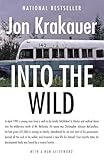
Krakauer’s account of Christopher McCandless — a 24-year-old who abandoned his comfortable life, burned his money, and disappeared into Alaska. McCandless was found dead in an abandoned bus on the Stampede Trail in September 1992, having survived for 113 days before dying of starvation (or, in a contested alternate theory, accidental poisoning from wild potato seeds). Krakauer reconstructed his journey from the evidence McCandless left behind and the people who met him on the way.
The book is simultaneously a portrait of idealism and a careful autopsy of romanticism. McCandless’s vision of the wilderness as a space of pure individual freedom — drawn from Thoreau, Tolstoy, and Jack London — runs into the indifference of the Alaskan landscape with fatal consequences. Krakauer treats his subject with sympathy without shielding him from criticism; the reader can find McCandless inspiring, reckless, or both simultaneously.
Under the Banner of Heaven (2003)
Krakauer’s most ambitious work — alternating between a true-crime investigation (the 1984 murders of Brenda Lafferty and her infant daughter by brothers Ron and Dan Lafferty, committed in the name of divine commandment) and a history of Mormonism from Joseph Smith’s visions to contemporary fundamentalist polygamous communities. Krakauer is interested in how religious certainty — the absolute conviction that God has spoken and commanded action — relates to violence. His most overtly journalistic and most intellectually contentious work; essential for readers interested in American religion or true-crime investigation with a historical dimension.
Why Into Thin Air Is the Ideal First Book
For a reader new to Jon Krakauer, Into Thin Air is the ideal first book because it is among his most gripping and acclaimed works and a fine expression of his distinctive gifts, the immersive reporting, the propulsive narrative, and the unflinching honesty. Into Thin Air is Krakauer’s firsthand account of the 1996 Mount Everest disaster, which he survived, a harrowing and meticulous reconstruction of how a climbing expedition turned deadly. As an entry point it is ideal, for it is one of his best-known books and a perfect example of his gripping, deeply reported narrative nonfiction. It welcomes the newcomer with its harrowing story, its immersive reporting, and its propulsive momentum, drawing the reader into his distinctive vision. It is among his major works and a fine representation of his gifts, so the new reader encounters Krakauer at his most characteristic. For the newcomer, then, Into Thin Air is the natural and ideal starting point.
What to Expect as a New Reader
As a new reader, you can expect Into Thin Air to be a harrowing, immersive, and propulsive work of narrative nonfiction. You can expect a firsthand account, for Krakauer was present on Everest during the 1996 disaster and survived it, lending the book intense immediacy. You can expect immersive reporting, for Krakauer reconstructs events with meticulous detail and reporting. You can expect propulsive narrative, for the book reads with the tension and momentum of a thriller. You can expect unflinching honesty, for Krakauer confronts hard questions about decisions, responsibility, and his own role. You can expect insight into mountaineering, risk, and human behavior under extreme conditions. You can expect a gripping, sobering, and emotionally powerful read. You should be prepared for tragic events. Expect, in short, a harrowing, immersive, and propulsive work of narrative nonfiction, a gripping introduction to Krakauer’s gifts.
Going Deeper After Your First Book
Once Into Thin Air has introduced you to Krakauer’s gifts, the reader who wishes to go deeper can explore his other books, which apply the same immersive reporting, propulsive narrative, and unflinching honesty to a range of compelling subjects. His acclaimed book on a young man who walked into the Alaskan wilderness is a haunting investigation of idealism and risk, while his other works examine extremism, faith and violence, and questions of justice, each marked by his deep reporting and gripping storytelling. Reading these after Into Thin Air deepens your appreciation of Krakauer’s distinctive gifts, the immersive reporting, the propulsive narrative, and the unflinching honesty. His characteristic strengths run through his work, and the reader gripped by Into Thin Air will find them across his books. Building your reading journey through Krakauer is a matter of following his nonfiction from Into Thin Air into his other books. The reader who begins here and continues will find one of the finest writers of immersive, deeply reported narrative nonfiction.
Reading Jon Krakauer
Begin with Into Thin Air for the most concentrated version of Krakauer’s method — firsthand reporting, psychological acuity, and extraordinary narrative drive. Read Into the Wild for the more meditative side of his work. Under the Banner of Heaven is best read third, as it requires more patience and historical background but delivers a richer analysis of American religious extremism.
Frequently Asked Questions
Where should I start with Jon Krakauer?
Into Thin Air (1997) is the most gripping starting point — Krakauer's firsthand account of the May 1996 Everest disaster, in which eight climbers died during a single storm, including some of the most experienced high-altitude mountaineers in the world. Krakauer was on the mountain as a journalist for Outside magazine; his account of what happened — told from inside one of the guided expeditions that was destroyed — is both an extraordinary piece of adventure journalism and a meditation on hubris, commercialisation, and the psychology of extreme risk. Into the Wild is the alternative for readers more interested in character study than mountaineering.
What is Into the Wild about?
Into the Wild (1996) is Krakauer's account of Christopher McCandless, a 24-year-old who gave away his savings, burned his money, abandoned his car, and disappeared into the Alaskan wilderness in 1992 — where his body was found four months later. Krakauer reconstructed McCandless's journey from his journal, postcards, letters, and the accounts of people who met him. The book is a portrait of idealism and recklessness, of the seductive call of the American wilderness, and of the gap between romantic imagination and survival reality. Krakauer's own near-death climbing experience on Devils Thumb is interwoven with McCandless's story.
What is Under the Banner of Heaven about?
Under the Banner of Heaven (2003) is Krakauer's investigation into the 1984 murder of a Mormon woman and her infant daughter by her brothers-in-law, members of a fundamentalist Mormon sect who believed God commanded the killing. The book alternates between the murder investigation and a history of Mormonism — from Joseph Smith's visions to polygamous fundamentalist communities operating outside mainstream LDS today. It is Krakauer's most controversial book; the LDS Church formally objected to its characterisation of Mormon history. His most journalism-inflected work.
Is Krakauer's writing reliable?
Krakauer's account of the 1996 Everest disaster in Into Thin Air was disputed by several other climbers on the mountain, particularly Anatoli Boukreev, whose own account (The Climb) challenged Krakauer's characterisation of Boukreev's actions during the storm. Krakauer has maintained his account and acknowledged some minor factual errors. His work is rigorously reported and his reconstruction of events thorough, but — particularly in Into Thin Air — the perspective is personal and some judgements remain contested. Under the Banner of Heaven has been criticised by Mormon scholars for selective use of historical sources.