Where to Start with Mary Stewart: A Reading Guide
Where to start with Mary Stewart — whether to begin with The Crystal Cave or The Hollow Hills. A complete reading guide to the British Arthurian novelist.

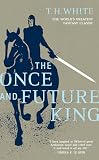
Mary Stewart (1916–2014) was the English novelist whose Merlin trilogy — The Crystal Cave (1970), The Hollow Hills (1973), and The Last Enchantment (1979) — became the most widely read Arthurian fiction of the twentieth century after T.H. White’s The Once and Future King, transforming Merlin from a supporting character into a fully realised protagonist and grounding the Arthurian legends in the specific historical reality of fifth-century post-Roman Britain. Stewart was also highly regarded for her romantic suspense novels — Nine Coaches Waiting, My Brother Michael — that were enormously popular in the 1950s and 1960s.
Where to Start: The Crystal Cave (1970)
The essential Stewart — and one of the great works of Arthurian fiction. The novel’s narrator is Myrddin Emrys — Merlin — an illegitimate child of royal blood growing up in fifth-century Wales after the collapse of Roman order and the beginning of the Anglo-Saxon invasions. Merlin has, from childhood, the gift of sight: visions that come unbidden, prophecies he cannot always interpret, an inner knowing that separates him from the people around him.
Stewart’s approach to Merlin is rationalist rather than mystical. The magic he practises is real — he heals, he sees, he influences events — but the novel’s tone is one of a practical, intelligent man who understands engineering, medicine, and psychology better than those around him, and whose ‘gifts’ are mostly the application of superior knowledge to situations others treat as supernatural. He moves through the political landscape of fifth-century Britain — the rivalry between British princes, the threat of Saxon invasion, the competing claims to the high kingship — with a political intelligence that shapes events without quite controlling them.
The final third of the novel concerns the conception of Arthur — one of the most delicately handled pieces of mythological storytelling in English fiction. Stewart makes the central event of the Arthurian legend feel simultaneously historically plausible and genuinely momentous.
For readers interested in Arthurian legend, historical fiction, or simply exceptional narrative prose, The Crystal Cave is one of the finest novels in the genre.
The Hollow Hills (1973)
The direct sequel — Merlin’s guardianship of the young Arthur, from infancy through the drawing of the sword. Must be read after The Crystal Cave; the trilogy completes with The Last Enchantment (1979).
Why The Crystal Cave Is the Ideal First Book
For a reader new to Mary Stewart, The Crystal Cave is an ideal first book because it is the celebrated first volume of her acclaimed Arthurian sequence and a fine expression of her gifts, the vivid storytelling, the evocative historical setting, and the imaginative power that made her a beloved author. The Crystal Cave tells the story of Merlin’s early life, reimagining the Arthurian legend with historical richness, narrative power, and a grounded, believable vision of the world from which the Arthur legend arises. As an entry point, it offers a full expression of Stewart’s gifts in the genre for which she is most celebrated, the immersive historical setting, the compelling narrative, and the imaginative reimagining of legend. It welcomes the newcomer with its vivid storytelling, its richly evoked world, and its compelling reimagining of a beloved legend, drawing the reader into the Arthurian world. It is the beginning of her acclaimed Arthurian sequence and a fine representation of her gifts, so that the new reader begins where her most celebrated story begins. For the newcomer, then, The Crystal Cave is an excellent starting point.
What to Expect as a New Reader
As a new reader, you can expect The Crystal Cave to be a vivid, immersive, and imaginatively rich reimagining of the Arthurian legend, told with narrative power and a grounded historical setting. You can expect a compelling reimagining of legend, for the novel tells the story of Merlin’s early life, bringing the Arthurian world to life with historical richness and imaginative power. You can expect a vivid and immersive historical setting, for Stewart grounds her reimagining of the legend in a believable, richly evoked vision of its world, lending the Arthurian story a new realism and depth. You can expect narrative power and vivid storytelling, for Stewart was a gifted and popular storyteller who draws the reader into her world and her story. You can expect the imaginative pleasure of a beloved legend reimagined with depth and conviction. Expect, in short, a vivid, immersive, and imaginatively rich reimagining of the Arthurian legend, a compelling introduction to Stewart’s celebrated Arthurian sequence.
Going Deeper After Your First Book
Once The Crystal Cave has drawn you into Stewart’s Arthurian world, the natural next step is to continue her acclaimed Arthurian sequence, following the story through its subsequent volumes as her reimagining of the legend unfolds. The sequence is best read in order, for the story of Merlin and the Arthurian world develops across the books, deepening the characters and the world that the first volume establishes. Reading the sequence in order allows the story and the reimagined legend to reach their full development. Beyond the Arthurian books, the reader who has enjoyed Stewart’s storytelling can explore her other fiction, including the romantic suspense novels for which she was also celebrated, marked by the same vivid storytelling and evocative settings. Her characteristic gifts, the vivid storytelling, the evocative settings, and the imaginative power, run through her work, and the reader who has enjoyed The Crystal Cave will find them across her fiction. Building your reading journey through Stewart’s work is a matter of continuing her Arthurian sequence and exploring her wider fiction. The reader who begins with The Crystal Cave will find a gifted and beloved storyteller.
Reading Mary Stewart
Begin with The Crystal Cave — it is the only starting point. Read The Hollow Hills directly after; the trilogy forms a continuous narrative of Merlin’s life and purpose.
For the full Mary Stewart bibliography, reviews, and biography, visit the Mary Stewart author page on Editors Reads.
Affiliate disclosure: Links to Amazon on this page are affiliate links. We earn a small commission at no extra cost to you.
Frequently Asked Questions
Where should I start with Mary Stewart?
The Crystal Cave (1970) is the only starting point — the first novel in Stewart's Merlin trilogy, told from Merlin's perspective from his illegitimate childhood in fifth-century Britain through the events that lead to the conception of Arthur. The most important Arthurian novel of the twentieth century alongside T.H. White's The Once and Future King; must be read before The Hollow Hills, which continues Merlin's story.
What is The Crystal Cave about?
The Crystal Cave follows Myrddin Emrys (Merlin) from his childhood as an illegitimate prince in fifth-century Wales through his discovery of his gift for vision and prophecy, his training under the magician Galapas, his years in Brittany and Rome, and his return to Britain to serve the high king Ambrosius and eventually Uther Pendragon. Stewart's Merlin is rational and political rather than mystically supernatural — his 'magic' is largely insight, knowledge of engineering, and the ability to read people and situations — and the fifth-century world he inhabits is rendered with historical precision.
What is The Hollow Hills about?
The Hollow Hills (1973) is the direct sequel — Merlin's guardianship of the infant Arthur, hidden from those who would harm him, and the growing boy's training and preparation for his destiny. The novel covers Arthur's childhood and young manhood up to his drawing of the sword Excalibur. Stewart continues the rationalist approach — the sword in the stone has a historical explanation — while building genuine mythological grandeur.
How does Stewart's Merlin compare to other Arthurian retellings?
Stewart's trilogy is distinguished from other Arthurian retellings by its historical grounding (fifth-century post-Roman Britain rather than medieval fantasy), its first-person narration from Merlin's perspective (making him the protagonist rather than a supporting character), and its rationalist approach to magic (explaining supernatural elements through natural knowledge and insight). T.H. White's The Once and Future King is the other major twentieth-century Arthurian retelling; White is more comic and more interested in anachronism; Stewart is more historically serious.