Where to Start with T.H. White: A Reading Guide
Where to start with T.H. White — how to approach The Once and Future King, his four-part retelling of the Arthurian legend from Merlin's backward-living education of young Arthur to the tragic collapse of Camelot. A complete reading guide.
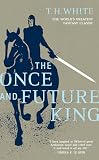
T.H. White (1906–1964) was a British author born in Bombay, educated at Cambridge, and for most of his adult life a reclusive eccentric living in remote corners of England and Ireland, hunting, hawking, and writing. The Once and Future King — the collected four-part Arthurian retelling that emerged from his wartime isolation — is the work for which he is remembered. The first book, The Sword in the Stone, appeared in 1938; the complete four-book version was published in 1958. The novel became the basis for the Lerner and Loewe musical Camelot (1960) and, through it, for the mythology of the Kennedy administration — a connection White found flattering and somewhat baffling.
Where to Start: The Once and Future King (1958)
The essential T.H. White — and the twentieth century’s definitive version of the Arthurian legend. The Once and Future King opens not with the tragedy its title implies but with comedy: a boy called Wart living in a minor English castle, fostered with a knight’s family, largely ignored by adults, curious about everything. The tone is immediately anachronistic and deliberately so — this is a medieval England as White imagined it, touched throughout by his own twentieth-century mind and anxieties, and inhabited by a Merlin who lives backward through time, already knowing what the future holds and unable to change any of it.
Merlin’s education of young Arthur is the first book’s heart and its greatest invention. His method is transformation: he turns Wart into a series of animals, each experience designed to teach what books cannot convey. As a perch in the castle moat, Wart encounters the cold logic of absolute power — the largest fish consumes everything it can, because power without restraint is simply appetite. As an ant in a colony, he experiences a society organised entirely around efficiency and martial purpose, with no room for the individual thought that makes people human. As a wild goose, he migrates with birds who have no concept of national borders — they travel across the same land humans fight over, and the land does not belong to any of them. White is making his argument about power and justice through metamorphosis, and the device works because the animal sequences are genuinely and precisely imagined as natural history as well as political allegory.
When Wart pulls the sword from the stone, he does it not heroically but by accident — searching for a sword for Kay before a tournament, not knowing what the stone is. He tries it because no one else is around. White’s version of this central Arthurian moment is characteristically deflating and characteristically right: the great kings are not always people who seek greatness, and the moments that change history rarely announce themselves.
The novel’s emotional range is one of its most remarkable qualities. The first book is genuinely and consistently funny — White’s comic timing and his affection for Wart and Merlin produce passages of pure delight. The later books deepen steadily into melancholy as Arthur’s great idea — the Round Table, the attempt to harness knightly violence in the service of justice rather than mere power — proves vulnerable to the human nature it was designed to redeem. Lancelot is White’s finest creation: the greatest knight in the world, who is great not despite his self-hatred but because of it, and who carries in himself the contradiction that will destroy the institution he embodies. His love for Guinevere is both the most human thing about him and the source of the sin that cracks the Round Table.
The final pages, in which an old Arthur talks through the night with a young page who will grow up to be Thomas Malory, are among the most moving in English literature. The Round Table is finished. The last battle is unavoidable. But the idea — the attempt, however imperfect, to make power serve justice — can be written down and remembered. White, writing in wartime, was making a claim about why idealism matters even when it fails.
Why The Once and Future King Is the Ideal First Book
For a reader new to T.H. White, The Once and Future King is the ideal first book because it is his masterpiece, a beloved classic of fantasy, and the fullest expression of his distinctive gifts, the warmth and humor, the deep humanity, and the rich, thoughtful retelling of the legend of King Arthur. The Once and Future King retells the story of Arthur, from his boyhood as the young Wart tutored by Merlin to his rise, his reign, and the tragedy that brings it down, in a rich, humane, and moving epic. As an entry point it is both natural and essential, for it is his defining work and a perfect example of his warm, humane, thoughtful fiction. It welcomes the newcomer with its warmth and humor, its deep humanity, and its rich storytelling, drawing the reader into his distinctive vision. It is his masterpiece and the one that best represents his gifts, so the new reader encounters White at his finest. For the newcomer, then, The Once and Future King is the natural and ideal starting point.
What to Expect as a New Reader
As a new reader, you can expect The Once and Future King to be a warm, humane, and richly thoughtful retelling of the legend of King Arthur. You can expect warmth and humor, especially in the early sections following the young Wart and his tutor Merlin, which are full of charm and comedy. You can expect deep humanity, for White renders his characters with warmth, sympathy, and psychological depth. You can expect a rich retelling, for the book follows Arthur from boyhood through his rise, his reign, and the tragedy that brings it down. You can expect thoughtful themes, for White reflects on power, justice, war, and human nature. You can expect a blend of comedy, magic, romance, and tragedy. You can expect a moving, beloved, and substantial epic. Expect, in short, a warm, humane, and richly thoughtful retelling of the Arthurian legend, a superb introduction to White’s gifts.
Going Deeper After Your First Book
Once The Once and Future King has introduced you to White’s gifts, the reader who wishes to go deeper can explore his other works and the wider world of Arthurian legend to which his masterpiece belongs. The first part of The Once and Future King, the beloved story of the young Wart, is often read on its own and is a delight, while White’s other novels and writings reveal further dimensions of his warm, thoughtful, and humane imagination, and a related later book extends the Arthurian story. The reader can also explore the rich tradition of Arthurian literature, from the medieval sources White drew on to other modern retellings. Reading more widely deepens your appreciation of White’s distinctive gifts, the warmth and humor, the deep humanity, and the rich, thoughtful storytelling. Building your reading journey through White is a matter of following him from The Once and Future King into his other work and the wider Arthurian tradition. The reader who begins here will have encountered one of the warmest and most humane retellings of the Arthurian legend.
Reading T.H. White
The Once and Future King is White’s essential and defining work. It stands alone. The four books are best read as a single novel, but The Sword in the Stone (the first part) is worth reading independently if you want to sample before committing to the full length.
For the full T.H. White bibliography, reviews, and biography, visit the T.H. White author page on Editors Reads.
Affiliate disclosure: Links to Amazon on this page are affiliate links. We earn a small commission at no extra cost to you.
Frequently Asked Questions
Where should I start with T.H. White?
The Once and Future King (published in full in 1958, though the first part appeared as The Sword in the Stone in 1938) is White's essential work — a four-part retelling of the Arthurian legend that follows Arthur from his education by the backward-living wizard Merlin through the founding of the Round Table, the love triangle of Lancelot, Guinevere, and Arthur, and the final destruction of Camelot. White wrote it against the backdrop of World War II, and his version of Arthur — who dreams of replacing Might Makes Right with Might for Right — is unmistakably a twentieth-century figure wrestling with the same questions White himself was.
What is The Once and Future King about?
The four books trace the arc of idealism: the first, The Sword in the Stone, is comic and inventive, following Merlin's education of young Arthur through magical transformations into various animals, each teaching something a king must understand. The later books become progressively darker as Arthur's great idea — that force can be made to serve justice — proves vulnerable to human nature: the passion of Lancelot and Guinevere, the legalism of Mordred, the limitations of the institution Arthur built. By the end, on the eve of his final battle, Arthur reflects on whether the attempt was worth making. White's answer is: yes, because ideas outlast the people who hold them.
Is The Once and Future King primarily for fantasy readers?
It is fantasy by classification but literary fiction by ambition and achievement. Readers who primarily want epic fantasy action may find it too discursive; White interrupts the narrative with digressions on hawking, medieval political philosophy, and his own anxieties about war and human violence. Readers who approach it as the twentieth century's most humanely wise meditation on power, justice, and the impossible gap between noble ideas and human reality will find it one of the most rewarding books in the language. It is most likely to be loved by readers who also love Jonathan Strange & Mr Norrell, Piranesi, or any fantasy that takes its ideas as seriously as its world-building.
What should I read after The Once and Future King?
After The Once and Future King, Thomas Malory's Le Morte d'Arthur is the medieval source White was working from — and which the young Thomas Malory character in the final book is destined to write. For modern Arthurian fiction, Rosemary Sutcliff's The Sword at Sunset provides the most historically grounded twentieth-century retelling. Mary Stewart's Merlin trilogy (The Crystal Cave, The Hollow Hills, The Last Enchantment) covers Merlin's perspective on the same events with great narrative skill.


