Where to Start with Nikolai Gogol: A Reading Guide
Where to start with Nikolai Gogol — how to approach Dead Souls, the great comic novel of Russian literature following Chichikov's scheme to buy dead serfs as collateral through a gallery of provincial landowners who are each unforgettable. A complete reading guide.
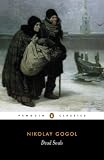
Nikolai Gogol (1809–1852) was a Russian writer born in Ukraine who transformed Russian prose fiction in a career of barely two decades. He is the author of the short stories collected in Evenings on a Farm Near Dikanka and Mirgorod, the Petersburg tales including The Overcoat and The Nose, the play The Government Inspector (1836), and Dead Souls (1842). Dostoevsky’s famous remark that all Russian literature “came out from under Gogol’s Overcoat” captures the magnitude of his influence. He died in 1852 after burning the manuscript of the second part of Dead Souls, a loss that has haunted Russian literature ever since.
Where to Start: Dead Souls (1842)
Gogol conceived Dead Souls as the first part of a redemptive national epic — a Russian Divine Comedy — but what he completed before burning the rest is a comic masterpiece whose portrait of the bureaucratic swindler Chichikov needs no redemption arc. Dead Souls opens with Chichikov arriving in a provincial town with a plan: he will visit local landowners and purchase their dead serfs — the serfs who died between censuses but remain on paper as taxable property. With the registration records in hand, he can mortgage these nominal souls for ready cash, a scheme that is legally murky and practically comic in its brazenness.
The gallery of landowners is the novel’s central achievement. Gogol structures the journey as a series of visits, each to a landowner who embodies a single excess pushed to its satirical limit. Manilov is sentimental idleness made flesh — a man of vague goodwill and no energy who has spent years planning projects he will never execute. Nozdryov is reckless energy with no internal governor — a boor, a liar, and a gambler who cannot be controlled and cannot be offended. Sobakevich is brutal materialism made architectural: his house, his furniture, his conversation are all constructed on the same unyielding practical principle. Plyushkin — the hoarder — is the most disturbing: a man who began as a prosperous and careful manager and has been reduced by miserliness and loss to a figure barely distinguishable from a beggar, living amidst the accumulated garbage of decades. He is the chapter readers remember decades after finishing the novel.
The digressive narrator is Gogol’s formal invention and the source of the book’s peculiar register. The narrator addresses Russia directly in lyrical passages of astonishing beauty — the famous troika passage, where Russia is compared to a carriage racing through the night while the world watches and cannot answer where it is going — and then returns to the comic surface as though nothing happened. The tonal oscillation, between belly-laugh comedy and national anguish, is what makes Dead Souls unlike anything else in the tradition.
The incompleteness is real but not diminishing. Part I is a complete journey; the gallery has been completed; Chichikov’s scheme has been exposed and he has fled. What was lost in the fire was the redemption Gogol could not find the language for.
Why Dead Souls Is the Ideal First Book
For a reader new to Nikolai Gogol, Dead Souls is the ideal first book because it is his masterpiece and the fullest expression of his distinctive gifts, the brilliant satire, the comic genius, and the vivid, grotesque portrait of human folly. Dead Souls follows the schemer Chichikov as he travels across provincial Russia buying up dead serfs who are still listed as alive on the census, in a darkly comic and satirical journey that paints an unforgettable picture of Russian society and human vice. As an entry point it is ideal, for it is his greatest work and a perfect example of his satirical, comic genius. It welcomes the newcomer with its outrageous premise, its memorable characters, and its rich comedy, drawing the reader into the world of one of the great Russian writers. It is his masterpiece and the one that best represents his gifts, so the new reader encounters Gogol at his finest. For the newcomer, then, Dead Souls is the natural and ideal starting point.
What to Expect as a New Reader
As a new reader, you can expect Dead Souls to be a brilliant, darkly comic, and richly satirical novel. You can expect an outrageous premise, for the novel follows a schemer who travels across Russia buying up dead serfs who are still officially listed as alive, a strange and revealing scheme. You can expect satire, for Gogol skewers the greed, vanity, corruption, and absurdity of provincial Russian society and its landowners. You can expect comic genius, for Gogol is one of the great comic writers, with a gift for the grotesque, the absurd, and the unforgettable character. You can expect vivid, exaggerated portraits, for the people Chichikov meets are brilliant caricatures of human folly and vice. You can expect rich, digressive, exuberant prose. You should know the work is famously unfinished, ending mid-journey. Expect, in short, a brilliant, darkly comic, and richly satirical novel, a superb introduction to Gogol’s gifts.
Going Deeper After Your First Book
Once Dead Souls has introduced you to Gogol’s gifts, the reader who wishes to go deeper can explore his other works, especially his celebrated short stories and his great comic play, which continue his satire, his comic genius, and his gift for the grotesque and the absurd. His famous stories, including the beloved and influential tale of a poor clerk and his overcoat, and his other Petersburg tales, are masterpieces of comedy, pathos, and the fantastic, while his great play satirizes corruption with brilliant comic energy. Reading these after Dead Souls deepens your appreciation of Gogol’s distinctive gifts, the satire, the comic genius, and the vivid portrayal of human folly. His characteristic qualities run through his work. Building your reading journey through Gogol is a matter of following his comedy and satire from Dead Souls into his stories and his play. The reader who begins here and continues will encounter one of the great comic and satirical geniuses of Russian literature.
Reading Nikolai Gogol
Dead Souls is the essential Gogol and the place to start. The Overcoat and The Nose are the essential shorter fiction — the Petersburg tales that made Gogol’s influence on Dostoevsky and the subsequent tradition possible.
For the full Nikolai Gogol bibliography, reviews, and biography, visit the Nikolai Gogol author page on Editors Reads.
Affiliate disclosure: Links to Amazon on this page are affiliate links. We earn a small commission at no extra cost to you.
Frequently Asked Questions
Where should I start with Nikolai Gogol?
Dead Souls (1842) is Gogol's essential novel and one of the great comic achievements in world literature — the story of Chichikov, a mysterious and affable provincial official who travels through rural Russia purchasing the registration records of serfs who have died since the last census. These 'dead souls' can be used as collateral for loans; the scheme is comic, the execution is digressive and lyrical, and the gallery of landowners Chichikov visits — Manilov (sentimental and useless), Nozdryov (reckless and unscrupulous), Sobakevich (brutal and material), Plyushkin (a hoarder reduced to rags amidst accumulated junk) — is among the most vivid character gallery in any literature.
What is Dead Souls about?
Dead Souls follows Chichikov as he visits landowners in a unnamed Russian provincial town, purchasing their dead serfs' registration records. The scheme is legally questionable but not obviously illegal — the records will make Chichikov appear to own hundreds of serfs, enabling him to mortgage them for cash before the next census exposes the fraud. The surface comedy is generated by the negotiations: each landowner responds to the unusual request according to their specific character, and the portraits that emerge are satirical exaggerations of human types that Gogol found in provincial Russia. The deeper comedy — and the deeper anguish — is the suggestion that the 'dead souls' of the title are the landowners themselves, the bureaucrats, the entire social order: a Russia populated by the spiritually and morally dormant.
Why is Dead Souls incomplete?
Gogol conceived Dead Souls as the first part of a Russian Divine Comedy — Chichikov's journey through vice-ridden provincial Russia representing the Inferno, with subsequent volumes covering Purgatorio and Paradiso. He worked on Part II for many years but burned his manuscript nine days before his death in 1852, reportedly in a state of religious crisis. Fragments of Part II survived and are included in most editions, but they are clearly unfinished. The novel exists as a complete first part: Chichikov's journey through the comic gallery of Russian provincial life is self-contained and fully achieved. The absence of the subsequent volumes is a loss, but what survives is a masterpiece.
What should I read after Dead Souls?
After Dead Souls, Gogol's shorter fiction — The Overcoat, The Nose, and the story collection Evenings on a Farm Near Dikanka — covers his full range: the dark Petersburg tales that influenced Dostoevsky, and the Ukrainian folk tales that gave him his start. Ivan Goncharov's Oblomov is the great companion piece in the Russian comic tradition — the portrait of a man who cannot get out of bed is the opposite of Chichikov's restless schemes but equally devastating. For readers who want to continue with the provincial Russia that Dead Souls maps, Turgenev's Fathers and Sons and the short stories of Chekhov complete the picture.


