Where to Start with N.K. Jemisin: A Reading Guide
Where to start with N.K. Jemisin — whether to begin with The Fifth Season or another entry point. A complete reading guide to the three-time Hugo Award winner.
N.K. Jemisin (born 1972) is the American speculative fiction novelist who — with the Broken Earth trilogy (2015–2017) — became the first author in Hugo Award history to win Best Novel in three consecutive years, and the first African American author to win the Hugo for Best Novel. Her work is distinguished by formal innovation (second-person narration, fragmented timelines), rigorous world-building, and a sustained engagement with systemic oppression — the mechanisms by which societies control and exploit those whose abilities they depend on — rendered through the structural possibilities of fantasy and science fiction. She is the most important American speculative fiction writer of her generation.
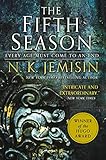
Where to Start: The Fifth Season (2015)
The essential Jemisin — and the beginning of one of the most formally and politically ambitious fantasy trilogies of the twenty-first century. The world is called the Stillness, an ironic name for a supercontinent of violent seismic instability. Every few centuries, a catastrophic event called a Fifth Season disrupts global climate and agriculture for years or decades, ending the current civilisation. Orogenes — people born with the ability to still seismic energy, to suppress earthquakes and volcanic eruptions with their minds — are essential to civilisation’s functioning and are enslaved, controlled, and stigmatised by it. They are marked at birth, taken from their families, trained in Fulcrum institutions, and deployed as tools.
The novel follows three storylines in different times and persons: Damaya, a child discovered to be an orogene and taken away; Syenite, a trained Fulcrum orogene on her first mission; and Essun, a woman in a small community who comes home to find her son murdered and her daughter taken by their father. The second-person narration for Essun’s strand is arresting from the first sentence — a formal choice that proves to have structural significance as the trilogy proceeds.
Jemisin’s world-building is unlike conventional fantasy world-building: geological, painstaking, and used as a metaphor for the structural mechanisms of oppression with unusual precision. The Fulcrum is not simply a villain’s institution; it is a plausible description of how a society manages a dangerous and necessary minority.
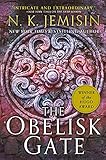
The Obelisk Gate (2016)
The second book — and the Hugo winner for 2017. The world-building deepens; the three timelines begin to converge; the scale of what is happening is clarified. Essun reaches the underground community of Castrima, a geode city, and must decide whether to trust it. The obelisks — enormous stone objects floating in the sky, whose purpose has been only partially understood — become central. The emotional and political complexity of the trilogy’s first book is extended and darkened.
The Stone Sky (2017)
The concluding volume — and the third consecutive Hugo winner. The three timelines, now understood in their relationship, approach their convergence. The trilogy’s central question — what does the world owe those it has exploited, and what do they owe back? — is answered with considerable moral seriousness. One of the most carefully constructed endings in recent fantasy.
Why The Fifth Season Is the Ideal First Book
For a reader new to N.K. Jemisin, The Fifth Season is the ideal first book because it is the opening of her groundbreaking, multiple-award-winning Broken Earth trilogy and the fullest expression of her distinctive gifts, the inventive world-building, the formal daring, and the profound engagement with oppression, power, and survival. The Fifth Season is set on a world wracked by catastrophic geological upheavals, following people with the power to control the earth, who are both essential and brutally oppressed, in a story of remarkable originality and force. As an entry point it is the natural place to begin, for it launches her most celebrated work and a perfect introduction to her ambitious, powerful fantasy. It welcomes the newcomer with its inventive world, its compelling characters, and its emotional and thematic depth, drawing the reader into one of the most acclaimed fantasy series of recent years. It is among her most famous works and the start of her finest sequence, so the new reader begins where her vision is most fully realized. For the newcomer, then, The Fifth Season is the natural and ideal starting point.
What to Expect as a New Reader
As a new reader, you can expect The Fifth Season to be an inventive, powerful, and emotionally and thematically rich work of fantasy. You can expect inventive world-building, for Jemisin imagines a world wracked by catastrophic geological upheavals, with a detailed history, geology, and society. You can expect formal daring, for the novel uses a bold and unconventional narrative structure, including a striking use of second-person narration. You can expect compelling characters, especially people with the power to control the earth, who are both essential to society and brutally oppressed by it. You can expect profound themes, for the novel engages oppression, power, survival, and resistance with depth and force. You can expect emotional power and a propulsive, gripping story. You should be prepared for some dark and harrowing material. Expect, in short, an inventive, powerful, and emotionally and thematically rich work of fantasy, a remarkable introduction to Jemisin’s gifts.
Going Deeper After Your First Book
Once The Fifth Season has drawn you into its world, the natural next step is to continue the Broken Earth trilogy, following the story through its subsequent volumes as the world, the characters, and the themes deepen toward a powerful conclusion. The trilogy is best read in order, for it tells a single, building story, and its later volumes were honored as highly as the first. Beyond it, the reader who has been gripped by Jemisin’s gifts can explore her other acclaimed work, including her earlier fantasy trilogies and her later novels of imagined cities and worlds, each marked by her inventive imagination and her thematic depth. Her characteristic strengths, the inventive world-building, the formal daring, and the engagement with power and oppression, run through her work. Building your reading journey through Jemisin is a matter of completing the Broken Earth trilogy and exploring her wider fiction. The reader who begins here and continues will find one of the most acclaimed and ambitious fantasy writers of her generation.
Reading N.K. Jemisin
The Broken Earth trilogy is best understood as a single novel published in three volumes. Its formal innovations — the second-person narration, the fragmented chronology, the delayed revelation of the timelines’ relationships — are all in service of a single argument about trauma, survival, and the ethics of complicity in unjust systems. Begin with The Fifth Season and read straight through; the trilogy rewards re-reading from the beginning once the structure is clear.
Frequently Asked Questions
Where should I start with N.K. Jemisin?
The Fifth Season (2015) is the only starting point — the first book of the Broken Earth trilogy and the novel that won Jemisin the first of her three consecutive Hugo Awards for Best Novel (an unprecedented achievement). Set on a single supercontinent called the Stillness, where apocalyptic seismic events called Fifth Seasons periodically end civilisation, it follows an orogene — a person with the ability to control seismic energy — through three interwoven storylines. The second-person narration is immediately arresting; the world-building is unlike anything else in contemporary fantasy.
What is the Broken Earth trilogy about?
The Broken Earth trilogy (The Fifth Season, The Obelisk Gate, The Stone Sky) is set on the Stillness, a geologically unstable supercontinent whose civilisation has developed an entire social and political infrastructure around managing seismic apocalypses called Fifth Seasons. Orogenes — people born with the ability to suppress or direct geological forces — are simultaneously essential to civilisation's survival and systematically oppressed and controlled by it. The trilogy follows Essun, an orogene who has spent her life hiding her ability, across the beginning of the worst Fifth Season in recorded history. The formal innovation — second-person narration, fragmented timelines — mirrors the fractured consciousness of a person who has survived the unsurvivable.
Is the second-person narration in The Fifth Season difficult to read?
Jemisin uses second person ('you do this, you feel that') for one of the three narrative strands — a deliberate formal choice that implicates the reader in the protagonist's experience and distances them simultaneously. Readers' responses vary: some find it arresting and affecting, others find it distancing. The narration becomes explicable as the trilogy progresses — the choice is revealed to have a specific in-world rationale. Most readers who find the opening chapters challenging report that the technique becomes natural within fifty pages. The formal innovation is inseparable from the novel's argument about trauma and survival; it is not an affectation.
Has N.K. Jemisin won the Hugo Award multiple times?
Jemisin won the Hugo Award for Best Novel in 2016, 2017, and 2018 — one for each book in the Broken Earth trilogy, an achievement that had never previously occurred in the award's sixty-year history. She is the first author to win the award in three consecutive years and the first African American author to win the Hugo for Best Novel. The Broken Earth trilogy is considered among the most significant fantasy works of the twenty-first century both for its literary achievement and for its engagement with systemic oppression and the ethics of survival under unjust systems.