Where to Start with Patti Smith: A Reading Guide
Where to start with Patti Smith — how to approach Just Kids, her National Book Award-winning memoir of her friendship with Robert Mapplethorpe in 1970s New York. A complete reading guide.
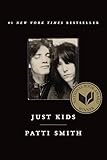
Patti Smith (born 1946) is an American singer, songwriter, visual artist, and poet who emerged from the New York underground arts scene in the early 1970s and became one of the founders of punk rock with her 1975 debut album Horses. Just Kids was published by Ecco Press in 2010 and won the National Book Award for Nonfiction. Smith had been working on the memoir for years before completing it; she has described it as the book she needed to write, a promise fulfilled to Robert Mapplethorpe, the photographer who died of AIDS in 1989, that she would tell the story of their early years together.
Where to Start: Just Kids (2010)
The essential Patti Smith — and one of the most beautifully written memoirs in recent American literature. Just Kids begins with Robert Mapplethorpe’s death and then moves immediately backward to 1967: Smith, twenty years old, newly arrived in New York after leaving New Jersey with no money, no plan, and the conviction — not yet evidence — that she was going to be an artist. The memoir covers the next two decades, but its heart is the first few years, when Smith and Mapplethorpe were almost entirely without resources and entirely committed to making work.
The Chelsea Hotel years are the memoir’s centre. Smith and Mapplethorpe moved into the Chelsea — then populated by artists, writers, musicians, and eccentrics at varying stages of success and ruin — and into a world that both of them were learning to understand. The memoir is full of brief portraits of the people who passed through: Janis Joplin, Jimi Hendrix, Allen Ginsberg, William Burroughs, the artist Gregory Corso. Smith renders them without celebrity inflation, as people encountered in corridors and at readings and in the small hours, people who were part of the fabric of a particular time and place.
What makes Just Kids exceptional is the quality of attention Smith brings to Mapplethorpe himself. She writes about his development as an artist with the precision of someone who watched it closely over many years: his early assemblages made from found objects and magazine images; his discovery of photography as a medium; the way his eye organised a frame. She writes about his sexuality — his gradual acceptance of his attraction to men, against the background of a devout Catholic upbringing — with delicacy and without elision. And she writes about his body’s decline with the directness of someone who spent months beside a deathbed, managing the grief by continuing to look clearly.
The artistic apprenticeship narrative gives the memoir its spine. Both Smith and Mapplethorpe arrived in New York as people with potential and left their early years there as working artists with defined sensibilities and bodies of work. The memoir is honest about how this happened: through constant making, through the influence of other artists and writers, through the long education that living in close proximity to creative ambition provides, and through a kind of mutual devotion that sustained both of them through the poverty and the uncertainty. Smith does not romanticise the poverty; she describes what it was like to not eat, to sleep in bad places, to have no certainty about whether the work would ever reach anyone.
The prose style is the memoir’s most distinctive quality. Smith writes in a register that sits between lyric and plain: sentences that carry the weight of what they describe without decoration, paragraphs that build to images rather than arguments. She draws on her life as a poet without letting the book become poetic in the mannered sense. The result is a memoir that reads quickly and leaves a strong impression, not because it simplifies its material but because it trusts the material to speak without being managed.
The promise that frames the book — the commitment Smith made to Mapplethorpe as he was dying — gives Just Kids an unusual moral gravity. It is not primarily a memoir of artistic success or New York nostalgia. It is an act of witness to a specific person, a specific friendship, and a specific way of living with art as the central project of a life. Smith delivers on the promise.
Why Just Kids Is the Ideal First Book
For a reader new to the books of Patti Smith, Just Kids is the ideal first book because it is her acclaimed, award-winning memoir and the fullest expression of her distinctive gifts, the lyrical prose, the emotional depth, and the evocative portrait of art, youth, and friendship. Just Kids recounts Smith’s early years in New York and her profound relationship with the artist Robert Mapplethorpe, as they came of age as artists, in a beautiful, moving, and evocative memoir. As an entry point it is ideal, for it is her best-known book and a perfect example of her lyrical, evocative, deeply felt writing. It welcomes the newcomer with its lyrical prose, its emotional depth, and its evocative portrait of a time and a friendship, drawing the reader into her distinctive vision. It is her most famous book and the one that best represents her gifts as a writer, so the new reader encounters Smith at her most characteristic. For the newcomer, then, Just Kids is the natural and ideal starting point.
What to Expect as a New Reader
As a new reader, you can expect Just Kids to be a lyrical, evocative, and deeply moving memoir. You can expect lyrical prose, for Smith, also a poet and musician, writes with beauty, feeling, and grace. You can expect a central relationship, for the memoir recounts her profound relationship with the artist Robert Mapplethorpe. You can expect an evocative portrait of a time and place, for the book vividly evokes the New York art and music world of its era. You can expect emotional depth, for the memoir is a moving meditation on art, youth, love, and friendship. You can expect themes of becoming an artist, devotion, and loss. You can expect a beautiful, atmospheric, and deeply felt read. Expect, in short, a lyrical, evocative, and deeply moving memoir, a superb introduction to Smith’s writing.
Going Deeper After Your First Book
Once Just Kids has introduced you to Smith’s gifts as a writer, the reader who wishes to go deeper can explore her other books, which continue her lyrical prose, her emotional depth, and her evocative, reflective writing. Her later memoirs and writings continue her meditations on art, memory, loss, and the creative life, rendered with the same lyrical beauty and feeling, while her poetry and her work as a musician offer further dimensions of her artistry. Reading these after Just Kids deepens your appreciation of Smith’s distinctive gifts, the lyrical prose, the emotional depth, and the evocative, reflective writing. Her characteristic qualities run through her work, and the reader moved by Just Kids will find them across her books. Building your reading journey through Smith is a matter of following her writing from Just Kids into her other memoirs and her poetry. The reader who begins here and continues will find a lyrical and deeply felt writer, as well as a celebrated artist and musician, to follow.
Reading Patti Smith
Just Kids is Smith’s essential and most widely read book. It stands alone as a complete memoir and requires no familiarity with Smith’s music or visual art.
For the full Patti Smith bibliography, reviews, and biography, visit the Patti Smith author page on Editors Reads.
Affiliate disclosure: Links to Amazon on this page are affiliate links. We earn a small commission at no extra cost to you.
Frequently Asked Questions
Where should I start with Patti Smith?
Just Kids (2010) is Smith's essential book — a National Book Award-winning memoir of her relationship with the photographer Robert Mapplethorpe from their first meeting in 1967 to his death from AIDS in 1989, set against the artistic underground of 1970s New York. One of the most elegantly written memoirs of the past twenty years, it is simultaneously a love story, an account of artistic apprenticeship, and a portrait of a city and a generation.
What is Just Kids about?
Just Kids describes Smith's arrival in New York in 1967 at age twenty, her immediate connection with the young Robert Mapplethorpe, their years living together in poverty at the Chelsea Hotel and elsewhere while both developed as artists, and their lifelong friendship after their romantic relationship ended. The memoir covers Smith's own transformation from aspiring poet and visual artist to one of the founding figures of punk rock, Mapplethorpe's development as a photographer and his openly gay identity and later AIDS diagnosis, and the artistic world of Max's Kansas City and CBGB that surrounded them both.
Is Just Kids more about Patti Smith or Robert Mapplethorpe?
The book holds both equally — it is, as its title implies, a portrait of two young people growing into themselves together. Smith writes about Mapplethorpe with deep tenderness and specificity: his ambition, his aesthetic sensibility, his struggle with his sexuality and his Catholic upbringing, his transition from making found-object assemblages to becoming one of the defining photographers of his generation. The memoir was written partly as fulfilment of a promise Smith made to Mapplethorpe as he was dying — that she would tell their story — which gives the book its unusual combination of intimacy and dedication.
What should I read after Just Kids?
After Just Kids, Smith's M Train (2015) continues the memoir form with a more meditative, less linear account of creative life in later years — a useful companion. Matthew Specktor's Always Crashing in the Same Car covers the Los Angeles creative underground of the same era from a different angle. Edmund White's City Boy: My Life in New York during the 1960s and '70s provides a different perspective on the same artistic world Smith inhabited, focused on gay New York and the literary scene.


