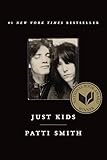
Editors Reads Verdict
One of the great memoirs of the twentieth century's artistic life — a portrait of two young artists discovering themselves in a New York that no longer exists, written with the precision of poetry and the urgency of a promise kept.
What We Loved
- Smith's prose is as close to poetry as prose can get
- The portrait of 1970s New York's artistic underground is irreplaceable
- The relationship between Smith and Mapplethorpe is rendered with complete honesty
- National Book Award winner that fully deserved the recognition
Minor Drawbacks
- Readers unfamiliar with the period's cultural figures may feel lost
- The narrative covers decades quickly in its final sections
- Smith's reverence for Mapplethorpe occasionally borders on hagiography
Key Takeaways
- → Artistic development requires community — other artists, not just individual talent
- → Poverty and precarity do not diminish artistic ambition; they sometimes fuel it
- → A great friendship can be the primary relationship of a life
- → Art is not decoration but a necessary response to existence
- → AIDS devastated an entire generation of artists and the culture they were building
| Author | Patti Smith |
|---|---|
| Publisher | Ecco |
| Pages | 279 |
| Published | January 19, 2010 |
| Language | English |
| Genre | Memoir, Biography |
| Difficulty | Beginner |
| Best For | Art lovers; music fans; memoir readers; anyone interested in 1970s New York counterculture. |
How Just Kids Compares
Just Kids at a glance against 3 similar books readers weigh alongside it.
| Book | Author | Rating | Best for |
|---|---|---|---|
| Just Kids (this book) | Patti Smith | ★ 4.5 | Art lovers |
| Becoming | Michelle Obama | ★ 4.8 | Anyone interested in American political history, the Obama era, or memoir as a |
| Born a Crime | Trevor Noah | ★ 4.8 | Anyone interested in apartheid South Africa, memoir as a form, questions of |
| Greenlights | Matthew McConaughey | ★ 4.4 | Readers interested in celebrity memoir with philosophical ambition, or anyone |
A Promise Kept
Robert Mapplethorpe was dying of AIDS in 1989 when he asked Patti Smith to write their story. “Just Kids” is that story — a book written as an obligation, a love letter, and a memorial, finally published in 2010. It won the National Book Award for Nonfiction and became one of the most beloved memoirs of its era. It is the record of two young artists who arrived in New York City with nothing but ambition and gave each other the foundation they needed to become themselves.
Chelsea Hotel, 1967
Smith arrived in New York in 1967, eighteen years old and nearly penniless, with a portfolio of drawings and a backpack of books. She met Mapplethorpe, twenty-one and equally hungry, at a moment when both were on the verge of sleeping on the street. They became a couple, then best friends, then each other’s most important audience, inhabiting a series of rooms in the Chelsea Hotel that housed Janis Joplin, Arthur C. Clarke, Allen Ginsberg, and an entire ecosystem of people trying to become something.
Smith’s Prose
What makes “Just Kids” extraordinary is Smith’s prose, which has the compression and precision of the poet she is. She renders an afternoon light, a shared meal, a moment of artistic discovery with the economy of a lyric — no wasted words, every detail carrying weight. The poverty of their early years is present without self-pity; the gradual emergence of their careers is rendered without triumphalism. The voice throughout is completely her own.
A Poet’s Prose
It bears repeating how singular the writing is, because the prose is the reason Just Kids transcends its genre. Patti Smith is a poet first, and she brings to the memoir a poet’s economy and exactness — an afternoon’s light, a borrowed coat, the taste of a shared day-old loaf, all rendered in spare sentences where every word is load-bearing. There is no celebrity gloss and no self-pity about the genuine hunger of those years; she writes about being broke and hopeful with the same calm precision she brings to scenes of dawning artistic triumph. The voice is reverent without being sentimental, romantic without being naïve, and it lends even the smallest moments the weight of something sacred. Few memoirists can make poverty and ambition feel this luminous, and fewer still can sustain such control across an entire book.
Two Artists Becoming Themselves
At its heart, Just Kids is the story of how two people made each other possible. When they met, neither was yet who they would become: Patti was a New Jersey factory worker’s daughter making drawings and writing poems, and Robert was a Catholic boy from Queens making collages and assemblages, not yet a photographer at all. The book traces, almost in real time, the slow discovery of their respective vocations — Robert drifting toward the camera and the provocative, formally exacting images that would make him famous (and infamous); Patti moving from poetry readings toward the fusion of words and rock and roll that produced Horses in 1975 and made her a founding figure of punk. Each was the other’s first audience, fiercest believer, and aesthetic conscience. The title comes from a moment when a tourist couple, seeing the two of them dressed in their thrift-store finery, declines to photograph them — “they’re just kids,” one says — and it captures the book’s tender backward gaze at a pair too young to know what they were becoming.
The Truth of Their Love
What gives the memoir its emotional honesty is Smith’s refusal to simplify their relationship. They began as lovers, sharing rooms and beds and a near-total poverty, before Robert came to understand and accept that he was gay — a recognition that reshaped their bond from romance into something Smith insists was deeper and more permanent: an artistic marriage that outlasted every other relationship in both their lives. She writes about Robert’s emerging sexuality, his entry into the world of S&M imagery that would define his most controversial work, and his relationship with the wealthy curator Sam Wagstaff, without judgment or possessiveness. Their love simply changed shape and endured. It is one of literature’s great portraits of a friendship as the central relationship of a life.
An Elegy for a Lost New York
The New York of Smith’s memory — the Chelsea Hotel, Max’s Kansas City, CBGB, the gallery scene of the early 1970s — no longer exists in any meaningful sense. Just Kids preserves it as literature, capturing the specific texture of a time and place where art and poverty and ambition coexisted in ways that seem impossible in today’s hyper-expensive city. The book is thick with the famous and soon-to-be-famous — Allen Ginsberg, Janis Joplin, Jimi Hendrix, William Burroughs, Andy Warhol’s Factory orbit — but Smith renders them not as icons but as fellow strugglers passing through the same cheap hotels and diners. It is, among other things, an elegy for a bohemian culture that the relentless commercialization of Manhattan and the devastation of the AIDS crisis together swept away.
A Promise Fulfilled
That Just Kids exists at all is the keeping of a deathbed vow: Robert, dying of AIDS in 1989, asked Patti to tell their story, and she spent the better part of two decades finding the form for it. The result won the 2010 National Book Award for Nonfiction, a rare instance of a celebrity memoir achieving the highest literary recognition entirely on merit. The only fair criticisms are gentle ones: readers unsteeped in the period’s cultural figures can occasionally feel adrift, the final years are compressed into a swift coda, and Smith’s reverence for Robert sometimes shades toward the saintly. But these are quibbles against a genuine masterwork — a book that turns grief into something luminous and permanent.
Our rating: 4.5/5 — One of the finest memoirs of the American artistic underground, written as a promise to a dying friend and delivered as a masterwork.
Frequently Asked Questions
What is "Just Kids" about?
Patti Smith's memoir of her friendship and love with photographer Robert Mapplethorpe in New York City from 1967 to his death from AIDS in 1989, written as a promise to a dying friend.
Who should read "Just Kids"?
Art lovers; music fans; memoir readers; anyone interested in 1970s New York counterculture.
What are the key takeaways from "Just Kids"?
Artistic development requires community — other artists, not just individual talent Poverty and precarity do not diminish artistic ambition; they sometimes fuel it A great friendship can be the primary relationship of a life Art is not decoration but a necessary response to existence AIDS devastated an entire generation of artists and the culture they were building
Is "Just Kids" worth reading?
One of the great memoirs of the twentieth century's artistic life — a portrait of two young artists discovering themselves in a New York that no longer exists, written with the precision of poetry and the urgency of a promise kept.
Ready to Read Just Kids?
Check the current price on Amazon.
Check Price on Amazon (paid link)Prices and availability are subject to change. See Amazon for current price.
Review last updated: