Where to Start with Robin Sharma: A Reading Guide
Where to start with Robin Sharma — whether to begin with The Monk Who Sold His Ferrari or The 5 AM Club. A complete reading guide to the leadership and self-help author.
By Lena Fischer

Robin Sharma (born 1964) is the Canadian leadership author, motivational speaker, and former litigation lawyer whose debut The Monk Who Sold His Ferrari (1997) — self-published after multiple rejections before finding a major publisher — became an international bestseller with sales exceeding fifteen million copies, establishing him as one of the most widely read leadership and self-improvement authors in the world. His work is characterised by a blend of Eastern philosophy, Western achievement culture, and the fable structure of philosophical storytelling.
Where to Start: The Monk Who Sold His Ferrari (1997)
The essential Sharma — and the book that launched his career. Julian Mantle is a brilliant, driven, and famous trial lawyer who has sacrificed everything for professional success. When he collapses in court with a massive heart attack, he abandons his career, sells his possessions including his Ferrari, and travels to India. He spends three years in the Himalayas with a community of monks called the Sages of Sivana, who teach him a philosophy of purposeful, deliberate living. On returning to North America, he seeks out his former colleague John to share what he has learned.
The book’s wisdom is conveyed through a system of seven symbols: a magnificent garden (the mind), a towering lighthouse (purpose), a sumo wrestler (self-discipline), a pink wire cable (time), a fragrant yellow rose (service), a gold stopwatch (the present moment), and a path of diamonds (commitment to growth). Each symbol encodes a lesson; the fable structure makes the lessons memorable.
The book’s success rests on a real insight: that most high-achievers are not living their own lives, and that the skills that create professional success are not the same as the skills that create a meaningful existence. Sharma makes this point through a character rather than an argument, which turns out to be a more persuasive mode for many readers.
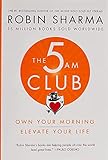
The 5 AM Club (2018)
Sharma’s argument for the disciplined morning routine — the first sixty minutes of the day as protected space for physical, intellectual, and spiritual development. Written as a parable like his first book; more prescriptive about the specific 20/20/20 formula. Can be read independently.
Why The Monk Who Sold His Ferrari Is the Ideal First Book
For a reader new to Robin Sharma, The Monk Who Sold His Ferrari is the ideal first book because it is his most famous and beloved work and the fullest expression of his distinctive approach, the teaching of personal mastery and a meaningful life through an accessible, parable-like story. The Monk Who Sold His Ferrari tells the fable of a successful but unfulfilled lawyer who abandons his life to seek wisdom, and through this story it conveys Sharma’s lessons on living a more disciplined, purposeful, and fulfilling life. As an entry point, it offers the most beloved expression of Sharma’s teaching, the principles of personal mastery, self-discipline, purpose, and fulfillment, conveyed through an accessible and inspiring story. It welcomes the newcomer with its engaging fable, its accessible wisdom, and its inspiring message, making the principles of personal mastery approachable and memorable. It is his best-known book and the one that best represents his approach, so that the new reader encounters Sharma’s teaching from the first. For the newcomer, then, The Monk Who Sold His Ferrari is the natural and ideal starting point.
What to Expect as a New Reader
As a new reader, you can expect The Monk Who Sold His Ferrari to be an accessible, parable-like book on personal mastery and a meaningful life, conveying its lessons through an inspiring story. You can expect a fable, for the book tells the story of a successful but unfulfilled lawyer who abandons his life to seek wisdom, and uses this story as the vehicle for its teaching. You can expect lessons on personal mastery, self-discipline, purpose, and fulfillment, the principles of living a more disciplined, purposeful, and meaningful life that are Sharma’s central concern. You can expect an accessible and inspiring style, for Sharma conveys his teaching in a simple, engaging, and motivating form that makes the principles approachable and memorable. You can expect practical wisdom embedded in the story, guidance for cultivating discipline, purpose, and fulfillment in your own life. Expect, in short, an accessible, parable-like book on personal mastery and a meaningful life, conveyed through an inspiring story, a memorable introduction to Sharma’s teaching.
Going Deeper After Your First Book
Once The Monk Who Sold His Ferrari has introduced you to Sharma’s teaching, the reader who wishes to go deeper can explore his other books, which develop and extend his principles of personal mastery, leadership, and high performance. His other work addresses themes such as the cultivation of powerful daily habits and the disciplines of high achievement and leadership, applying his teaching on self-mastery and purpose to further dimensions of life and work. Reading these after The Monk Who Sold His Ferrari deepens your engagement with Sharma’s overall teaching, the principles of personal mastery, discipline, purpose, and fulfillment that run through his work. His core message, the cultivation of a disciplined, purposeful, and fulfilling life, runs through his books, and the reader who has been inspired by his most famous work will find the same teaching in his others. Building your reading journey through Sharma’s work is a matter of following his principles of personal mastery from his beloved fable into his further writing. The reader who begins with The Monk Who Sold His Ferrari and continues through his work will find a consistent guide to personal mastery and a meaningful life.
Reading Robin Sharma
Begin with The Monk Who Sold His Ferrari — it is his foundational text and the right introduction to his philosophy. Read The 5 AM Club after for his most developed thinking on daily habits and peak performance. Both books stand alone.
For the full Robin Sharma bibliography, reviews, and biography, visit the Robin Sharma author page on Editors Reads.
Affiliate disclosure: Links to Amazon on this page are affiliate links. We earn a small commission at no extra cost to you.
Frequently Asked Questions
Where should I start with Robin Sharma?
The Monk Who Sold His Ferrari (1997) is the essential starting point — Sharma's parable about a high-powered lawyer who abandons his career after a heart attack, travels to India, and returns transformed with wisdom about living deliberately and purposefully. Written as a philosophical fable rather than a prescriptive self-help book; became an international bestseller through word of mouth. The book that established Sharma as a leading figure in the leadership and self-help space.
What is The Monk Who Sold His Ferrari about?
The Monk Who Sold His Ferrari is structured as a conversation between Julian Mantle, a lawyer who has returned from spiritual study in the Himalayas, and his former colleague John, who listens as Julian shares the philosophy he learned from a community of monks. The teachings are presented through a fable about a garden, a lighthouse, a sumo wrestler, a path of diamonds, and a golden stopwatch — each element encoding a lesson about purpose, mindfulness, self-discipline, and living in the present. A parable in the tradition of Paulo Coelho's The Alchemist.
What is The 5 AM Club about?
The 5 AM Club (2018) is Sharma's argument for waking at 5 AM as the foundation of extraordinary productivity and wellbeing — the first hour of the day (the '20/20/20 formula': 20 minutes exercise, 20 minutes reflection, 20 minutes learning) as a protected space for self-improvement before the world makes demands. Presented as a parable like his first book; builds on twenty years of Sharma's thinking about high performance and morning routines.
Are Robin Sharma's books practical or philosophical?
Sharma's books occupy the space between philosophical parable and practical self-help. The Monk Who Sold His Ferrari uses the fable structure to convey principles rather than specific techniques; The 5 AM Club is more prescriptive about the specific morning routine. Both are written in parable form — with fictional characters and narrative — rather than as direct instruction manuals. Readers who prefer parable-style wisdom literature will find them more engaging than readers who want purely action-oriented advice.