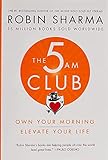
Editors Reads Verdict
The fictional parable format makes the framework engaging, and the 20/20/20 morning routine is a genuinely well-designed starting protocol for high performance. The self-help content is denser and more specific than most in the genre.
What We Loved
- The 20/20/20 formula is specific, actionable, and based on real productivity principles
- The parable format makes the principles more memorable than a list
- Synthesizes a wide body of peak performance research
- Sharma's genuine passion for the material is evident throughout
Minor Drawbacks
- The parable characters are flat vehicles for the ideas
- The content could be delivered in half the pages
- The early waking requirement may not suit everyone's biology or circumstances
Key Takeaways
- → The first hour of the day sets the tone for everything that follows
- → 20 minutes of intense exercise generates neurological benefits for hours afterward
- → Reflection and planning protect against reactive, distracted work patterns
- → Continuous learning is not a luxury but a professional necessity
- → Victory is a private matter won in the morning before anyone else is awake
| Author | Robin Sharma |
|---|---|
| Publisher | HarperCollins |
| Pages | 336 |
| Published | December 4, 2018 |
| Language | English |
| Genre | Self-Help, Personal Development |
| Difficulty | Beginner |
| Best For | High achievers; productivity enthusiasts; anyone looking to establish a morning routine. |
How The 5 AM Club Compares
The 5 AM Club at a glance against 3 similar books readers weigh alongside it.
| Book | Author | Rating | Best for |
|---|---|---|---|
| The 5 AM Club (this book) | Robin Sharma | ★ 4.0 | High achievers |
| Atomic Habits | James Clear | ★ 4.8 | Anyone who wants to build better habits, break bad ones, or improve personal |
| Deep Work | Cal Newport | ★ 4.7 | Knowledge workers, writers, programmers, academics, and anyone whose job |
| The Miracle Morning | Hal Elrod | ★ 4.2 | People who want to build a consistent morning practice, feel rushed or reactive |
The Parable Format
Robin Sharma tells his story of morning transformation through a fictional narrative: a struggling entrepreneur and a world-weary artist meet a brilliant, apparently eccentric billionaire who takes them to his estate and teaches them the principles of world-class performance. The parable format — familiar from Spencer Johnson and Ken Blanchard — gives Sharma a vehicle for presenting ideas in memorable story beats rather than lecture. The characters are thin, but the format is effective.
The 20/20/20 Formula
The book’s core content is the 20/20/20 formula: the first twenty minutes of a 5 AM wake are devoted to intense physical exercise (sweat, spike your cortisol, generate BDNF). The second twenty minutes are devoted to reflection: journaling, meditation, or visualization. The third twenty minutes are devoted to learning: reading, studying, processing. By 6 AM, you have already moved your body, centered your mind, and added to your knowledge — before the demands of the world have had a chance to direct your attention.
The elegance of the formula is that it bundles three evidence-supported habits — exercise, mindfulness, and continuous learning — into a single, repeatable forty-minute block, removing the daily decision-making and willpower that usually erode such routines. Each segment also reinforces the others: the movement primes the brain for the reflection, and the reflection clears the mind for the learning. Sharma’s claim is that compounded over months and years, this hour quietly separates world-class performers from everyone else, not through dramatic effort but through the accumulation of small, consistent morning wins. Whether or not one buys the grander rhetoric, the underlying routine is hard to fault as a template.
The Victory Hour and the Four Interior Empires
Sharma frames this first sixty minutes as “the Victory Hour” — a private stretch of time that belongs entirely to you, before the world begins making claims on your attention, and in which the day is quietly won or lost before anyone else is awake. Around it he builds a broader model of personal growth he calls the Four Interior Empires: Mindset (your psychology), Heartset (your emotional life), Healthset (your physical vitality), and Soulset (your spiritual core). His argument is that most self-improvement fixates on mindset alone, while genuine, lasting performance requires tending all four in balance. He layers on further frameworks — a “Twin Cycle of Elite Performance” alternating intense work with deliberate recovery, and a “66-day” habit-installation protocol — so that the morning routine sits inside a fuller philosophy of how change actually sticks.
The Science Behind the System
Sharma grounds his recommendations in neuroscience and performance psychology: the role of BDNF in cognitive function, the benefits of meditation on prefrontal cortex thickness, the consolidation benefits of deliberate review. The synthesis is not original — Hal Elrod covered similar territory in “The Miracle Morning” — but Sharma’s version is more detailed and its research claims are somewhat more carefully stated.
The Criticisms
The book has real weaknesses worth flagging. Its definition of success is narrow and distinctly capitalist — goals are framed overwhelmingly around business wins and financial achievement, with little room for those whose ambitions lie elsewhere. There is also nothing scientifically sacred about 5 a.m. specifically; the research links early rising and protected morning time to wellbeing, but Sharma never really explains why that exact hour is the golden ticket, so it can feel more like a memorable brand than a tested prescription. Stylistically, the book is bloated: the acronyms and models multiply until they blur together, the prose tips into purple, the parable is predictable, and a romance subplot lands awkwardly. Robin Sharma — the former litigation lawyer turned leadership guru behind The Monk Who Sold His Ferrari — writes with undeniable conviction, but a reader has to excavate the genuinely useful core from a great deal of repetition.
For the Committed
The honest caveat: the 5 AM Club requires a fundamental restructuring of your evening and sleep schedule. Waking at 5 AM when you go to bed at midnight produces sleep deprivation, not peak performance. The book’s prescriptions are genuinely effective for people who can reorganize their lives around them. For people with young children, demanding evening work, or chronobiology that resists early waking, the formula requires modification.
Verdict
Read past the padding and the brand-building, and The 5 AM Club contains a genuinely sound core: that protecting the first hour of your day for movement, reflection, and learning — before the world starts making demands — can meaningfully change how you feel and perform. The 20/20/20 formula is specific, actionable, and a better-designed starting protocol than most morning-routine advice. The trick is to take the structure and the spirit while ignoring the rigid 5 a.m. literalism and the relentless hustle framing; adapted to your own biology and circumstances, it is worth a try. As a system it is useful; as a book, it would have been far better at half the length. For readers who respond to motivation delivered as story and who have the flexibility to reshape their mornings, it can genuinely change the shape of a day — and, repeated, of a life. For everyone else, the core idea travels perfectly well without the 5 a.m. dogma attached.
Our rating: 4.0/5 — A specific, well-reasoned morning routine system wrapped in an overlong parable — the 20/20/20 formula is worth trying if your life permits it.
Frequently Asked Questions
What is "The 5 AM Club" about?
Robin Sharma presents the 20/20/20 formula for the first hour of the day — 20 minutes of intense exercise, 20 minutes of reflection and planning, 20 minutes of learning — through a motivational story of a billionaire mentor.
Who should read "The 5 AM Club"?
High achievers; productivity enthusiasts; anyone looking to establish a morning routine.
What are the key takeaways from "The 5 AM Club"?
The first hour of the day sets the tone for everything that follows 20 minutes of intense exercise generates neurological benefits for hours afterward Reflection and planning protect against reactive, distracted work patterns Continuous learning is not a luxury but a professional necessity Victory is a private matter won in the morning before anyone else is awake
Is "The 5 AM Club" worth reading?
The fictional parable format makes the framework engaging, and the 20/20/20 morning routine is a genuinely well-designed starting protocol for high performance. The self-help content is denser and more specific than most in the genre.
Ready to Read The 5 AM Club?
Check the current price on Amazon.
Check Price on Amazon (paid link)Prices and availability are subject to change. See Amazon for current price.
Review last updated: