Where to Start with Tana French: A Reading Guide
Where to start with Tana French — whether to begin with In the Woods, The Likeness, or Faithful Place. A complete reading guide to the Dublin Murder Squad.

Tana French (born 1973) is the finest Irish crime novelist of her generation — an American-born writer who grew up in Ireland and whose Dublin Murder Squad series is among the most acclaimed crime fiction in any language. Her novels use the detective novel format as the vehicle for sustained psychological exploration: each book is narrated by a compromised, unreliable detective whose investigation is entangled with their own unresolved past, and each renders Dublin and the Irish countryside with atmospheric precision. She has won the Edgar Award, the Anthony Award, and numerous other crime fiction prizes.
Where to Start: In the Woods (2007)
The essential starting point — and one of the finest crime novels of the past twenty years. Detective Rob Ryan was found as a child in a Wicklow wood with his two friends missing, his shoes full of blood, and no memory of what happened. As an adult, under a different name, he is assigned to investigate the murder of a twelve-year-old girl found at an archaeological dig in the same area. The investigation becomes entangled with Ryan’s desperate and increasingly self-destructive attempt to recover his childhood memory.
French refuses to resolve the novel’s central mystery — the reader never learns what happened in the wood — and this refusal, which angered some genre readers, is the novel’s most serious artistic statement: some things cannot be recovered. The prose is extraordinary and the atmosphere of the Wicklow countryside and Dublin’s middle-class suburbs is among the most precisely rendered in contemporary Irish fiction.
The Likeness (2008)
The second Dublin Murder Squad novel — and for many readers the equal or superior of the first. Detective Cassie Maddox is called to a crime scene where the dead woman looks exactly like her and carries an identity that Cassie once used as an undercover persona. She goes undercover as the dead woman in the house the victim shared with four graduate students, trying to determine which of them killed her. The novel is a sustained exploration of the fantasy of belonging — the dead woman’s housemates have created a world of such intimacy and warmth that Cassie finds herself unwilling to leave even as she discovers what holds them together.
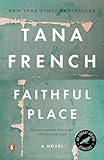
Faithful Place (2010)
The third Dublin Murder Squad novel — the most purely plot-driven and the most thriller-like, but also a devastating portrait of a working-class Dublin family. Detective Frank Mackey, who escaped the Liberties as a young man, is drawn back into his family’s world when the suitcase of his first love — who disappeared the night they were supposed to elope together — is found in a derelict house. The novel is French’s most direct engagement with class and family loyalty, and her portrait of the Mackey family is one of the most fully realised in Irish fiction.
Broken Harbor (2012)
The most emotionally devastating of the Dublin Murder Squad novels — set in a ghost estate on the Dublin coast during the aftermath of the Irish economic collapse, where a family has been murdered and the husband left barely alive. Detective Mick Kennedy, who has his own complicated relationship to Broken Harbour, investigates. The novel is French’s most directly political — a portrait of what the Celtic Tiger and its collapse did to Irish families who reached for a life they couldn’t sustain — and her most formally controlled.
The Secret Place (2014)
Set in a Dublin girls’ boarding school, where a boy is found murdered a year after his death and a new piece of evidence arrives at Cold Cases. Detectives Holly Mackey (Frank’s daughter, grown up) and Stephen Moran investigate. The novel is French’s most atmospheric and her most focused on female friendship and the power dynamics of adolescent girls — the secret world of the boarding school is her finest sustained setting, and the novel’s parallel narratives (the investigation and the events of the previous year) are interwoven with great skill.
Why In the Woods Is the Ideal First Book
For a reader new to Tana French, In the Woods is the ideal first book because it is her acclaimed debut, the opening of her Dublin Murder Squad series, and the fullest expression of her distinctive gifts, the atmospheric writing, the psychological depth, and the literary approach to crime fiction. In the Woods follows a detective investigating the murder of a child, a case that disturbingly echoes an unsolved mystery from his own childhood, in an atmospheric, psychologically rich, and haunting crime novel. As an entry point it is the natural place to begin, for it launches her celebrated series and a perfect introduction to her atmospheric, literary crime fiction. It welcomes the newcomer with its atmospheric writing, its psychological depth, and its haunting mystery, drawing the reader into her distinctive vision. It begins her best-known work, so the new reader meets her world where it begins. For the newcomer, then, In the Woods is the natural and ideal starting point.
What to Expect as a New Reader
As a new reader, you can expect In the Woods to be an atmospheric, psychologically rich, and literary crime novel. You can expect atmospheric writing, for French creates a haunting, immersive mood. You can expect psychological depth, for French probes the inner lives, wounds, and obsessions of her characters with unusual depth. You can expect a compelling mystery, for a detective investigates the murder of a child, a case that echoes an unsolved mystery from his own childhood. You can expect a literary approach, for French writes with beauty, complexity, and ambition beyond conventional crime fiction. You can expect a focus on character and psychology as much as on the puzzle. You can expect a haunting, immersive, and emotionally complex read. You should be prepared for dark subject matter. Expect, in short, an atmospheric, psychologically rich, and literary crime novel, a superb introduction to French’s gifts.
Going Deeper After Your First Book
Once In the Woods has introduced you to French’s gifts, the natural next step is to continue the Dublin Murder Squad series, in which each novel typically follows a different detective connected to the squad, allowing French to explore new characters and psychologies while building a loosely connected whole. The series can largely be read in order or enjoyed for its connected but distinct stories. Beyond the series, the reader who has enjoyed French’s gifts can explore her later standalone novels, which continue her atmospheric writing, her psychological depth, and her literary approach to crime and suspense. Her characteristic strengths, the atmospheric writing, the psychological depth, and the literary approach to crime fiction, run through her work. Building your reading journey through French is a matter of continuing the Dublin Murder Squad series and exploring her standalones. The reader who begins here and continues will find one of the most atmospheric and literary authors of contemporary crime fiction to follow.
Reading Tana French
French’s novels are crime fiction for readers who want literary fiction’s depth of character and psychological complexity. Her detectives are never simply observers of crime: they are participants, damaged by what they see, sometimes destroyed by it. Begin with In the Woods; accept its refusal to provide all the answers the genre normally offers; continue with The Likeness and proceed through the series in order. The Dublin Murder Squad is one of the great achievements in contemporary crime fiction, and it repays the commitment it asks for.
Frequently Asked Questions
Where should I start with Tana French?
In the Woods (2007) is the correct starting point — the first Dublin Murder Squad novel, which introduces detectives Rob Ryan and Cassie Maddox and follows their investigation of a child's murder in a Dublin suburb near the woods where Ryan survived an incident as a child that he cannot remember. The novel is Irish crime fiction at its finest: atmospheric, psychologically complex, and built around an unreliable narrator. The Likeness is equally good and can be read independently, but the connection to In the Woods enriches it. Reading in publication order is recommended.
Do the Dublin Murder Squad books need to be read in order?
The Dublin Murder Squad novels are loosely connected — each follows a different detective as the main narrator, with characters from earlier novels appearing in supporting roles. They can be read in any order, but In the Woods is the best starting point both because it is first and because it establishes the atmosphere and quality of the series. The Likeness, the second novel, is more directly connected to the first (sharing Cassie Maddox as the protagonist) and is best read second. Later novels (Faithful Place, Broken Harbour, The Secret Place) are more independent.
What is In the Woods about?
In the Woods (2007) follows Detective Rob Ryan, who as a child was found in a Wicklow wood with his two friends missing and with no memory of what happened. As an adult, under a different name, he investigates the murder of a child in the same area. The novel is constructed around Ryan's unreliable narration — his desperate attempt to recover his childhood memory, and the consequences of this attempt for his investigation and his partnership with Cassie Maddox. French does not resolve the mystery of what happened in the wood; this decision, controversial among genre readers, is one of the novel's defining qualities.
What makes Tana French different from other crime writers?
French's distinguishing quality is the psychological depth and unreliability of her narrators: each novel is told from the perspective of a detective who is compromised in some way — by childhood trauma, obsession, grief, or self-deception — and whose attempt to solve the crime is entangled with their own unresolved psychology. Her prose is among the finest in contemporary crime fiction: atmospheric, precise, and deeply engaged with the texture of Irish life and landscape. Her novels are longer and slower than most crime fiction, and reward the patience they require with character and atmosphere of unusual richness.