Where to Start with Yuval Noah Harari: A Reading Guide
Where to start with Yuval Noah Harari — whether to begin with Sapiens, Homo Deus, or 21 Lessons for the 21st Century. A complete reading guide to the bestselling historian.
By Elena Marsh
Yuval Noah Harari (born 1976) is the Israeli historian and philosopher who — with Sapiens: A Brief History of Humankind (2011; English translation 2014) — produced one of the most widely read non-fiction books of the twenty-first century. His macro-historical approach — examining human history through the lens of large-scale patterns, shared fictions, and the long-term consequences of our species’ choices — made his work accessible and provocative to a global readership and sold over twenty-five million copies across multiple books. He is a professor at the Hebrew University of Jerusalem and one of the most influential public intellectuals of his generation.
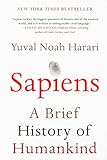
Where to Start: Sapiens (2011/2014)
The essential Harari — and one of the most stimulating popular histories published in the twenty-first century. The argument is both sweeping and specific: Homo sapiens became the planet’s dominant species not through physical superiority (Neanderthals were larger and possibly more intelligent) but through the cognitive ability to believe in shared fictions — gods, nations, money, corporations, human rights — that enable large-scale cooperation beyond the kinship groups that constrain other social animals.
Harari traces this capacity from the Cognitive Revolution (approximately 70,000 years ago, when our cognitive abilities produced language and fiction-making) through the Agricultural Revolution (10,000 years ago — Harari’s controversial argument is that farming made most individual humans worse off while enabling the growth of cities and states), the unification of humankind through money, empire, and religion, and the Scientific Revolution of the past 500 years. Each transition is examined through its consequences for individuals, for social structures, and for the planet.
The writing is clear and vivid; the argument is provocative and designed to unsettle assumptions. Harari makes large claims — some historians have criticised his simplifications and the confidence with which he presents contested interpretations as established fact — but the book’s ambition and reach make it uniquely stimulating as an introduction to questions about where humans came from and why we are as we are.
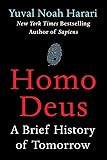
Homo Deus (2015)
Harari’s sequel — extending the Sapiens argument into the future. Having largely solved the traditional problems of famine, plague, and war (in historical terms, though not eliminated them), what will humanity seek next? Harari’s answer: the upgrade of human capabilities toward immortality, bliss, and divinity. Homo Deus traces the implications of biotechnology and artificial intelligence for the humanist worldview — the belief that human experience is uniquely valuable — and asks what happens when individual humans can be enhanced to very different degrees. More speculative and more unsettling than Sapiens; a necessary sequel.
21 Lessons for the 21st Century (2018)
Harari’s present-focused book — twenty-one essays on the most urgent questions facing humanity now: technological disruption, political manipulation, climate change, nuclear war, the crisis of meaning in a world where traditional narratives are failing. Less cohesive than the first two books; more directly applicable to current events. Best read after Sapiens and Homo Deus.
Why Sapiens Is the Ideal First Book
For a reader new to Yuval Noah Harari, Sapiens is the ideal first book because it is his breakout international bestseller and the fullest expression of his distinctive gift, the rendering of vast sweeps of history and big ideas into a bold, accessible, and provocative narrative. Sapiens tells the sweeping story of humankind, from the emergence of our species through the cognitive, agricultural, and scientific revolutions, advancing striking arguments about how shared myths, cooperation, and information have shaped human history. As an entry point it is ideal, for it is his most famous book and the clearest introduction to his sweeping, big-picture approach. It welcomes the newcomer with its grand scope, its bold and provocative ideas, and its engaging style, drawing the reader into a panoramic view of the human story. Readers will encounter sweeping generalizations and arguments that specialists sometimes contest, and are wise to engage with them thoughtfully and critically. It is his defining work, so the new reader encounters Harari at his most characteristic. For the newcomer, then, Sapiens is the natural and ideal starting point.
What to Expect as a New Reader
As a new reader, you can expect Sapiens to be a sweeping, provocative, and highly accessible big-history book. You can expect grand scope, for Harari surveys the entire history of our species, from prehistory to the present and toward the future. You can expect bold arguments, for he advances striking claims about the role of shared myths, cooperation, agriculture, and money in shaping human history. You can expect an engaging style, for Harari writes with clarity, momentum, and a gift for the memorable example and the arresting generalization. You can expect a synthesizing, big-picture approach that ranges across history, biology, anthropology, and economics. You can expect material that has been both enormously popular and criticized by specialists for its sweeping generalizations, so you are wise to read it thoughtfully and to weigh its claims critically. Expect, in short, a sweeping, provocative, and accessible big-history book, an engaging introduction to Harari’s ideas, best approached critically.
Going Deeper After Your First Book
Once Sapiens has introduced you to Harari’s sweeping approach, the reader who wishes to go deeper can explore his other books, while continuing to engage critically with his bold claims. Homo Deus turns from the past to the future, exploring where humanity may be headed in an age of biotechnology and artificial intelligence, while 21 Lessons for the 21st Century focuses on the pressing challenges of the present. Reading these after Sapiens deepens your engagement with Harari’s distinctive themes, the role of shared stories and information, the trajectory of human history, and the challenges of the future. As with Sapiens, thoughtful readers weigh his sweeping arguments critically rather than accepting them wholesale. Building your reading journey through Harari is a matter of moving from Sapiens into Homo Deus and 21 Lessons for the 21st Century. The reader who begins here and continues will encounter one of the most widely read and widely debated big-picture thinkers of our time.
Reading Yuval Noah Harari
Begin with Sapiens — it is the essential book and the foundation for everything that follows. Read Homo Deus immediately after if you find yourself wanting to extend the argument into the future. Together, the three books constitute the most widely read and most intellectually stimulating popular account of human history and its trajectory currently available.
Frequently Asked Questions
Where should I start with Yuval Noah Harari?
Sapiens (2011; English translation 2014) is the essential starting point — Harari's comprehensive account of the history of Homo sapiens from our origins as one of several human species to our current position as the planet's dominant force, and one of the bestselling non-fiction books of the twenty-first century. The argument is sweeping: Harari identifies the Cognitive Revolution, the Agricultural Revolution, and the Scientific Revolution as the three key turning points in human history, and traces their consequences with vertiginous scope. Homo Deus is the best follow-up, extending the argument into the future.
What is Sapiens about?
Sapiens (2014) is a history of Homo sapiens from about 70,000 years ago (when cognitive abilities appeared that enabled language, fiction, and collective belief) to the present. Harari argues that Homo sapiens dominates the planet not because of any physical superiority but because of our unique ability to believe in shared fictions — money, nations, religions, corporations — that enable large-scale cooperation. The book covers the Cognitive Revolution, the Agricultural Revolution (which Harari controversially argues was bad for most individual humans), the unification of humankind through empire, money, and religion, and the Scientific Revolution's transformation of human capabilities.
What is Homo Deus about?
Homo Deus (2015) is Harari's account of humanity's probable future — what we may become when we have largely solved the traditional problems of famine, plague, and war and turn our technological capabilities toward the enhancement of human capabilities. The title refers to 'god-man': the possibility that biotechnology and artificial intelligence will allow humans to transcend the biological limitations that have defined our existence. The book raises deep questions about what happens to humanism when humans can be upgraded and some humans are more capable than others. More speculative and more unsettling than Sapiens.
Do the three Harari books need to be read in order?
The three books form an informal trilogy that benefits from being read in order: Sapiens (the past), Homo Deus (the future), 21 Lessons (the present). However, each is largely standalone, and 21 Lessons in particular is a collection of essays that can be read in any sequence. Many readers begin with Sapiens and find it so stimulating that they immediately read the follow-ups; others read only Sapiens and find it complete in itself. The full trilogy provides the broadest and most comprehensive view of Harari's argument about human history and its trajectory.