William Faulkner Books in Order: Complete Bibliography & Best Starting Points
William Faulkner's complete bibliography in order — from The Sound and the Fury and As I Lay Dying to Absalom, Absalom! and Light in August. Best starting points for new readers.
William Faulkner was a Nobel laureate (1949), the most technically ambitious of American novelists, and the writer who most completely mapped a single patch of American ground: the fictional Yoknapatawpha County, Mississippi, modelled on Lafayette County, where he spent most of his life. Through Yoknapatawpha — its families, its history, its geography — he examined the American South, its legacy of slavery and civil war, and the specific psychology of a society that defines itself by what it has lost.
His prose style — stream of consciousness, multiple narrative voices, non-linear chronology, sentences that extend for paragraphs — was unprecedented in American fiction and influenced virtually every subsequent serious American novelist, from Toni Morrison to Cormac McCarthy.
Where to Start
As I Lay Dying (1930)
The best starting point. The Bundren family transports the body of their matriarch Addie through rural Mississippi to be buried in Jefferson, the county seat — a journey that becomes increasingly grotesque as the coffin floods, catches fire, and the family members pursue their own agendas alongside the stated mission of honouring the dead. The novel uses fifteen different first-person narrators, but the narrative is easier to follow than The Sound and the Fury because the external events provide a skeleton.
It is also Faulkner’s darkest comedy — the Bundrens are simultaneously awful and sympathetic — and the sections narrated by Cash (the carpenter who builds his mother’s coffin while she is dying, describing each board’s angle and measurement) and by Addie herself are among the strangest passages in American fiction.
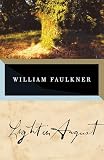
Light in August (1932)
The most accessible of Faulkner’s major novels. Three narratives intersect in Jefferson: Joe Christmas, a drifter of uncertain racial identity whose inability to belong anywhere leads to catastrophic violence; Lena Grove, a pregnant woman crossing Mississippi looking for the father of her child; and Reverend Hightower, an ex-minister haunted by his grandfather’s death in the Civil War. The novel’s treatment of race, identity, and the South’s relationship with its own violent history is Faulkner’s most sustained and most accessible.
The Essential Faulkner
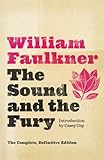
The Sound and the Fury (1929)
Faulkner’s most celebrated novel and the one he described as the work he loved most. The decline of the Compson family is rendered in four sections — Benjy’s disordered present-tense, Quentin’s obsessive final day, Jason’s bitter accounting, and the third-person epilogue — that together constitute a portrait of aristocratic dissolution, failed love, and the specifically Southern failure to move past what cannot be recovered.
The first section requires surrender to a narrative that does not operate by normal logic, but readers who persist find that it yields a kind of understanding unavailable through conventional narration.
Absalom, Absalom! (1936)
Faulkner’s most ambitious novel and the one most concerned with narrative itself. Thomas Sutpen’s story — his arrival in Mississippi, his construction of a plantation out of nothing, the dynastic catastrophe that follows — is assembled by multiple narrators across decades, each constructing the past from fragments of knowledge and powerful imagination. The result is simultaneously a Southern Gothic family saga, a meditation on historical knowledge and the nature of storytelling, and an examination of what the antebellum South was willing to do in the pursuit of its version of civilisation.
Complete Bibliography in Order
| Title | Year | Note |
|---|---|---|
| Soldiers’ Pay | 1926 | First novel; World War I veteran returning home |
| Mosquitoes | 1927 | New Orleans bohemian satire |
| Sartoris | 1929 | First Yoknapatawpha novel; the Sartoris family |
| The Sound and the Fury | 1929 | Masterpiece; the Compson family |
| As I Lay Dying | 1930 | Essential; the Bundren family |
| Sanctuary | 1931 | Thriller elements; controversial |
| Light in August | 1932 | Most accessible major novel |
| Pylon | 1935 | Aviation journalists; less central |
| Absalom, Absalom! | 1936 | Most ambitious; Thomas Sutpen |
| The Unvanquished | 1938 | Civil War; Bayard Sartoris |
| The Wild Palms | 1939 | Two interleaved narratives |
| The Hamlet | 1940 | First Snopes trilogy novel |
| Go Down, Moses | 1942 | Linked stories; the McCaslin family |
| Intruder in the Dust | 1948 | Race and justice; more accessible |
| Requiem for a Nun | 1951 | Sequel to Sanctuary; partly play format |
| A Fable | 1954 | WWI allegory; Pulitzer Prize |
| The Town | 1957 | Second Snopes trilogy novel |
| The Mansion | 1959 | Third Snopes trilogy novel |
| The Reivers | 1962 | Final novel; comic; Pulitzer Prize |
A Titan of American Modernism
William Faulkner was one of the giants of American literature and a titan of literary modernism, a Nobel laureate whose technically daring and profoundly ambitious fiction transformed the American novel and illuminated the history and the soul of the American South. Faulkner brought to the American novel a radical technical ambition and a profound vision, employing innovative techniques such as stream of consciousness, fractured chronology, and multiple narrators, and creating fiction of extraordinary depth, complexity, and power. His celebrated novels, set largely in his imagined region of the American South, illuminate the history, the burdens, and the soul of the South, and his Nobel Prize recognized his extraordinary achievement. This stature as a titan of American modernism is central to Faulkner’s significance, for his technically daring and profoundly ambitious fiction transformed the American novel and illuminated the history and the soul of the American South. His technical innovation and his profound vision mark him as one of the giants of American literature. For readers, Faulkner offers a titan of American modernism, technically daring and profoundly ambitious fiction that transformed the American novel. A titan of American modernism, Faulkner transformed the American novel through his technically daring and profoundly ambitious fiction, illuminating the history and the soul of the American South.
The South, History, and Its Burdens
A central subject of William Faulkner’s fiction is the American South, its history, and the burdens of that history, particularly the legacy of slavery, defeat, and racial conflict that haunt the region and its people. Faulkner’s fiction is deeply rooted in the American South, and he created an entire imagined region peopled by families and characters whose lives and fates are shaped by the history and the burdens of the South. His fiction confronts the weight of Southern history, the legacy of slavery and racial injustice, the trauma of defeat, the decline of old orders, and the way that the past haunts and shapes the present in the South. This concern with the South, history, and its burdens is central to Faulkner’s fiction, for he illuminated the history of the South and the burdens of that history, particularly the legacy of slavery, defeat, and racial conflict that haunt the region and its people. His profound engagement with Southern history and its burdens gives his fiction its tragic depth and its moral weight. For readers, Faulkner offers a profound exploration of the South, history, and its burdens, the legacy of slavery, defeat, and racial conflict that haunt the region. The South, history, and its burdens are a central subject of Faulkner’s fiction, particularly the legacy of slavery, defeat, and racial conflict that haunt the region and its people, and the way that the past haunts and shapes the present.
Technical Daring and Difficult Greatness
A defining feature of William Faulkner’s fiction is its technical daring and its difficult greatness, the demanding complexity of his innovative techniques and the profound rewards they offer the committed reader. Faulkner’s fiction is technically daring and often genuinely difficult, employing innovative and demanding techniques, stream of consciousness, fractured and non-linear chronology, multiple and unreliable narrators, and complex, challenging prose, that require real effort and engagement from the reader. Yet this difficulty is the vehicle of a profound greatness, for Faulkner’s demanding techniques serve his profound vision and his exploration of consciousness, time, and the burdens of history, and they reward the committed reader with fiction of extraordinary depth and power. This combination of technical daring and difficult greatness is central to Faulkner’s achievement, for the demanding complexity of his innovative techniques serves his profound vision and rewards the committed reader. His difficulty is inseparable from his greatness, the means by which he achieved his profound and powerful vision. For readers prepared to meet its demands, Faulkner’s fiction offers a difficult but profoundly rewarding greatness, technically daring work that rewards the committed reader with extraordinary depth and power. Technical daring and difficult greatness are a defining feature of Faulkner’s fiction, the demanding complexity of his innovative techniques and the profound rewards they offer the committed reader.
Reading Order Recommendations
New to Faulkner: As I Lay Dying → Light in August → The Sound and the Fury.
Yoknapatawpha in full: Sartoris → The Sound and the Fury → As I Lay Dying → Light in August → Absalom, Absalom! → Go Down, Moses.
For the Snopes trilogy: The Hamlet → The Town → The Mansion — a complete arc across thirty years.
Frequently Asked Questions
What is the best Faulkner novel to start with?
As I Lay Dying is the best starting point for most readers — it is shorter than The Sound and the Fury, structurally simpler to follow (despite using fifteen different first-person narrators), and demonstrates Faulkner's essential qualities without the full difficulty of his densest work. Light in August is the most accessible of his major novels — a more linear narrative, intense but readable. The Sound and the Fury is Faulkner's most celebrated novel but the most challenging: its four-section structure requires patience and often rereading.
What is The Sound and the Fury about?
The Sound and the Fury follows the decline of the Compson family — a once-aristocratic Mississippi family — through four narrative sections, each with a different narrator. The first section is narrated by Benjy, who is intellectually disabled and whose non-linear narrative is organised by sense and association rather than chronology. The second section is Quentin's, obsessed with his sister Caddy and with time, narrated on the day of his suicide at Harvard. The third is the bitter Jason's. The fourth is narrated in a more conventional third person. Together they construct a picture of a family and a society in irreversible decline.
What is Absalom, Absalom! about?
Absalom, Absalom! is Faulkner's most ambitious novel — the story of Thomas Sutpen, who arrives in Mississippi in 1833 with no money and no explanation, acquires land, builds a plantation, marries, and produces a family that destroys itself across generations. The novel is narrated from multiple perspectives decades after the events, and the narrators are constructing the story as much as reporting it. It is a meditation on the South's history, on the nature of narrative and knowledge, and on the specific kind of ambition that the antebellum South both produced and destroyed.
Is Faulkner difficult to read?
Yes — Faulkner is among the most technically demanding of major novelists, using stream of consciousness, multiple narrative perspectives, non-linear chronology, and long, syntactically complex sentences that require active attention. The Sound and the Fury's first section, narrated by Benjy, is deliberately disorienting. Absalom, Absalom! opens with sentences that can run for a full page. The rewards are proportionate: no novelist in American fiction renders the texture of interior experience, the weight of history, and the specific landscape of the American South with comparable power.