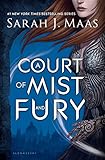
Editors Reads Verdict
Widely considered the crown jewel of the ACOTAR series, ACOMAF takes everything the first book built and burns it gloriously down, replacing it with something darker, more complex, and more emotionally satisfying. The introduction of the Night Court and Rhysand's true character redefines the entire series.
What We Loved
- Rhysand's full characterization is one of contemporary fantasy's great reveals
- Feyre's recovery arc is handled with genuine psychological nuance
- The Night Court world-building is spectacularly detailed and original
- The Inner Circle is one of the most beloved found-family ensembles in the genre
- Pacing is exceptional across 626 pages — it never drags
Minor Drawbacks
- Requires reading ACOTAR first for full emotional impact
- Some readers found the shift away from Tamlin jarring
- The love triangle elements frustrate readers with strong first-book attachments
Key Takeaways
- → Trauma recovery is not linear and requires genuine support, not protective isolation
- → Appearances designed to protect can become cages
- → Power is most dangerous when wielded without self-knowledge
- → True partnership requires equality, not possession
- → The world is rarely divided into the safe and the dangerous in simple ways
| Author | Sarah J. Maas |
|---|---|
| Publisher | Bloomsbury Publishing |
| Pages | 626 |
| Published | May 3, 2016 |
| Language | English |
| Genre | Fantasy Romance, Fae Fantasy, New Adult Fantasy |
| Difficulty | Beginner |
| Best For | Readers who finished ACOTAR and want deeper world-building, a more complex romance, and a heroine who truly comes into her own. |
How A Court of Mist and Fury Compares
A Court of Mist and Fury at a glance against 3 similar books readers weigh alongside it.
| Book | Author | Rating | Best for |
|---|---|---|---|
| A Court of Mist and Fury (this book) | Sarah J. Maas | ★ 4.6 | Readers who finished ACOTAR and want deeper world-building, a more complex |
| A Court of Thorns and Roses | Sarah J. Maas | ★ 4.2 | Fantasy romance readers who enjoy fae mythology, slow-burn romance, and |
| Fourth Wing | Rebecca Yarros | ★ 4.2 | Fantasy readers who enjoy romance-infused storylines, military academy |
| Iron Flame | Rebecca Yarros | ★ 4.1 | Readers who loved Fourth Wing and want more of Violet, Xaden, and the Basgiath |
The Series Pivot That Became a Legend
A Court of Mist and Fury is the rare sequel that eclipses its predecessor so completely that many readers encounter the series backward — drawn by the passionate word-of-mouth around ACOMAF and then returning to ACOTAR as context. Sarah J. Maas takes everything established in book one and fundamentally reinterprets it, revealing that the reader, like Feyre, was given an incomplete picture of Prythian’s politics and people.
The novel opens in the aftermath of the events Under the Mountain. Feyre is free, technically, but she is also traumatized, newly immortal, and trapped in a gilded cage with Tamlin — whose protective instincts have curdled into something suffocating. When Rhysand appears to collect on an old bargain, Feyre’s escape from the Spring Court begins.
Rhysand Unmasked
The transformation of Rhysand from apparent antagonist in ACOTAR to fully realized protagonist in ACOMAF is the series’ masterstroke. Maas had seeded enough ambiguity in the first book that the recontextualization doesn’t feel like a cheat — it feels like earned revelation. Rhysand’s true role in the events Under the Mountain, the Night Court’s actual character versus its reputation, and his years of psychological sacrifice constitute one of contemporary fantasy’s more satisfying long-game reveals.
His Inner Circle — Cassian, Azriel, Amren, Morrigan — are drawn with enough individuality and history to feel like people rather than plot functions. The found-family dynamic they offer Feyre is one of the book’s emotional cores.
Feyre’s Recovery
Maas handles PTSD with more care than is typical in the fantasy genre. Feyre’s panic attacks, her inability to paint, her gradual re-emergence as a person with agency — these are depicted with specificity rather than glossed over as mere backstory. The Night Court gives her room to heal rather than demanding she perform recovery on someone else’s timeline.
The Night Court
Velaris, the City of Starlight, is among the most detailed and imaginative settings in the ACOTAR world. The Court of Nightmares provides a perfect dark-mirror contrast. Maas does her best world-building here.
Our rating: 4.6/5 — A masterful sequel that redefines its series and delivers one of fantasy romance’s most beloved romantic leads.
Reading Guides
- Books Like A Court of Thorns and Roses: 12 Romantasy Reads for ACOTAR Fans
- Sarah J. Maas Books in Order: Complete Reading Guide for All Three Series (2026)
Why ACOMAF Became the Fan Favourite
Among readers who have followed the ACOTAR series, A Court of Mist and Fury is consistently cited as the strongest entry — and the reasons are instructive. It is not simply that Rhysand is a more compelling romantic lead than Tamlin, though most readers agree he is. It is that the entire novel is built on a recontextualization: the reader’s understanding of the world, the characters, and the first book’s events is systematically revised, and what emerges is a story that was always more interesting than the version of it ACOTAR allowed the reader to see.
The Night Court — its true nature, the court of nightmares versus the City of Starlight, the difference between Rhysand’s public performance and private self — is the clearest example. Everything in book one that seemed to indicate Rhysand’s villainy was a deliberate construction. Maas had planned the full arc before she wrote the first chapter, and the care with which she placed details in the first book that the second renders innocently becomes visible on reread.
The PTSD Arc
Maas’s handling of Feyre’s psychological state after the events Under the Mountain is the novel’s most significant contribution to how fantasy romance treats its protagonists. Feyre is not healed by the transition to the Night Court. She has panic attacks. She cannot paint, which had been her central form of self-expression. She is newly immortal and does not know what she is or what her body is capable of. Her recovery is gradual, non-linear, and sometimes does not look like recovery at all.
The Night Court’s response to this — giving her space, agency, and tasks that build competence without demanding that she perform wellness — is drawn in implicit contrast to the Spring Court’s response, which was to protect her so thoroughly that she had no room to become herself again. Maas is making an argument about what healing requires that goes beyond genre convention.
Velaris and the World Behind the World
The Night Court as it actually is — not the Court of Nightmares, which is Rhysand’s necessary public face, but Velaris, the City of Starlight hidden from the rest of Prythian — is one of Maas’s most detailed and successful settings. Its streets, its music, its population of High Fae and half-breeds and Rhysand’s Inner Circle going about lives that look surprisingly ordinary: all of it is rendered with the affection of someone who has lived in the place in imagination long before describing it.
Velaris matters to the plot because of what it represents: the world Rhysand is protecting by maintaining his reputation as a monster. The gap between appearance and reality — the Night Court feared by the rest of Prythian, the Night Court that actually exists — is the novel’s structural argument about the cost of necessary deceptions.
The Mating Bond
The concept of the mating bond — an instinctive, soul-level recognition between two people, drawn from fae mythology — is introduced in ACOMAF with enough ambiguity that readers can track how Feyre encounters it gradually before understanding what it is. Maas handles the reveal with characteristic patience, and the mating bond becomes one of the most discussed elements of the series for the specific way it complicates the relationship between choice and fate.
Frequently Asked Questions
What is "A Court of Mist and Fury" about?
Following the events Under the Mountain, Feyre adjusts to life as a High Fae and discovers that the Spring Court is not the safe haven she believed.
Who should read "A Court of Mist and Fury"?
Readers who finished ACOTAR and want deeper world-building, a more complex romance, and a heroine who truly comes into her own.
What are the key takeaways from "A Court of Mist and Fury"?
Trauma recovery is not linear and requires genuine support, not protective isolation Appearances designed to protect can become cages Power is most dangerous when wielded without self-knowledge True partnership requires equality, not possession The world is rarely divided into the safe and the dangerous in simple ways
Is "A Court of Mist and Fury" worth reading?
Widely considered the crown jewel of the ACOTAR series, ACOMAF takes everything the first book built and burns it gloriously down, replacing it with something darker, more complex, and more emotionally satisfying. The introduction of the Night Court and Rhysand's true character redefines the entire series.
Ready to Read A Court of Mist and Fury?
Check the current price on Amazon.
Check Price on Amazon (paid link)Prices and availability are subject to change. See Amazon for current price.
Review last updated: