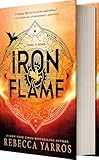
Editors Reads Verdict
Iron Flame suffers the classic second-book problem of carrying enormous expectation into a novel tasked with expanding the world rather than establishing it, but Yarros delivers enough propulsive action, genuine emotional stakes, and world-building revelations to satisfy most Fourth Wing devotees.
What We Loved
- The relationship between Violet and Xaden is tested with real emotional sophistication
- World-building expands significantly, answering major questions from book one
- Action sequences are kinetically written and consistently high-stakes
- The ending delivers genuine surprise and sets up book three effectively
Minor Drawbacks
- First half moves slower than Fourth Wing as the story reorients
- Some new characters feel underdeveloped given the page count
- The communication-failure relationship trope is heavily leaned upon
- Requires Fourth Wing freshly in mind — the plot complexity is demanding
Key Takeaways
- → Secrets kept to protect someone can be just as destructive as betrayal
- → Institutions built on lies require enormous violence to sustain themselves
- → Love tested by impossible circumstances reveals what it is actually made of
- → Power that cannot be controlled is not power — it is a liability
- → The truth, when it arrives, reshapes everything that came before it
| Author | Rebecca Yarros |
|---|---|
| Publisher | Red Tower Books |
| Pages | 623 |
| Published | November 7, 2023 |
| Language | English |
| Genre | Fantasy Romance, Dragon Fantasy, New Adult Fantasy |
| Difficulty | Beginner |
| Best For | Readers who loved Fourth Wing and want more of Violet, Xaden, and the Basgiath world — with significantly higher emotional and political stakes. |
How Iron Flame Compares
Iron Flame at a glance against 3 similar books readers weigh alongside it.
| Book | Author | Rating | Best for |
|---|---|---|---|
| Iron Flame (this book) | Rebecca Yarros | ★ 4.1 | Readers who loved Fourth Wing and want more of Violet, Xaden, and the Basgiath |
| A Court of Mist and Fury | Sarah J. Maas | ★ 4.6 | Readers who finished ACOTAR and want deeper world-building, a more complex |
| A Court of Thorns and Roses | Sarah J. Maas | ★ 4.2 | Fantasy romance readers who enjoy fae mythology, slow-burn romance, and |
| Fourth Wing | Rebecca Yarros | ★ 4.2 | Fantasy readers who enjoy romance-infused storylines, military academy |
The Weight of Expectations
Iron Flame arrived in November 2023, seven months after Fourth Wing broke every publishing record its genre had seen. The pressure on a sequel under those circumstances is enormous and largely unfair — no book could satisfy every reader who fell in love with Violet and Xaden’s enemies-to-lovers arc — but Rebecca Yarros makes a solid case for the durability of this world.
The second year at Basgiath War College is darker, more politically complex, and more emotionally fraught than the first. Violet is now bonded to Tairn, managing a secret power that could get her killed, and navigating a relationship with Xaden Riorson that is fracturing under the weight of what they are each keeping from the other.
The Secrets Architecture
Much of Iron Flame’s narrative drive comes from dramatic irony — the reader often knows more than characters do, or suspects what is being hidden, and watches the consequences of those hidden truths unfold. Yarros deploys this effectively in the Violet/Xaden dynamic: their relationship is genuinely romantic and genuinely strained, and the tension between those two things is the novel’s emotional center.
The world-building revelations — what the wards actually protect against, what the rebellion truly knew, what Xaden’s people have been doing — constitute a significant expansion of the Basgiath universe that rewards readers who paid attention to the first book’s details.
Action and Consequence
Yarros writes battle sequences with more kinetic clarity than many fantasy authors. The action in Iron Flame is consistently high-stakes and physically grounded, with consequences that actually cost the characters involved. The novel does not protect its principals from genuine loss.
The Ending
The final sequence delivers the kind of shocking pivot that makes book threes mandatory. Yarros earns the gut-punch through careful setup — looking back, the clues were present — which places her firmly in the tradition of writers who trust their readers to re-read. Without spoiling specifics, the climax pulls back the curtain on the true nature of the threat the kingdom of Navarre has been concealing, weaponizes a long-running romantic tension into genuine anguish, and leaves Violet and Xaden in a position that recolors everything the reader thought they understood about the war.
The Empyrean Phenomenon
It is impossible to assess Iron Flame outside the cultural earthquake of its series. Fourth Wing turned Rebecca Yarros — a prolific contemporary-romance author — into the face of “romantasy,” the fusion of fantasy world-building and steamy romance that BookTok propelled to the top of every bestseller list. Published by Entangled’s Red Tower imprint with a deluxe sprayed-edge format that became a collector’s object, the books sold in the millions and made dragon-rider academies the dominant trend in commercial fiction. Iron Flame inherited that frenzy, becoming an instant number-one bestseller, and the saga continued with Onyx Storm. Understanding that context explains both the impossible expectations the book carried and the devotion of the audience that met it.
Romance at the Core
Whatever else it is — military fantasy, political thriller, dragon adventure — Iron Flame is, at heart, a romance, and Yarros never loses sight of that. The relationship between Violet and Xaden is the gravitational center around which the war, the world-building, and the action all orbit, and the sequel deliberately complicates the heady enemies-to-lovers spark of the first book with the harder questions of a maturing relationship: Can you love someone who keeps secrets from you “for your own good”? Does trust survive when loyalty to a cause collides with loyalty to a person? The novel is also frank about its “spice,” with explicit scenes that are a core part of the romantasy appeal and a frequent topic of the BookTok conversation around it. Crucially, Yarros makes the physical relationship feel earned by the emotional stakes rather than gratuitous, and readers invested in the couple will find the push-and-pull genuinely absorbing even when the surrounding plot sags.
The Second-Book Problem
For all its strengths, Iron Flame shows the strain of being a middle volume. Where Fourth Wing had the propulsive clarity of a survival story — learn to ride a dragon or die — the sequel must juggle expanded politics, a larger cast, and a romance that has moved past its initial spark into the murkier territory of sustained conflict. The first half is noticeably slower as the story reorients, some newly introduced characters feel thin against the enormous page count, and the plot leans heavily on the “if they would just talk to each other” trope, with Violet and Xaden’s mutual secrecy generating tension that occasionally tips into frustration. Readers also genuinely need Fourth Wing fresh in mind; the political complexity assumes close recall of the first book’s details. None of this sinks the novel, but it makes it a denser, less effortless read than its predecessor.
Verdict
Iron Flame is a satisfying if imperfect continuation that does what a good second book must: it raises the stakes, deepens the world, complicates the romance, and ends on a revelation that makes the next installment unmissable. Yarros’s kinetic action, her willingness to inflict real loss on her characters, and the genuine emotional sophistication of the Violet–Xaden relationship carry it past its pacing wobbles and overused tropes. For the legions who fell for Fourth Wing, it delivers exactly the higher-stakes, more emotionally fraught return to Basgiath they were hoping for — just be ready to work a little harder for it.
Our rating: 4.1/5 — A worthy, if occasionally overstuffed, sequel that deepens the Basgiath world and tests its characters in ways that matter.
Reading Guides
Frequently Asked Questions
What is "Iron Flame" about?
Violet Sorrengail returns to Basgiath War College for her second year, navigating deeper secrets, more dangerous enemies, and a relationship with Xaden Riorson that is tested by the truths they are both keeping.
Who should read "Iron Flame"?
Readers who loved Fourth Wing and want more of Violet, Xaden, and the Basgiath world — with significantly higher emotional and political stakes.
What are the key takeaways from "Iron Flame"?
Secrets kept to protect someone can be just as destructive as betrayal Institutions built on lies require enormous violence to sustain themselves Love tested by impossible circumstances reveals what it is actually made of Power that cannot be controlled is not power — it is a liability The truth, when it arrives, reshapes everything that came before it
Is "Iron Flame" worth reading?
Iron Flame suffers the classic second-book problem of carrying enormous expectation into a novel tasked with expanding the world rather than establishing it, but Yarros delivers enough propulsive action, genuine emotional stakes, and world-building revelations to satisfy most Fourth Wing devotees.
Ready to Read Iron Flame?
Check the current price on Amazon.
Check Price on Amazon (paid link)Prices and availability are subject to change. See Amazon for current price.
Review last updated: