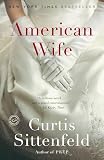
Editors Reads Verdict
A absorbing, psychologically rich novel that imagines the inner life of a Laura Bush–like First Lady. Sittenfeld's empathy and insight make it compelling, even as its premise and politics invite scrutiny.
What We Loved
- Absorbing, empathetic, psychologically rich
- A nuanced portrait of a private woman in public life
- Sittenfeld's sharp, intimate first-person voice
Minor Drawbacks
- Its real-life basis can feel intrusive or uneasy
- The final section is more divisive and less assured
Key Takeaways
- → Private conscience and public complicity can painfully diverge
- → Love can bind us to politics we would not choose
- → Even the most public life conceals a hidden inner self
| Author | Curtis Sittenfeld |
|---|---|
| Publisher | Random House |
| Pages | 576 |
| Published | September 2, 2008 |
| Language | English |
| Genre | Literary Fiction, Contemporary Fiction |
| Difficulty | Intermediate |
| Best For | Readers of character-driven literary fiction interested in marriage, politics, conscience, and the inner lives of public women. |
How American Wife Compares
American Wife at a glance against 3 similar books readers weigh alongside it.
| Book | Author | Rating | Best for |
|---|---|---|---|
| American Wife (this book) | Curtis Sittenfeld | ★ 4.0 | Readers of character-driven literary fiction interested in marriage, politics, |
| Little Fires Everywhere | Celeste Ng | ★ 4.4 | Readers who enjoy literary fiction that examines race, class, and community |
| The Corrections | Jonathan Franzen | ★ 4.0 | Literary fiction readers |
| The Marriage Plot | Jeffrey Eugenides | ★ 3.9 | Eugenides readers who want his most recent and accessible novel, and literary |
The Inner Life of a First Lady
Curtis Sittenfeld’s American Wife, published in 2008, is an absorbing, psychologically rich, and quietly audacious novel that imagines the inner life of a First Lady of the United States loosely modeled on Laura Bush. Sittenfeld, the sharp-eyed author of Prep and later Rodham, specializes in the intimate first-person portrait of a woman navigating the gap between her private self and the public roles imposed upon her, and American Wife is among her most ambitious and accomplished works: a sympathetic, deeply interior account of an ordinary, thoughtful woman who, through love and circumstance, finds herself at the center of American power, married to a man and a politics she does not entirely share. It is a novel about conscience and complicity, marriage and selfhood, and the strange, lonely experience of a private person living the most public of lives.
The novel follows Alice Lindgren, a quiet, bookish, fundamentally decent woman from small-town Wisconsin, from her formative youth — including a devastating accident that shadows her whole life — through her unlikely marriage to Charlie Blackwell, the charming, feckless scion of a wealthy, powerful Republican family, and ultimately to the White House, where Charlie improbably becomes President and Alice the First Lady. Told in Alice’s own reflective, intelligent voice, the novel traces her journey with great psychological intimacy: her quiet liberal sympathies and private doubts, her deep love for a husband whose politics and character differ sharply from her own, and the growing tension between her conscience and her position as the wife and public partner of a President whose decisions — an unpopular war above all — she cannot fully endorse. It is, at its core, a study of a thoughtful woman’s complicity: how a good person of independent mind comes to stand beside, and lend her grace to, a power she privately questions.
Empathy and Psychological Richness
The great strength of American Wife is Sittenfeld’s empathy and psychological insight. Alice is a wonderful creation — intelligent, self-aware, decent, and quietly conflicted — and Sittenfeld inhabits her inner life with remarkable intimacy and nuance, rendering her thoughts, doubts, compromises, and loyalties with subtlety and compassion. The novel takes seriously the question at its heart: how does a thoughtful, principled woman reconcile her private conscience with public complicity, her love for her husband with her disagreement with his politics, her ordinary self with an extraordinary role? Sittenfeld refuses easy answers and easy judgments, granting Alice full humanity and treating her dilemma with genuine moral seriousness. The result is a portrait of marriage, conscience, and selfhood that is absorbing and affecting, anchored by one of the most convincing first-person voices in recent fiction.
The novel is also a sharp, intimate study of marriage and of the experience of public life. Sittenfeld is excellent on the texture of Alice and Charlie’s relationship — its love, its frustrations, its compromises — and on the strange loneliness and performance of life in the public eye, where a private self must be concealed behind a public role. The book’s exploration of how love can bind us to choices and a politics we would not make ourselves, and of the costs of the grace and silence such complicity demands, gives it real depth and resonance. It is a quietly serious novel beneath its accessible, page-turning surface.
The Uneasy Premise
Honesty requires acknowledging the discomfort built into the book’s premise. American Wife is closely and recognizably based on Laura Bush — the broad outlines of Alice’s life, from the fatal car accident of her youth to her marriage to a charming ne’er-do-well turned President, track the real First Lady’s biography — and the novel’s imagining of the private thoughts, conscience, and sex life of a real, living person can feel intrusive and ethically uneasy. Readers’ comfort with this will vary: some find the fictional speculation about a real woman’s inner life a legitimate and illuminating act of imaginative empathy, others find it presumptuous or voyeuristic. The novel’s politics, too — its sympathetic but ultimately critical portrait, and its implication of where Alice’s private sympathies lie — will land differently for different readers. This real-life basis is the book’s hook and its source of unease in equal measure.
The novel is also somewhat uneven across its length. The early sections, tracing Alice’s youth and marriage, are the most assured and absorbing; the final section, set in the White House, is more divisive — some find it a powerful culmination of the book’s themes, others find it more strained and explicitly political, the fictional distance from its real-life subject thinnest and most uncomfortable here. The book is long, and its energy is strongest in its first three-quarters.
An Absorbing, Empathetic Novel
American Wife is an absorbing, psychologically rich, and quietly audacious novel that imagines, with great empathy and intelligence, the inner life of a private woman who becomes First Lady. Sittenfeld’s insight into conscience, marriage, complicity, and the gap between private self and public role makes it compelling and affecting, even as its close basis in a real living person, and its more divisive final section, invite scrutiny and unease. It is a thoughtful, accomplished exploration of a fascinating dilemma, anchored by an unforgettable narrator.
For readers of character-driven literary fiction about marriage, politics, and the inner lives of public women, American Wife is a rewarding and absorbing read — empathetic, intelligent, and quietly provocative.
Final Verdict
Our rating: 4.0/5 — An absorbing, psychologically rich novel imagining the inner life of a Laura Bush–like First Lady. Sittenfeld’s empathy and insight into conscience and complicity make it compelling, even as its close real-life basis feels intrusive to some and its final section divides readers. A thoughtful, accomplished portrait.
For more intelligent contemporary American fiction, see The Corrections, Little Fires Everywhere, and The Marriage Plot.
Frequently Asked Questions
What is "American Wife" about?
Curtis Sittenfeld's acclaimed novel loosely inspired by Laura Bush. Alice Lindgren, a quiet Midwestern librarian, marries into a powerful, wealthy family and finds herself, improbably, the First Lady of the United States — a sympathetic, psychologically rich exploration of conscience, complicity, and a private woman in a public life.
Who should read "American Wife"?
Readers of character-driven literary fiction interested in marriage, politics, conscience, and the inner lives of public women.
What are the key takeaways from "American Wife"?
Private conscience and public complicity can painfully diverge Love can bind us to politics we would not choose Even the most public life conceals a hidden inner self
Is "American Wife" worth reading?
A absorbing, psychologically rich novel that imagines the inner life of a Laura Bush–like First Lady. Sittenfeld's empathy and insight make it compelling, even as its premise and politics invite scrutiny.
Ready to Read American Wife?
Check the current price on Amazon.
Check Price on Amazon (paid link)Prices and availability are subject to change. See Amazon for current price.
Review last updated: