Editors Reads Verdict
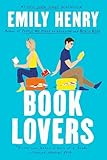
Book Lovers is Emily Henry's most self-aware romance, an affectionate deconstruction of the 'city girl finds herself in a small town' romance trope through the eyes of a woman who has always been the villain in that particular story. It is funny, sharp, and surprisingly moving.
What We Loved
- The meta-awareness of romance tropes is handled with wit rather than condescension
- Nora is one of Henry's most fully realized protagonists — ambitious, difficult, and deeply sympathetic
- The publishing industry setting adds genuine texture and inside-baseball charm
- The emotional arc around Nora's sister Libby is quietly devastating
Minor Drawbacks
- Charlie Lastra remains slightly opaque for much of the novel
- The third-act conflict is the most mechanically genre-standard of Henry's books
- The small-town setting is somewhat underwritten compared to Henry's usual environmental detail
Key Takeaways
- → Being the ambitious, difficult woman in a story doesn't make you the villain
- → The tropes we mock are often the ones that speak to our deepest needs
- → Caring for a sibling can become a way of avoiding one's own life and desires
- → Professional respect can be the most honest kind of romantic foundation
- → Small towns are not inherently more authentic than cities — people bring themselves everywhere
| Author | Emily Henry |
|---|---|
| Publisher | Berkley |
| Pages | 400 |
| Published | May 3, 2022 |
| Language | English |
| Genre | Contemporary Fiction, Romance, Women's Fiction |
| Difficulty | Beginner |
| Best For | Romance readers who enjoy meta-commentary on the genre; anyone who works in publishing; readers looking for an ambitious, career-focused female protagonist. |
How Book Lovers Compares
Book Lovers at a glance against 3 similar books readers weigh alongside it.
| Book | Author | Rating | Best for |
|---|---|---|---|
| Book Lovers (this book) | Emily Henry | ★ 4.2 | Romance readers who enjoy meta-commentary on the genre |
| Beach Read | Emily Henry | ★ 4.1 | Readers of contemporary romance, particularly those interested in books about |
| People We Meet on Vacation | Emily Henry | ★ 4.2 | Readers who love slow-burn romance and friends-to-lovers tropes |
| The Seven Husbands of Evelyn Hugo | Taylor Jenkins Reid | ★ 4.5 | Readers who love character-driven historical fiction, Hollywood glamour, and |
The Villain Gets Her Story
Nora Stephens has spent enough time reading romance novels to know what she is: the cutthroat career woman from the city who exists to be the obstacle the small-town heroine must overcome before finding love with the charming local. When her sister Libby proposes a summer in the small town of Sunshine Falls to replicate the plots of their favorite novels, Nora agrees — and promptly keeps running into Charlie Lastra, a brooding literary editor who is everything she didn’t expect to want.
Emily Henry’s third novel is her most formally playful. Book Lovers is explicitly in conversation with the romance genre’s conventions, but it wears its meta-awareness lightly enough that it never becomes tedious. Nora’s repeated observations about which trope she’s currently living through are funny precisely because her self-awareness doesn’t protect her from the feelings.
The Publishing World as Setting
Henry’s use of the literary publishing industry as backdrop gives Book Lovers an insider quality that readers who work in or around books will particularly relish. The agent-editor dynamic between Nora and Charlie is plausible in its power dynamics and frictions; the references to submission processes, editorial notes, and the specific social rituals of the book world feel observed rather than researched.
The romance develops at the pace of two people who are professionally too smart to rush into anything and personally too stubborn to admit they want to.
What the Book Gets Right
The emotional core of the novel is not the central romance but Nora’s relationship with her sister Libby. The summer in Sunshine Falls has a purpose beyond romance: Libby is facing something she hasn’t told Nora, and Nora’s tendency to sacrifice her own desires for her sister’s happiness has made both of them less honest with each other. Henry handles this strand with more delicacy than the romantic plot requires, and it lifts the book considerably.
Nora is also one of contemporary romance’s most convincingly ambitious protagonists — a woman who loves her work, is good at it, and whose professional identity is treated as a genuine asset rather than an obstacle to personal fulfillment.
Our rating: 4.2/5 — A witty, affectionate genre deconstruction that works equally well as a straight romance, anchored by one of Emily Henry’s most fully realized and likable protagonists.
Reading Guides
- Emily Henry Books in Order: Complete Reading Guide (2026)
- Best Romance Novels of All Time: 20 Love Stories You
The BookTok Phenomenon
Emily Henry, born in 1991 in Cincinnati, Ohio, began her publishing career writing fantasy romance before pivoting to contemporary fiction. Book Lovers arrived in 2022 as her third contemporary novel and became an instant New York Times bestseller — a pattern that has repeated with every book she has published since Beach Read in 2020. Henry has become the defining voice of the BookTok romance era, a writer whose work circulates through social media not because it is simple but because it rewards passionate recommendation.
The publishing industry setting of Book Lovers is one of its most distinctive assets. Henry worked in a bookstore before publishing, and the insider knowledge she brings to the agent-editor world gives the novel a specificity that readers who love books find irresistible. Nora and Charlie’s professional relationship — built on submissions, editorial calls, and the quiet politics of the literary world — makes their personal attraction feel continuous with their professional respect rather than separate from it.
Why Nora Stephens Works
Romance fiction has historically struggled with professionally ambitious female protagonists, tending to treat their ambition as a wound to be healed rather than a quality to be celebrated. Nora Stephens is an exception. She is good at her job, she knows she is good at it, and the novel never suggests she needs to soften this or apologize for it. Henry’s argument is that competence is attractive, that professional seriousness is a form of caring, and that the right relationship intensifies rather than softens who you already are.
The novel also handles the sibling relationship between Nora and Libby with unusual emotional intelligence. Libby’s situation — which Nora takes the entire novel to fully understand — gives the story its deepest emotional layer and explains why Nora has organized her life around protecting her sister rather than building her own.
Henry’s Place in Contemporary Romance
Book Lovers participates in a long tradition of romance novels that use small-town settings as contrast to urban protagonists, and it does so with full awareness of the tradition’s assumptions. Henry inverts the usual dynamic: instead of the city woman learning to value what she abandoned, Nora discovers that her values were right all along — and that the right person will value them too. It is a quietly radical position, and Henry holds it with warmth rather than polemicism.
The City Girl Gets the Story
Book Lovers (2022) is Emily Henry’s knowing inversion of the small-town romance. Nora Stephens is the sharp, ambitious literary agent who, in the genre’s usual logic, is the big-city girlfriend the hero dumps when he goes home and falls for someone wholesome. Henry hands her the love story instead, pairing her with the equally prickly editor Charlie Lastra during a sisters’ trip to Sunset Falls, North Carolina. The result is a metafictional romance about the kinds of women fiction usually discards, and it became one of the defining BookTok titles of its year.
Frequently Asked Questions
What is "Book Lovers" about?
A cutthroat literary agent keeps bumping into the same brooding editor during her summer in a small town, and their mutual irritation slowly transforms into something neither expected.
Who should read "Book Lovers"?
Romance readers who enjoy meta-commentary on the genre; anyone who works in publishing; readers looking for an ambitious, career-focused female protagonist.
What are the key takeaways from "Book Lovers"?
Being the ambitious, difficult woman in a story doesn't make you the villain The tropes we mock are often the ones that speak to our deepest needs Caring for a sibling can become a way of avoiding one's own life and desires Professional respect can be the most honest kind of romantic foundation Small towns are not inherently more authentic than cities — people bring themselves everywhere
Is "Book Lovers" worth reading?
Book Lovers is Emily Henry's most self-aware romance, an affectionate deconstruction of the 'city girl finds herself in a small town' romance trope through the eyes of a woman who has always been the villain in that particular story. It is funny, sharp, and surprisingly moving.
Ready to Read Book Lovers?
Check the current price on Amazon.
Check Price on Amazon (paid link)Prices and availability are subject to change. See Amazon for current price.
Review last updated: