Best Romance Novels of All Time: 20 Love Stories You'll Never Forget
Romance is the bestselling fiction genre for a reason. These 20 novels — spanning Regency England to contemporary New York — are the ones readers return to again and again.

Romance is the bestselling fiction genre on earth. It outsells literary fiction, science fiction, fantasy, and mystery combined in most markets, and it has done so consistently for decades. Despite this, it is the genre most frequently dismissed by people who do not read it — and most ardently defended by the people who do.
The defence is straightforward: romance fiction, at its best, is fundamentally optimistic. In a genre where a happily-ever-after ending is a contractual obligation, the reader’s investment is not in whether the couple will end up together but in how — in the emotional journey between two people who are initially separated by circumstance, misunderstanding, pride, or fear. That journey, when written well, is among the most satisfying territory in all of fiction.
This list covers 20 novels across the genre’s major traditions: classic and literary romance, Regency historical romance, contemporary romance, and the darker territory of new adult and emotionally intense fiction. There is a starting-point guide at the bottom for readers new to the genre.
Best Romance Novels at a Glance
| Book | Author | Best for |
|---|---|---|
| Pride and Prejudice | Jane Austen | Classic Fiction |
| Outlander | Diana Gabaldon | Historical fiction and romance readers who enjoy |
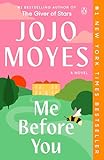
| Me Before You | Jojo Moyes | Romance readers who want emotional depth |
| One Day | David Nicholls | Literary fiction readers who want emotional |
| Normal People | Sally Rooney | Literary fiction readers interested |
| The Seven Husbands of Evelyn Hugo | Taylor Jenkins Reid | Readers who love character-driven historical |
| The Duke and I | Julia Quinn | Romance readers |
| The Viscount Who Loved Me | Julia Quinn | Romance readers looking for a witty, emotionally |
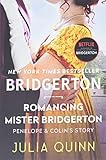
| Romancing Mister Bridgerton | Julia Quinn | Romance readers wanting the series’ emotional peak |
| The Hating Game | Sally Thorne | Romance readers who love slow burns, workplace |
| The Kiss Quotient | Helen Hoang | Romance readers who want autistic representation |
| The Love Hypothesis | Ali Hazelwood | Romance readers who want academic setting |
| Beach Read | Emily Henry | Readers of contemporary romance, particularly |
| People We Meet on Vacation | Emily Henry | Readers who love slow-burn romance |
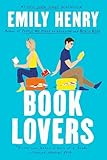
| Book Lovers | Emily Henry | Romance readers who enjoy meta-commentary |
| The Spanish Love Deception | Elena Armas | Romance readers who love fake dating, slow burns |
| Red, White & Royal Blue | Casey McQuiston | Romance readers, fans of enemies-to-lovers |
| Twisted Love | Ana Huang | Dark romance readers |
| Ugly Love | Colleen Hoover | Readers of new adult and contemporary romance |
| It Ends with Us | Colleen Hoover | Readers of contemporary romance who want |
Classic and Literary Romance
These novels sit at the intersection of romance and literature proper. They are taught in universities and read on beaches, and there is no contradiction in that. Love stories have always been literature’s central subject.
1. Pride and Prejudice by Jane Austen
The novel that every subsequent romance has had to reckon with. Elizabeth Bennet and Fitzwilliam Darcy are the prototype for every enemies-to-lovers arc, every proud hero who must be humbled, every heroine who must learn that her own judgement is not infallible. Austen’s dialogue is the wittiest in the English canon, and her portrait of the economic precarity that underlies every courtship in the novel adds a sharpness that sentiment alone could not produce.
Heat level: PG. For readers who want something warm, funny, and enduringly alive.
2. Outlander by Diana Gabaldon
In 1945, British nurse Claire Randall touches a standing stone in the Scottish Highlands and is transported to 1743 — into a world of warring clans, Jacobite uprisings, and a young Scottish warrior named Jamie Fraser. Gabaldon’s series is one of the great achievements of the romance genre: epic in scope, historically meticulous, psychologically complex, and anchored in a central relationship that grows more interesting across eight very long novels.
Heat level: R. For readers who want historical fiction with genuine romantic intensity and a multi-book commitment.
3. Me Before You by Jojo Moyes
Louisa Clark takes a job as a companion to Will Traynor, a wealthy, witty, and deeply unhappy man who was paralysed in an accident two years earlier. The novel is a love story, but Moyes refuses to resolve the tension between what love asks of us and what autonomy demands. The ending is not the one most readers want, and it is exactly the right ending.
Heat level: PG-13. For readers who want emotional depth alongside romance and are prepared to be genuinely moved.
4. One Day by David Nicholls
We visit Emma Morley and Dexter Mayhew on the same day — July 15th, St. Swithin’s Day — for twenty years, from the morning after their university graduation in 1988 to 2007. Nicholls’s structural constraint forces a kind of compression that intensifies every scene: we see only one day a year, which means we feel the weight of all the days we do not see.
Heat level: PG-13. One of the most emotionally devastating romance novels written in the past thirty years.
5. Normal People by Sally Rooney
Connell and Marianne grow up in the same small town in County Sligo, Ireland, and conduct a relationship across their school years and their time at Trinity College Dublin that neither of them seems able to define or abandon. Rooney’s novel is formally spare — no quotation marks, minimal scene-setting — and psychologically precise about the ways that class, social anxiety, and the need for approval can distort intimacy.
Heat level: R. For readers who want literary fiction with genuine erotic and emotional intensity.
6. The Seven Husbands of Evelyn Hugo by Taylor Jenkins Reid
Ageing Hollywood icon Evelyn Hugo grants one journalist — and only one — an exclusive interview about her life and her seven marriages. What emerges is a story about ambition, identity, and a love that could not be made public in the era in which it occurred. Reid’s novel is a love story, a Hollywood fable, and a meditation on the price of a life lived as a public performance.
Heat level: PG-13 to R. For readers who want emotional complexity and a protagonist who is not always sympathetic.
Historical Romance: Regency England and the Bridgerton World
The Regency romance — roughly 1811 to 1820, the period of the Prince Regent’s rule before his accession as George IV — has been the dominant setting for historical romance fiction since Georgette Heyer established its conventions in the mid-twentieth century. Julia Quinn is the genre’s current master. For a full guide to the series and similar books, see our Bridgerton reading order and recommendations.
7. The Duke and I by Julia Quinn
The novel that launched both the Bridgerton series and, eventually, the Netflix phenomenon. Daphne Bridgerton and Simon Basset, the Duke of Hastings, enter into a fake courtship — she needs suitors; he needs to appear unattainable — and the situation develops predictably from there. Quinn’s dialogue is sharp, her pacing is impeccable, and her social world is lightly sketched but effective.
Heat level: R. The series entry point for most readers.
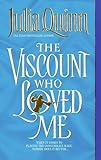
8. The Viscount Who Loved Me by Julia Quinn
Many Bridgerton fans consider this the series’s best novel. Anthony Bridgerton, the eldest sibling, has decided to marry for convenience rather than love — a decision complicated by the fact that the woman he has chosen to pursue is the younger sister of the woman who genuinely interests him. The rivals-to-lovers dynamic is executed with unusual precision.
Heat level: R. Accessible as a standalone if you have not read the first book.
9. Romancing Mister Bridgerton by Julia Quinn
The fourth Bridgerton novel is the fan favourite, following Colin Bridgerton and Penelope Featherington — childhood friends, long-held feelings, and the secret that, if revealed, would destroy everything between them. Quinn handles the slow-burn friends-to-lovers arc with more patience than she typically allows herself, and the result is the most emotionally satisfying novel in the series.
Heat level: R. Best read after the first three novels, though the central romance is self-contained.
Contemporary Romance: The Current Landscape
Contemporary romance — set in the present, usually in American or British cities, with modern relationship dynamics — is the most commercially active area of the genre. The following novels are the best recent examples across its major subgenres.
10. The Hating Game by Sally Thorne
Lucy Hutton and Joshua Templeman share an executive assistant suite and have despised each other since their respective CEOs merged companies. Thorne’s enemies-to-lovers novel is the form executed with unusual craft: the antagonism is specific and credible, the banter is genuinely funny, and the novel manages the transition from hate to attraction without cheating either phase.
Heat level: R. Recommended as a starting point for readers new to contemporary romance.
11. The Kiss Quotient by Helen Hoang
Stella Lane, an econometrician on the autism spectrum who struggles with intimacy, hires an escort named Michael Phan to help her practise relationships. Hoang’s novel is unusual in the genre for centring a neurodivergent heroine — and the portrayal is drawn from personal experience. The result is a romance that is simultaneously funny, emotionally acute, and genuinely moving.
Heat level: R. For readers who want contemporary romance with more psychological substance than the standard.
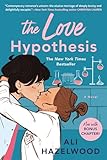
12. The Love Hypothesis by Ali Hazelwood
STEM PhD candidate Olive Smith kisses a stranger — biology professor Adam Carlsen — to convince her friend she is dating someone. The stranger agrees to sustain the pretence. Hazelwood’s fake-dating academic romance has become the genre’s most commercially successful debut of recent years, and the STEM setting gives the banter a specific flavour that distinguishes it from similar novels.
Heat level: PG-13 to R. For readers who want the fake-dating trope at its most efficient.
13. Beach Read by Emily Henry
Literary fiction writer January Andrews and romance novelist Augustus Everett are neighbours for the summer. Both have writer’s block. They make a bet: each will write the other’s genre by summer’s end. Henry’s novel works on two levels simultaneously — as a romance and as a genuine argument about what different kinds of fiction are for. The meta-textual dimension does not overwhelm the love story.
Heat level: PG-13 to R. Henry is the most literary voice in contemporary romance, and this is where to start.
14. People We Meet on Vacation by Emily Henry
Alex and Poppy have been best friends for a decade, taking one annual vacation together despite living very different lives. Two years ago something happened on their trip that ended the friendship. The novel alternates between past and present as we piece together what went wrong — and whether it can be undone. Henry’s execution of the friends-to-lovers arc across a decade of accumulated feeling is the best in the genre.
Heat level: PG-13. A slower, more melancholic Henry than Beach Read, and equally good.
15. Book Lovers by Emily Henry
Literary agent Nora Stephens and book editor Charlie Lastra keep encountering each other in the small North Carolina town where Nora has come to spend a month with her sister. Henry’s third novel is about people who live inside books — and who have, as a consequence, divided the world into the kinds of characters they are. Funnier and more self-aware than her previous novels.
Heat level: PG-13 to R. For readers who want their romance to contain jokes about the publishing industry.
16. The Spanish Love Deception by Elena Armas
Catalina Martín needs a date for her sister’s wedding in Spain — specifically, she needs to convince everyone she has moved on from her ex. Her insufferable colleague Aaron Blackford agrees to go with her. Armas’s slow-burn enemies-to-lovers novel was a TikTok sensation before it was traditionally published, and the pacing — a very long runway before the romance fully ignites — is either a feature or a bug depending on your patience.
Heat level: PG-13 to R. For readers who enjoy the slow-burn enemies-to-lovers format.
17. Red, White & Royal Blue by Casey McQuiston
The first son of the United States and a Prince of England are required, for diplomatic reasons, to fake a friendship after their public feud generates an international incident. The friendship becomes something more significant. McQuiston’s novel is fizzy, funny, politically hopeful in a very specific way, and the central romance is one of the most purely enjoyable in recent contemporary fiction.
Heat level: R. For readers who want M/M romance with political comedy and an optimistic ending.
Dark Romance and New Adult
18. Twisted Love by Ana Huang
Alex Volkov — cold, controlled, obsessively protective of his best friend’s sister — and Ava Chen navigate the kind of romance where the hero’s darkness is as much the subject as the love story itself. Huang’s novel is the best entry point into the darker end of the contemporary romance spectrum, with a plot that earns its emotional payoffs.
Heat level: R. For readers who want a more intense emotional register than standard contemporary romance.
19. Ugly Love by Colleen Hoover
Tate Collins and airline pilot Miles Archer agree to a no-strings arrangement. Miles’s terms: no asking about the past, no expectations of a future. The novel alternates between present-day Tate and past chapters revealing what happened to Miles — a structural choice that makes the emotional confrontation in the final third genuinely gutting.
Heat level: R. Among Hoover’s most emotionally affecting novels, and an efficient introduction to her work.
20. It Ends with Us by Colleen Hoover
Lily Bloom falls for neurosurgeon Ryle Kincaid — charming, successful, unwilling to commit — while also reconnecting with her first love, Atlas Corrigan, who reappears in her life at a complicated moment. The novel contains content relating to domestic abuse and cycles of violence in relationships; Hoover handles the subject with more seriousness than her lighter work. Content note: domestic violence depicted.
Heat level: PG-13. One of the most discussed romance novels of the past five years, and for substantive reasons beyond the controversy.
Where to Start by Reader Type
First romance: Begin with Me Before You. It is emotionally accessible, the love story is unambiguous, and it demonstrates that the genre can be genuinely moving without sacrificing craft. Most non-romance readers finish it in two days.
Classic literature reader: Begin with Pride and Prejudice. You may already have read it, in which case read it again knowing it is a romance novel. The genre comes from here.
Regency historical romance: Begin with The Duke and I. It is the most accessible entry into the Bridgerton world and into Regency romance generally. See our full Bridgerton guide for what to read next.
Contemporary romance: Begin with The Hating Game if you want something funny and fast, or Beach Read if you want something that thinks about the genre while doing it.
What Makes a Romance “Literary”?
The distinction between literary and genre romance is, in practice, less meaningful than critics suggest. The novels most frequently dismissed as “mere genre fiction” — Outlander, Normal People, The Seven Husbands of Evelyn Hugo — demonstrate the same technical skills as any prize-shortlisted literary novel: precise prose, psychologically complex characters, structural ingenuity, and thematic ambition.
What distinguishes literary fiction from genre fiction is, formally, nothing more than the presence or absence of a genre contract: the expectation, in romance, of a happily-ever-after ending. Some would argue that the genre contract — the guaranteed resolution — is a limitation. Others would argue it is the condition that allows the emotional journey to be explored without the distraction of narrative uncertainty.
The best argument for the second position is this list. These novels are not lesser achievements than literary fiction. They are the same thing under a different label — and they are read by far more people.
Author Guides: Complete Reading Orders
For every novel in order by romance’s most popular authors: Colleen Hoover books in order, Emily Henry books in order, Julia Quinn / Bridgerton in order, Nora Roberts books in order, and Nicholas Sparks books in order.
Affiliate disclosure: Links on this site are affiliate links. We earn a small commission at no extra cost to you. This does not influence our editorial recommendations.
Frequently Asked Questions
What is the best romance novel of all time?
Pride and Prejudice by Jane Austen is the most enduring romance novel ever written and the template for the entire genre. Among modern romance, Outlander by Diana Gabaldon and The Notebook by Nicholas Sparks are among the most read and adapted. The Duke and I by Julia Quinn launched the Bridgerton series and introduced millions of new readers to Regency romance.
What romance novels are recommended for people who do not normally read romance?
The best romance novels for sceptics are The Hating Game by Sally Thorne, Beach Read by Emily Henry, and Me Before You by Jojo Moyes. All three are written with wit and emotional intelligence that appeals beyond the core romance readership. Me Before You in particular is often described as transcending genre.
What are the best historical romance novels?
The best historical romance novels are Outlander by Diana Gabaldon (18th-century Scotland), the Bridgerton series by Julia Quinn (Regency England), and An Offer from a Gentleman by Julia Quinn. For literary historical romance, The Thornbirds by Colleen McCullough and Daphne du Maurier's Rebecca are considered genre-defining.
What contemporary romance authors are most popular right now?
The most popular contemporary romance authors right now are Colleen Hoover, Emily Henry, and Ana Huang. Colleen Hoover is the dominant force in BookTok-driven romance. Emily Henry is the most critically praised writer in contemporary romance. Fourth Wing by Rebecca Yarros blends romance with fantasy and is currently one of the bestselling books of the decade.