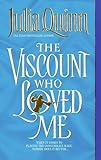
Editors Reads Verdict
Widely regarded as the strongest entry in the Bridgerton series, The Viscount Who Loved Me delivers the enemies-to-lovers arc at its most satisfying, anchored by one of romance fiction's most compelling heroines. Kate Sharma's refusal to be impressed by Anthony is the engine that makes the whole novel run.
What We Loved
- Kate Sharma is one of Quinn's finest heroines — sharp, principled, and genuinely funny
- The enemies-to-lovers tension is executed with patience and excellent comic timing
- Anthony's backstory regarding his father's early death gives the romance real emotional weight
- The bee motif threads through the novel with surprising elegance
Minor Drawbacks
- The central misunderstanding about Anthony's intentions stretches slightly past credibility
- Edwina's characterisation is thinner than the main pairing deserves
- Readers wanting a more modern sensibility may find some of Anthony's attitudes frustrating
Key Takeaways
- → Fear of loss can make people pre-emptively destroy the thing they most want
- → Being protective of someone you love is admirable; being controlling is not, and the line is easy to cross
- → A person who challenges your assumptions is more valuable than one who confirms them
- → Grief for a parent shapes adult character in ways that are slow to surface and hard to dislodge
- → The most effective romantic tension is built from genuine mutual respect, not just attraction
| Author | Julia Quinn |
|---|---|
| Publisher | Avon Books |
| Pages | 384 |
| Published | May 1, 2000 |
| Language | English |
| Genre | Romance, Historical Romance, Fiction |
| Difficulty | Beginner |
| Best For | Romance readers looking for a witty, emotionally satisfying Regency story; fans of the Netflix series wanting more depth than the screen can provide. |
How The Viscount Who Loved Me Compares
The Viscount Who Loved Me at a glance against 3 similar books readers weigh alongside it.
| Book | Author | Rating | Best for |
|---|---|---|---|
| The Viscount Who Loved Me (this book) | Julia Quinn | ★ 4.4 | Romance readers looking for a witty, emotionally satisfying Regency story |
| Pride and Prejudice | Jane Austen | ★ 4.9 | Classic Fiction |
| The Duke and I | Julia Quinn | ★ 4.1 | Romance readers |
| The Hating Game | Sally Thorne | ★ 4.2 | Romance readers who love slow burns, workplace settings, and heroes with a |
The Rake Who Chose Wrong
Anthony Bridgerton opens this novel with a plan so reasonable it is almost romantic in its cynicism: marry a pretty, biddable woman before the season ends, produce heirs, and remain emotionally uninvested throughout. He has decided on Edwina Sharma — lovely, sweet, universally admired. The one obstacle he did not account for is Edwina’s older sister Kate, who has taken it upon herself to screen Edwina’s suitors and who has concluded, after five minutes in Anthony’s company, that he is precisely the kind of charming, careless rake she intends to protect her sister from.
The resulting dynamic is Julia Quinn’s finest comic engine: two intelligent, stubborn people who have correctly assessed each other’s virtues and are furiously trying to ignore them.
Kate Sharma and the Art of the Heroine
What distinguishes Kate from many Regency heroines is that her opposition to Anthony is grounded in specific, reasonable analysis rather than mere misunderstanding. She has watched her sister’s happiness with a devoted elder-sibling intensity, and she is right that Anthony’s stated intentions — a pleasant marriage of convenience — are not what Edwina deserves. Her mistake is in refusing to revise her assessment as evidence accumulates that Anthony is more complicated than his reputation suggests.
Quinn gives Kate a backstory — her relationship with her stepmother, her own romantic foreclosures — that grounds her stubbornness in psychological reality rather than genre convention. She is not being difficult for plot reasons. She is being difficult because that is who she is, and the novel respects her for it.
Anthony’s Inheritance Problem
The novel’s most distinctive structural element is Anthony’s relationship with his father’s death. Edmund Bridgerton died young, suddenly, from a bee sting — and Anthony, as the eldest son who idolised him, has drawn the conclusion that he too will die young. He has organised his entire adult life around this assumption: take pleasure, avoid attachment, choose a wife with the detachment of a business transaction because why put a woman through real grief?
This backstory is deployed with care. It explains Anthony without excusing him, and it makes the moment when his defences finally collapse feel earned rather than arbitrary.
Why This Is the Series High Point
Among the eight Bridgerton novels, The Viscount Who Loved Me is the one most readers return to first. The main pairing generates real friction; the resolution is emotionally satisfying rather than just mechanically achieved; and the comedy — the archery scene, the piano recital, the running battle over what each character will and will not admit — lands with a precision Quinn’s later books sometimes sacrifice for sentimentality. If the Netflix series brought you to the books, start here.
Our rating: 4.4/5 — The Bridgerton series at its sharpest: a perfectly constructed enemies-to-lovers arc, an exceptional heroine, and romantic tension that earns its payoff.
Reading Guides
- Books Like Bridgerton: 15 Historical and Contemporary Romances to Read Next
- Julia Quinn Bridgerton Books in Order: Complete Reading Guide (2026)
- Best Romance Novels of All Time: 20 Love Stories You
The Enemies-to-Lovers Architecture
The enemies-to-lovers structure is one of romance fiction’s most reliable engines because it solves the pacing problem that plagues the genre: if both characters simply like each other from the beginning, there is no story. The conflict must be generated from somewhere, and the most satisfying version of that conflict — the kind that produces romantic tension rather than merely delay — is one in which both characters are responding intelligently to real information rather than misunderstanding each other over a misheard sentence.
Quinn’s version in The Viscount Who Loved Me is particularly well-constructed because Kate’s opposition to Anthony is grounded in specific, articulable reasoning. She has assessed him as a rake who wants a pleasant marriage of convenience that will not meet her sister’s emotional needs. This assessment is correct based on the available evidence. The dramatic irony — the reader can see that Anthony is more complicated than his reputation suggests, while Kate cannot — produces exactly the tension the genre requires while respecting Kate’s intelligence enough to make her wrong for defensible reasons rather than convenient ones.
Anthony’s Mortality and What It Drives
The Edmund Bridgerton backstory — the father who died young from a bee sting, the son who has built his entire adult philosophy around the assumption that he will die young too — is the novel’s most distinctive structural element and the one that most elevates it above a standard enemies-to-lovers arc. Anthony’s behaviour, which would otherwise be straightforwardly frustrating, becomes comprehensible once the backstory is established: he has organised his life around a mortality assumption so that the people who love him will suffer less when he dies. The tragedy is that this organisation requires him to keep those people at a distance that prevents the life he is trying to protect them from mourning.
Kate’s gradual penetration of this logic — not because she is told it but because she pays close enough attention to him to infer it — is the novel’s most satisfying intellectual movement. She does not dismantle his defenses; she makes them impossible to maintain through the sheer quality of her attention.
The Netflix Season 2 Adaptation
The Netflix Bridgerton series’ second season, which adapted The Viscount Who Loved Me in 2022, made Kate Sharma one of the show’s most celebrated characters. The adaptation’s decision to shift the character from Kate Sheffield to Kate Sharma, reflecting the show’s colorblind casting philosophy, did not alter the essential architecture of the relationship — the opposition grounded in intelligence, the slow revision of judgment, the bee as recurring motif — while bringing the story to an audience that had grown significantly since Season 1’s December 2020 premiere. Julia Quinn’s novel had been the series’ most recommended entry in the romance readership for years before the show’s amplification confirmed the broader consensus.
Frequently Asked Questions
What is "The Viscount Who Loved Me" about?
Anthony Bridgerton, London's most notorious rake, decides to marry for convenience — but falls helplessly in love with his intended's sharp-tongued, fiercely protective sister, Kate Sharma.
Who should read "The Viscount Who Loved Me"?
Romance readers looking for a witty, emotionally satisfying Regency story; fans of the Netflix series wanting more depth than the screen can provide.
What are the key takeaways from "The Viscount Who Loved Me"?
Fear of loss can make people pre-emptively destroy the thing they most want Being protective of someone you love is admirable; being controlling is not, and the line is easy to cross A person who challenges your assumptions is more valuable than one who confirms them Grief for a parent shapes adult character in ways that are slow to surface and hard to dislodge The most effective romantic tension is built from genuine mutual respect, not just attraction
Is "The Viscount Who Loved Me" worth reading?
Widely regarded as the strongest entry in the Bridgerton series, The Viscount Who Loved Me delivers the enemies-to-lovers arc at its most satisfying, anchored by one of romance fiction's most compelling heroines. Kate Sharma's refusal to be impressed by Anthony is the engine that makes the whole novel run.
Ready to Read The Viscount Who Loved Me?
Check the current price on Amazon.
Check Price on Amazon (paid link)Prices and availability are subject to change. See Amazon for current price.
Review last updated: