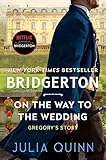
Editors Reads Verdict
The Bridgerton series' conclusion delivers a satisfying series finale that honours the family established across eight novels while giving Gregory a romance that subverts his initial certainties about love. The supporting cast's convergence gives the finale the sense of occasion it requires.
What We Loved
- The series conclusion brings the Bridgerton family together with genuine warmth and earned sentiment
- Gregory's arc — from misplaced certainty to genuine feeling — is more interesting than his earlier appearances suggested
- Lucy Abernathy is a strong, practically minded heroine whose obligations give the conflict real weight
- The wedding-stopping climax earns its melodrama through careful narrative preparation
Minor Drawbacks
- Gregory is the least developed Bridgerton sibling coming in, which limits initial reader investment
- The secondary romance (Lucy's intended) requires the villain to be conveniently flawed enough to justify resolution
- As a series finale, it carries a weight of expectation that no single novel could entirely satisfy
Key Takeaways
- → Certainty about who you love is not the same as certainty about why — the second question matters more
- → Practical people who fall in love are not less romantic; they experience a different kind of upheaval
- → The obligations we inherit are not always compatible with the happiness we pursue
- → A family that loves you well also complicates your romantic choices, because they have opinions
- → Endings are moments, but series finales are about accumulated feeling — you are not just finishing this story
| Author | Julia Quinn |
|---|---|
| Publisher | Avon Books |
| Pages | 371 |
| Published | April 1, 2006 |
| Language | English |
| Genre | Romance, Historical Romance, Fiction |
| Difficulty | Beginner |
| Best For | Bridgerton series completionists; romance readers who want a satisfying series conclusion; fans of the Netflix adaptation following the remaining siblings. |
How On the Way to the Wedding Compares
On the Way to the Wedding at a glance against 3 similar books readers weigh alongside it.
| Book | Author | Rating | Best for |
|---|---|---|---|
| On the Way to the Wedding (this book) | Julia Quinn | ★ 4.2 | Bridgerton series completionists |
| Romancing Mister Bridgerton | Julia Quinn | ★ 4.5 | Romance readers wanting the series' emotional peak |
| The Duke and I | Julia Quinn | ★ 4.1 | Romance readers |
| The Viscount Who Loved Me | Julia Quinn | ★ 4.4 | Romance readers looking for a witty, emotionally satisfying Regency story |
The Last Bridgerton
Gregory Bridgerton arrives in his own novel as the sibling readers know least, which is both a challenge and a freedom. He has been in the background of every family scene since the first book — the younger brother who does not get the spotlight, the Bridgerton who would be last. Quinn uses this relative blankness productively: Gregory’s story can begin from something closer to a clean slate, his character defined by this novel rather than accumulated across its predecessors.
His problem is that he has decided, with the cheerful certainty of someone who has not thought it through fully, that he is in love with Hermione Watson. The woman who actually engages his attention, challenges his logic, and occupies his thoughts is Hermione’s best friend Lucy Abernathy — who is engaged to someone else.
Gregory and the Error of Certainty
The novel’s central comedic and romantic engine is Gregory’s confidence about his own feelings versus the evidence of his own behaviour. He is certain he loves Hermione. He cannot stop thinking about Lucy. Quinn handles this not as dishonesty or self-deception but as the specific limitation of a man who has formed his ideas about love from the outside — watching his siblings’ romances — rather than from experience.
Lucy’s position complicates this in useful ways. She is practical, clear-eyed, bound by genuine obligations to a family she cannot simply abandon, and unwilling to indulge Gregory’s certainties until he has done the work of actually examining them.
The Series Finale
On the Way to the Wedding has to do double duty: it must be a satisfying romance in its own right and a satisfying conclusion to an eight-book series. Quinn manages this by converging the Bridgerton family for the climax — the wedding-stopping scene is the series’ most crowd-pleasing moment precisely because it mobilises the family warmth that has been the series’ constant throughout.
The final novel is not the strongest in the series by craft metrics — that remains the second or fourth — but it is exactly what a series finale should be: warm, funny, emotionally generous, and aware that the reader has been here for eight books and deserves a proper goodbye.
The World Quinn Built
Looking back across the eight novels, what is most striking about the Bridgerton series is its consistency of warmth. Quinn’s fictional London is not an accurate historical document; it is a place where intelligence and feeling are more important than rank, where families support rather than merely organise their members, and where love — eventually, after sufficient complication — actually works out. This is not a modest achievement.
Our rating: 4.2/5 — A warm, crowd-pleasing series finale that gives the Bridgerton family the send-off they deserve, with a heroine worth the wait and a climax that earns its melodrama.
Reading Guides
- Books Like Bridgerton: 15 Historical and Contemporary Romances to Read Next
- Julia Quinn Bridgerton Books in Order: Complete Reading Guide (2026)
Gregory and the Problem of Being Last
Gregory Bridgerton has one structural problem that no other sibling faces: he is the last. Every reader who has followed the series to its eighth book has watched seven other Bridgerton romances develop, and Gregory has been present in many of them as the sibling who is not yet the subject. His own novel must work both as a standalone romance and as a series finale, and it must do so with a character who carries less accumulated reader investment than any of his siblings.
Quinn’s solution is to use Gregory’s relative blankness as a feature rather than a bug. He arrives in his own story without the burden of reader expectations that earlier siblings carried — no one has seven books of anticipation about Gregory Bridgerton — which gives his romance more room to develop on its own terms. He does not need to be the person we have been waiting for; he needs to be interesting enough to deserve the ending he gets. Quinn, largely, achieves this.
Lucy Abernathy and the Practically Minded Heroine
Lucy is the series’ most pragmatic heroine, and her pragmatism is grounded in circumstances that make it reasonable rather than merely characterological. She has obligations to her family that she cannot simply set aside because a charming man has noticed her. She is engaged to someone else through a process that made sense when it was arranged and makes sense within the social constraints that organised it. Her resistance to Gregory is not coyness or misunderstanding; it is a person managing real competing obligations in a world that does not offer easy exits from them.
This makes the resolution more complicated to engineer than a standard romance obstacle, and Quinn’s management of how Lucy’s situation is resolved has been debated in the series’ readership. The wedding-stopping climax works as genre spectacle; whether the underlying social problem is fully resolved is a different question.
A Series Finale’s Particular Demands
On the Way to the Wedding was published in 2006, completing the eight-sibling arc that Quinn had planned from the series’ beginning in 2000. The novel carries the accumulated weight of the world she built across seven predecessors, and its finale function shapes every choice: the convergence of the Bridgerton family for the climax, the warmth that pervades even its complication, the sense that what is being concluded is not just Gregory’s story but the Bridgerton series as a whole. Quinn published the series over six years, building a readership in the romance community that Netflix’s December 2020 adaptation of the first book then multiplied enormously, bringing many new readers to the series conclusion. The Netflix show, one of Netflix’s most-watched series, has continued adapting the siblings in sequence, reaching Colin and Penelope’s story in Season 3 and Eloise’s in Season 4.
Frequently Asked Questions
What is "On the Way to the Wedding" about?
Gregory Bridgerton falls for a woman who loves someone else — and must stop a wedding to claim his own happy ending in the final chapter of Julia Quinn's beloved Regency series.
Who should read "On the Way to the Wedding"?
Bridgerton series completionists; romance readers who want a satisfying series conclusion; fans of the Netflix adaptation following the remaining siblings.
What are the key takeaways from "On the Way to the Wedding"?
Certainty about who you love is not the same as certainty about why — the second question matters more Practical people who fall in love are not less romantic; they experience a different kind of upheaval The obligations we inherit are not always compatible with the happiness we pursue A family that loves you well also complicates your romantic choices, because they have opinions Endings are moments, but series finales are about accumulated feeling — you are not just finishing this story
Is "On the Way to the Wedding" worth reading?
The Bridgerton series' conclusion delivers a satisfying series finale that honours the family established across eight novels while giving Gregory a romance that subverts his initial certainties about love. The supporting cast's convergence gives the finale the sense of occasion it requires.
Ready to Read On the Way to the Wedding?
Check the current price on Amazon.
Check Price on Amazon (paid link)Prices and availability are subject to change. See Amazon for current price.
Review last updated: