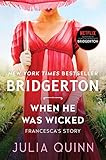
Editors Reads Verdict
The most divisive Bridgerton novel is also the most ambitious: a genuine examination of grief, guilt, and the kind of love that cannot be acted on. Quinn breaks with every formula she has established to tell a story about longing and loss that reads more like literary romance than genre comfort fare.
What We Loved
- The darkest and most emotionally complex of the Bridgerton novels by a significant margin
- Michael Stirling is the most internally conflicted hero of the series, and Quinn earns every complication
- The treatment of grief is unusually honest — slow, non-linear, and resistant to romantic consolation
- The structural departure from the series formula is a genuine artistic risk that mostly pays off
Minor Drawbacks
- Readers expecting the light, bantering tone of the earlier books will find this a significant tonal departure
- The time structure — years pass, loss accumulates — requires patience from readers accustomed to a more linear arc
- Francesca is a quieter heroine than the series has previously offered, and some readers want more of her interiority
Key Takeaways
- → Loving someone you cannot have is a form of moral problem, not just an emotional one
- → Grief does not resolve on a schedule, and demanding that it do so is its own cruelty
- → Guilt can become indistinguishable from loyalty when the object of both is the same person
- → A relationship begun in shadow carries that shadow forward — the question is what you do with it
- → Love that survives the worst circumstances is not the same as love that causes the worst circumstances
| Author | Julia Quinn |
|---|---|
| Publisher | Avon Books |
| Pages | 371 |
| Published | October 1, 2004 |
| Language | English |
| Genre | Romance, Historical Romance, Fiction |
| Difficulty | Beginner |
| Best For | Committed Bridgerton series readers; romance readers interested in the genre's capacity for genuine emotional darkness; readers who prefer depth to lightness. |
How When He Was Wicked Compares
When He Was Wicked at a glance against 3 similar books readers weigh alongside it.
| Book | Author | Rating | Best for |
|---|---|---|---|
| When He Was Wicked (this book) | Julia Quinn | ★ 4.2 | Committed Bridgerton series readers |
| Me Before You | Jojo Moyes | ★ 4.4 | Romance readers who want emotional depth and a willingness to engage with |
| Romancing Mister Bridgerton | Julia Quinn | ★ 4.5 | Romance readers wanting the series' emotional peak |
| The Duke and I | Julia Quinn | ★ 4.1 | Romance readers |
The Love You Cannot Have
Michael Stirling sees Francesca Bridgerton across a crowded supper room and falls in love with her in the instant before he learns that the supper celebrates her engagement to his cousin John. This is the novel’s entire premise and its entire tragedy in a single narrative beat, and Quinn does not soften it: Michael loves Francesca for years while she is happily married to John, and the love is as hopeless and as real as any in the series.
What Quinn does with this material is the most daring move she makes in the eight-book series: she takes it seriously.
The Formal Experiment
When He Was Wicked breaks from the series’ standard structure in ways that initially disorient readers accustomed to the pattern. Time passes — years, not weeks. John Bridgerton is present, characterised, and genuinely good. His death is not a convenient narrative disposal. The novel’s second half must contend with the weight of what its first half established: Michael loved Francesca while she was someone else’s wife, and that fact does not disappear when the circumstances change.
Quinn’s decision to give Michael a specific and developed perspective on his own guilt — rather than using the standard romance hero’s opaque self-punishment — makes him the series’ most psychologically accessible male lead.
Grief as the Novel’s Real Subject
If any Bridgerton novel has a subject beyond its romance, it is this one. Francesca’s grief after John’s death is depicted with an attention to its non-linear quality — the days that feel possible, the days that do not, the way recovery looks different from inside than from outside — that is unusual in genre romance. Her eventual openness to Michael is not the resolution of grief but its continuation by different means.
This is what divides readers. Those who want the series’ characteristic light resolution will find this novel’s emotional weight a mismatch. Those who want to see what the genre can do when it takes its darkest material seriously will find it the series’ most significant achievement.
The Dark Entry
In discussions of the Bridgerton books, this is the one that comes with the most caveats and the most loyal defenders. It is not a comfortable read. It was not designed to be. Quinn knew she was writing a departure and made the choice deliberately. For readers who have followed the series through its lighter instalments, When He Was Wicked is the point at which the Bridgerton world reveals its capacity for genuine tragedy.
Our rating: 4.2/5 — The Bridgerton series’ most daring departure: a dark, formally ambitious novel about love, guilt, and grief that rewards the readers willing to meet it on its own terms.
Reading Guides
- Books Like Bridgerton: 15 Historical and Contemporary Romances to Read Next
- Julia Quinn Bridgerton Books in Order: Complete Reading Guide (2026)
The Structure of an Impossible Love
What makes When He Was Wicked formally distinctive in the Bridgerton series is not simply that it is darker than its predecessors but that it takes its darkness seriously enough to let it shape the narrative architecture. Most romance novels — including Quinn’s own earlier Bridgerton entries — use misunderstanding, external opposition, and the hero’s emotional blockages as temporary obstacles to an outcome that the genre contract guarantees. When He Was Wicked uses its central impossibility — Michael loves Francesca while she is happily married to John — not as an obstacle to be resolved but as the defining condition of the novel’s first movement.
John Bridgerton is alive, present, and characterised. He is not cruel or negligent or conveniently flawed enough to justify Michael’s feelings by contrast. He is good. Francesca’s love for him is real. Quinn does not arrange the novel so that the reader can secretly agree with Michael; she arranges it so that the reader has to sit with the same discomfort Michael does. This is a structurally unusual choice for genre romance, and it produces a novel that does not feel quite like any of its predecessors in the series.
Michael Stirling’s Psychology
Romance heroes in the genre tradition are typically opaque about their emotional states — the heroine’s task is often to crack through surface comportment to find the feeling beneath. Michael Stirling is constructed differently. His awareness of his own love for Francesca, his analysis of what it costs him, his management of the guilt that love produces, are rendered with a degree of psychological explicitness that is unusual for the genre. Quinn gives him a first-person relationship to his own interior life rather than letting his feelings remain legible only through behaviour.
This makes him simultaneously the most accessible and the most uncomfortable hero of the series. He is doing something the reader can follow in real time, but what he is doing is morally uncomfortable — loving someone else’s wife, however silently and however hopelessly — and Quinn does not pretend otherwise.
Grief and Its Non-Linear Quality
Francesca’s grief after John’s death is where When He Was Wicked earns its most serious ambitions. The period between John’s death and the novel’s second romantic movement is handled with attention to how grief actually operates — not as a linear process with predictable stages but as a fluctuating condition that changes quality over time without resolving. Some days are possible. Some are not. Recovery, when it begins, does not feel like recovery from the inside. Quinn published this novel in 2004, and it remains the entry in the Bridgerton series that most consistently surprises readers who come to it expecting the tone of the earlier books. The Netflix Bridgerton series, which began in December 2020 and covered the first four siblings across its initial seasons, has yet to adapt this entry — its tonal demands would require the show to depart significantly from its established register.
Frequently Asked Questions
What is "When He Was Wicked" about?
Michael Stirling falls in love with Francesca Bridgerton at first sight — and discovers that she is about to marry his cousin. This is the darkest, most formally daring novel in the Bridgerton series.
Who should read "When He Was Wicked"?
Committed Bridgerton series readers; romance readers interested in the genre's capacity for genuine emotional darkness; readers who prefer depth to lightness.
What are the key takeaways from "When He Was Wicked"?
Loving someone you cannot have is a form of moral problem, not just an emotional one Grief does not resolve on a schedule, and demanding that it do so is its own cruelty Guilt can become indistinguishable from loyalty when the object of both is the same person A relationship begun in shadow carries that shadow forward — the question is what you do with it Love that survives the worst circumstances is not the same as love that causes the worst circumstances
Is "When He Was Wicked" worth reading?
The most divisive Bridgerton novel is also the most ambitious: a genuine examination of grief, guilt, and the kind of love that cannot be acted on. Quinn breaks with every formula she has established to tell a story about longing and loss that reads more like literary romance than genre comfort fare.
Ready to Read When He Was Wicked?
Check the current price on Amazon.
Check Price on Amazon (paid link)Prices and availability are subject to change. See Amazon for current price.
Review last updated: