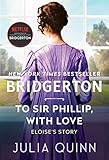
Editors Reads Verdict
The most unconventional entry in the Bridgerton series deploys an epistolary beginning and a genuinely darker emotional palette than its predecessors. Eloise is the series' most intellectually ambitious heroine, and her collision with Sir Phillip's grief-saturated household gives the romance more weight than comfort readers may expect.
What We Loved
- Eloise Bridgerton is a genuinely unusual Regency heroine — intellectual, feminist in orientation, and uncomfortable with the social rules she is supposed to follow
- The epistolary opening is a distinctive structural choice that gives the romance an unusual grounding
- The children subplot adds genuine emotional complexity rather than mere plot complication
- Sir Phillip's grief and depression are handled with more psychological honesty than the genre usually attempts
Minor Drawbacks
- The tonal shift between the light epistolary opening and the darker household reality is jarring for some readers
- Sir Phillip is a less conventionally appealing hero and some readers find him difficult to warm to
- The resolution of the family trauma feels accelerated relative to the care with which it was established
Key Takeaways
- → Letters allow people to present edited versions of themselves; physical presence removes that editing
- → Grief that is not processed becomes atmospheric — it saturates a household without needing to announce itself
- → Intellectual freedom is a feminist aspiration with Regency-specific costs that cannot simply be wished away
- → Children absorb the emotional atmosphere of their home far more accurately than adults tend to credit
- → The person who is right for you on paper may require a different kind of love in practice
| Author | Julia Quinn |
|---|---|
| Publisher | Avon Books |
| Pages | 374 |
| Published | September 1, 2003 |
| Language | English |
| Genre | Romance, Historical Romance, Fiction |
| Difficulty | Beginner |
| Best For | Bridgerton series readers following Eloise's arc; romance readers drawn to darker emotional registers and unconventional heroes. |
How To Sir Phillip, With Love Compares
To Sir Phillip, With Love at a glance against 3 similar books readers weigh alongside it.
| Book | Author | Rating | Best for |
|---|---|---|---|
| To Sir Phillip, With Love (this book) | Julia Quinn | ★ 4.2 | Bridgerton series readers following Eloise's arc |
| Pride and Prejudice | Jane Austen | ★ 4.9 | Classic Fiction |
| Romancing Mister Bridgerton | Julia Quinn | ★ 4.5 | Romance readers wanting the series' emotional peak |
| The Duke and I | Julia Quinn | ★ 4.1 | Romance readers |
Letters to a Widower
To Sir Phillip, With Love begins with a correspondence. Eloise Bridgerton — the Bridgerton sibling most likely to have read Sense and Sensibility critically rather than admiringly — has been writing to Sir Phillip Crane, a botanist widower, for months. Their letters have the intellectual quality of a genuine friendship, and Eloise, watching her brothers and sisters pair off and feeling the social pressure to do the same, decides that a man she can talk to is better than a man she finds conventionally attractive.
She arrives at his estate unannounced. This is approximately as advisable as it sounds.
Eloise Bridgerton
Fan discussions of the Bridgerton series often divide between those who find Eloise the most interesting Bridgerton and those who find her the most exasperating — and these responses are not as different as they appear. Eloise has the most fully developed intellectual life of any Quinn heroine, a genuine discomfort with Regency gender conventions, and a frustration with her own situation that gives the novel an emotional undertow the earlier books largely avoided.
She is not a perfect character. She can be self-righteous. She sometimes confuses being different with being right. But Quinn gives her a specifically realised inner life rather than a collection of heroine attributes, and the novel is more interesting for it.
Sir Phillip’s Household
What Eloise encounters at Sir Phillip’s estate is not a charming country idyll but a household still organised around loss. His first wife Marina (whose story is told more fully in the companion novel Bridgertons: Happily Ever After) suffered from what would today be recognised as severe depression, and the house carries the weight of that history. His children are feral, his social skills are rusty, and his own emotional processing has stalled somewhere around suppression.
Quinn takes these circumstances seriously, which is what gives the novel its distinctive texture. The romance here has to work through something, not around it.
The Unusual Fifth Book
In a series that tends toward lightness, To Sir Phillip, With Love is the entry most willing to sit with discomfort. It is not the fan favourite — that remains the fourth book — but it is arguably the most daring in its structural and tonal choices. Readers who want more emotional complexity than Regency romance typically delivers will find it here.
Our rating: 4.2/5 — The Bridgerton series’ most unconventional entry, anchored by its most intellectual heroine and willing to explore emotional territory the earlier books largely avoided.
Reading Guides
- Books Like Bridgerton: 15 Historical and Contemporary Romances to Read Next
- Julia Quinn Bridgerton Books in Order: Complete Reading Guide (2026)
The Epistolary Opening and Its Function
The choice to open To Sir Phillip, With Love with a correspondence rather than a scene is structurally unconventional for a romance novel, and Quinn deploys it with specific purpose. Letters allow both parties to construct edited versions of themselves — thoughtful, measured, intellectually engaged — that physical presence immediately complicates. Eloise and Sir Phillip’s written relationship has a quality it cannot sustain when she arrives at his estate unannounced and encounters not the man his letters described but the man his circumstances have made him: quieter than his prose, more burdened, less capable of the wit that written exchange rewards.
The tonal shift this creates — from the light, bright epistolary opening to the heavier atmosphere of Sir Phillip’s household — is the element that divides readers most sharply. Some find it jarring; others find it the most honest structural move Quinn makes across the eight-book series. It is certainly deliberate: Quinn is using form to make an argument about the difference between a person as they can present themselves and a person as they actually are.
Eloise’s Position in the Series
Eloise Bridgerton is the sibling who has most explicitly resisted the marriage market, not from shyness or lack of opportunity but from a genuine and articulated intellectual discomfort with what the process requires her to be. She has been a peripheral observer of her siblings’ romances — watching from the edges of scenes she appears in throughout the earlier books — and her accumulated observation has not produced enthusiasm for her own participation. Her arrival at Sir Phillip’s estate is an attempt to short-circuit the social machinery by choosing her own terms.
This makes her novel the series entry most directly concerned with female autonomy as a Regency-specific problem. Eloise cannot simply choose not to marry; the social and economic consequences are real. She cannot choose entirely on her own terms; the world she inhabits does not permit it. What she can do — and what Quinn has her do — is negotiate within constraints with as much intelligence and agency as the situation allows. The Netflix Bridgerton series featured Eloise’s arc in Season 4, adapting the novel for a contemporary audience familiar with the character from three prior seasons.
Sir Phillip’s Children and the Emotional Stakes
The children — twins Oliver and Amanda — are not simply plot complications. Quinn uses them to develop the emotional stakes of the romance in a way that is specific to this novel’s darker register. Their wildness is not charming mischief but the behaviour of children who have grown up in a household where adult grief was the dominant atmospheric condition. They absorb the emotional reality of their environment more accurately than any adult in the novel gives them credit for, and their eventual response to Eloise is not merely a narrative requirement but a psychologically earned development in characters who have been consistently rendered rather than used.
Frequently Asked Questions
What is "To Sir Phillip, With Love" about?
Eloise Bridgerton has been writing letters to a widowed botanist for months. When she decides to meet Sir Phillip Crane in person, she discovers that a man on paper and a man in a home are not the same man at all.
Who should read "To Sir Phillip, With Love"?
Bridgerton series readers following Eloise's arc; romance readers drawn to darker emotional registers and unconventional heroes.
What are the key takeaways from "To Sir Phillip, With Love"?
Letters allow people to present edited versions of themselves; physical presence removes that editing Grief that is not processed becomes atmospheric — it saturates a household without needing to announce itself Intellectual freedom is a feminist aspiration with Regency-specific costs that cannot simply be wished away Children absorb the emotional atmosphere of their home far more accurately than adults tend to credit The person who is right for you on paper may require a different kind of love in practice
Is "To Sir Phillip, With Love" worth reading?
The most unconventional entry in the Bridgerton series deploys an epistolary beginning and a genuinely darker emotional palette than its predecessors. Eloise is the series' most intellectually ambitious heroine, and her collision with Sir Phillip's grief-saturated household gives the romance more weight than comfort readers may expect.
Ready to Read To Sir Phillip, With Love?
Check the current price on Amazon.
Check Price on Amazon (paid link)Prices and availability are subject to change. See Amazon for current price.
Review last updated: