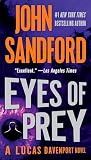
Editors Reads Verdict
Eyes of Prey, the third Lucas Davenport novel, is among the darkest and best of the early series, pitting a depressed Davenport against two of Sandford's most memorable villains: a disfigured pathologist and a sociopathic actor. The psychological cat-and-mouse, and Davenport's own darkness, give it real intensity.
What We Loved
- Two memorable, chilling villains
- A dark, psychological cat-and-mouse
- Davenport's own depression deepens the book
- Among the best early entries
Minor Drawbacks
- Dark, disturbing subject matter
- A bleak, intense tone
- The early-1990s setting shows its age
Key Takeaways
- → A killer's theatricality can be his undoing
- → A detective can share his quarry's darkness
- → Two killers are deadlier than one
- → Depression colors the hunt
| Author | John Sandford |
|---|---|
| Publisher | Berkley |
| Pages | 384 |
| Published | January 1, 1991 |
| Language | English |
| Genre | Thriller, Crime Fiction, Mystery, Fiction |
| Difficulty | Beginner |
| Best For | Lucas Davenport readers; fans of dark, psychological serial-killer thrillers. |
How Eyes of Prey Compares
Eyes of Prey at a glance against 3 similar books readers weigh alongside it.
| Book | Author | Rating | Best for |
|---|---|---|---|
| Eyes of Prey (this book) | John Sandford | ★ 4.1 | Lucas Davenport readers |
| Shadow Prey | John Sandford | ★ 3.9 | Lucas Davenport readers |
| Silent Prey | John Sandford | ★ 4.0 | Lucas Davenport readers |
| Winter Prey | John Sandford | ★ 4.1 | Lucas Davenport readers |
A Murderous Bargain
Eyes of Prey, the third Lucas Davenport novel, is among the darkest and finest of the early series, and it builds its intensity around two of John Sandford’s most memorable villains. A brilliant but disfigured and drug-addled pathologist, consumed by self-loathing, and a charming, sociopathic actor strike a murderous bargain — a partnership in killing that serves each man’s twisted needs. As bodies begin to turn up with their eyes destroyed, a signature of the killers’ particular pathology, Lucas Davenport is drawn into the hunt. But Davenport himself is sunk in a deep depression, and to outthink a pair of killers as theatrical as they are deadly, he must first climb out of his own darkness.
The two villains are the book’s great strength. The disfigured pathologist and the sociopathic actor are vivid, chilling creations, their murderous partnership giving the novel a doubled menace, and their theatricality — the actor’s performances, the pathologist’s clinical cruelty — makes them memorable antagonists. Two killers are deadlier than one, and the dynamic between them, the murderous bargain that binds them, gives Eyes of Prey a distinctive, disturbing center. The destruction of the victims’ eyes is a horrifying signature, and the killers’ particular pathology gives the novel a dark, psychological intensity.
Davenport’s Darkness
What deepens Eyes of Prey is Davenport’s own depression. The series’ hero, usually aggressive and confident, is here sunk in a deep depression that colors his pursuit, and the novel draws real intensity from the parallel between the detective and his quarry — both moving through darkness, the killers in their pathology, Davenport in his despair. This psychological dimension distinguishes the book, Davenport’s depression giving the hunt an emotional weight beyond the procedural, the sense of a detective who must overcome his own darkness to confront the darkness of his quarry. A detective can share his quarry’s darkness, and Eyes of Prey explores that unsettling kinship.
Davenport’s depression also deepens the character. The series had established him as a tough, unconventional cop; Eyes of Prey reveals his vulnerability, the darkness beneath the aggression, and the struggle to climb out of his despair to do the work. This character depth gives the novel an emotional resonance, the hunt for the killers inseparable from Davenport’s own psychological struggle. Sandford handles the depression with seriousness, refusing to make it a mere plot device, and the parallel between detective and killers gives the book its psychological power.
A Dark Cat-and-Mouse
Eyes of Prey is a dark, psychological cat-and-mouse, the hunt for the theatrical killers unfolding as a battle of wits between Davenport and his clever quarry. The killers’ theatricality — the actor’s ability to perform, to deceive, to hide in plain sight — makes them difficult to catch, and the psychological gamesmanship gives the novel its tension. Davenport must outthink killers who are intelligent, deceptive, and bound by a murderous partnership, and the cat-and-mouse drives the book toward a tense confrontation. The killer’s theatricality, ultimately, becomes a clue and an undoing, the very performances that conceal them providing the path to their capture.
The novel is dark and disturbing, its subject matter — the murderous bargain, the destroyed eyes, the killers’ pathology — genuinely unsettling, and its tone bleak and intense throughout. Readers seeking lighter entertainment should be warned of the darkness; Eyes of Prey is among the grimmest early Prey novels. But the disturbing material is the source of the book’s power, the psychological intensity and the memorable villains giving it a force the lighter entries lack. Sandford’s sharp prose and propulsive plotting carry the dark cat-and-mouse, and the early-1990s setting, while dating the book, gives it a specific texture.
A Dark, Excellent Entry
Eyes of Prey is among the best and darkest early Lucas Davenport novels, and its strengths are the two memorable villains, the dark psychological cat-and-mouse, and Davenport’s own depression. The disfigured pathologist and the sociopathic actor are chilling antagonists, the cat-and-mouse generates intensity, and Davenport’s darkness deepens the book. The disturbing subject matter and the bleak tone are considerations, but the memorable villains and the psychological depth distinguish it as a standout.
Sandford’s sharp prose and propulsive plotting carry the dark thriller, and the parallel between detective and killers gives it psychological power. Eyes of Prey is the series at its darkest and most psychologically intense, anchored by two memorable villains and a depressed detective, among the finest early entries in the Prey series.
Where It Sits in the Series
Eyes of Prey is the third Lucas Davenport / Prey novel, following Shadow Prey and preceding Silent Prey, which continues the story of one of its villains. It reads well in sequence, and its connection to Silent Prey makes the order meaningful. For readers tracking the Prey series, it is among the finest early entries.
Among the Prey novels, Eyes of Prey stands out as one of the darkest and best early entries, with two memorable villains and a depressed detective. It is a dark psychological cat-and-mouse anchored by a murderous bargain and Davenport’s own darkness, demonstrating Sandford’s gift for chilling villains and giving the series real psychological intensity.
The pairing of the two killers is what gives Eyes of Prey its distinctive horror, and it reflects a sophistication unusual in the genre. Most thrillers settle for a single antagonist; Sandford instead builds his around a folie à deux, a murderous partnership in which each man enables and amplifies the other’s pathology. The disfigured pathologist supplies the clinical knowledge and the self-loathing rage; the actor supplies the charm, the performance, the ability to move through the world undetected. Together they are far more dangerous than either alone, and the novel draws genuine dread from the way their partnership multiplies their menace. It is a study in how evil can collaborate, how two damaged people can find in each other the missing piece that makes atrocity possible, and that psychological insight elevates Eyes of Prey well above a routine serial-killer thriller.
Our rating: 4.1/5 — Among the darkest and finest early Lucas Davenport novels, pitting a depressed Davenport against two memorable villains — a disfigured pathologist and a sociopathic actor — in an intense psychological cat-and-mouse.
Frequently Asked Questions
What is "Eyes of Prey" about?
A brilliant, drug-addled pathologist and a charming, sociopathic actor strike a murderous bargain. As bodies turn up with their eyes destroyed, Lucas Davenport — himself sunk in a deep depression — must climb out of his own darkness to outthink a pair of killers as theatrical as they are deadly.
Who should read "Eyes of Prey"?
Lucas Davenport readers; fans of dark, psychological serial-killer thrillers.
What are the key takeaways from "Eyes of Prey"?
A killer's theatricality can be his undoing A detective can share his quarry's darkness Two killers are deadlier than one Depression colors the hunt
Is "Eyes of Prey" worth reading?
Eyes of Prey, the third Lucas Davenport novel, is among the darkest and best of the early series, pitting a depressed Davenport against two of Sandford's most memorable villains: a disfigured pathologist and a sociopathic actor. The psychological cat-and-mouse, and Davenport's own darkness, give it real intensity.
Ready to Read Eyes of Prey?
Check the current price on Amazon.
Check Price on Amazon (paid link)Prices and availability are subject to change. See Amazon for current price.
Review last updated: