Editors Reads Verdict
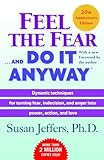
Feel the Fear and Do It Anyway is one of the foundational texts of modern self-help — a clear, compassionate framework for understanding fear and anxiety that remains as relevant now as it was when first published in 1987.
What We Loved
- The central insight — that fear is normal and acting despite it builds confidence — is genuinely liberating
- Clear, compassionate writing that avoids the bullying tone of some motivation books
- The 'pain-to-power' vocabulary exercises are immediately applicable
- Practical and psychologically grounded without being academic
Minor Drawbacks
- Some of the specific techniques feel dated in their framing
- Less analytically rigorous than more recent books on anxiety and behaviour change
- The positive-thinking dimension is more assertion-based than evidence-based
Key Takeaways
- → Fear never goes away — every new level of growth brings a new version of it
- → The only way to feel less afraid is to go through the fear, not around it
- → Confidence is built through action, not through waiting until you feel ready
- → At the bottom of every fear is the belief that you cannot handle what happens next — and that belief is false
- → Taking responsibility for your experience is the beginning of power
| Author | Susan Jeffers |
|---|---|
| Publisher | Ballantine Books |
| Pages | 224 |
| Published | April 1, 1987 |
| Language | English |
| Genre | Self-Help, Personal Development |
| Difficulty | Beginner |
| Best For | Anyone struggling with fear, indecision, or anxiety who wants a practical, compassionate framework for moving forward — particularly useful for people at major life transitions. |
How Feel the Fear and Do It Anyway Compares
Feel the Fear and Do It Anyway at a glance against 3 similar books readers weigh alongside it.
| Book | Author | Rating | Best for |
|---|---|---|---|
| Feel the Fear and Do It Anyway (this book) | Susan Jeffers | ★ 4.1 | Anyone struggling with fear, indecision, or anxiety who wants a practical, |
| Atomic Habits | James Clear | ★ 4.8 | Anyone who wants to build better habits, break bad ones, or improve personal |
| The Charisma Myth | Olivia Fox Cabane | ★ 4.2 | Professionals looking to improve their leadership presence, social skills, and |
| You Can Heal Your Life | Louise Hay | ★ 4.3 | Readers open to a mind-body-spirit framework who are seeking tools for |
The Permission You Didn’t Know You Needed
Susan Jeffers’s central insight in Feel the Fear and Do It Anyway is almost embarrassingly simple: fear doesn’t go away. Every new level of growth brings a new version of it. The people who seem fearless are not without fear — they have simply learned to act despite it. And the act of acting despite fear is exactly what builds the confidence that reduces future fear.
This observation — obvious in retrospect, genuinely clarifying when you first encounter it — reframes the whole relationship to anxiety. If you are waiting until you feel ready, until the fear goes away, until you feel confident enough to try: you are waiting for something that will never arrive. The readiness comes after, not before.
The Five Truths About Fear
Jeffers organises her argument around five foundational truths that recur throughout the book. The first: the fear will never go away as long as you continue to grow. The second: the only way to get rid of the fear of doing something is to go out and do it. The third: the only way to feel better about yourself is to go out and do it — the doing comes before the confidence, never the other way around. The fourth: not only will you experience fear on unfamiliar territory, so will everyone else, including the people who look effortlessly assured. And the fifth, perhaps the most freeing: pushing through fear is less frightening than living with the underlying helplessness of never acting at all.
Beneath all of these sits her central claim — that at the bottom of every fear is a single thought: “I can’t handle it.” Whatever the specific fear — of failure, of rejection, of loss, of change — the underlying belief is that the feared outcome would be more than you could cope with. Her answer is that this belief is essentially always false. You have already handled everything that has ever happened to you, including things you once thought would be unbearable. Building trust in your own capacity to handle whatever comes — good or bad — is, for Jeffers, the foundation of genuine courage. She reframes fear not as a psychological defect to be cured but as an ordinary, educational signal that you are stretching into something new.
The Practical Toolkit
The exercises in the book — reframing from victim to chooser, from pain language to power language, from waiting to acting — are dated in their specific framing but still functional in their underlying logic. Jeffers’s central image is a spectrum running from Pain to Power: at the Pain end lie helplessness, self-doubt, and victimhood; at the Power end, responsibility, confidence, and action. Much of the practical work is about consciously moving along that spectrum — replacing “I can’t” with “I won’t,” “I have to” with “I choose to,” “it’s a problem” with “it’s an opportunity” — so that language itself becomes a lever for agency. She urges readers to “say yes to your universe,” to take full responsibility for their experience, and to remember that no single decision is ever fatal because there are “no wrong decisions,” only different paths to learn from. The core practice is simply learning to notice the fear and then consciously choose to act anyway — not because you’re not afraid, but because you’ve decided the action is worth the fear.
Mapping the Levels of Fear
One of the book’s more clarifying frameworks is its anatomy of fear itself. Jeffers sorts fears into three levels. The first are surface fears — those that “happen” to us (ageing, illness, change) and those that require action (public speaking, ending a relationship, starting a business). The second level is deeper and more pervasive: ego states like rejection, failure, helplessness, and loss of approval that attach themselves to almost any situation. And beneath both lies the third and ultimate fear — the one all the others reduce to — “I can’t handle it.” The value of this map is that it short-circuits the endless game of trying to eliminate individual fears one by one. If every fear ultimately springs from a single doubt about your own resilience, then you only have one real problem to solve, and you solve it not by thinking but by doing: each time you handle something you were afraid of, the foundational fear quietly weakens. It is a tidy, genuinely useful reframing that turns a thousand anxieties into one workable project.
The Verdict
First published in 1987 by Jeffers, a psychologist, Feel the Fear and Do It Anyway became a genuine phenomenon — translated into dozens of languages, selling millions of copies, and turning its title into a piece of everyday vocabulary. Its limitations are real: it leans heavily on repetition, its positive-thinking dimension rests more on assertion than evidence, and it is less analytically rigorous than later books on anxiety and behaviour change. But what it gets right, it gets right permanently. The reframing of fear as a normal companion to growth rather than a stop sign, and the insistence that confidence is the result of action rather than its precondition, are genuinely liberating ideas that decades of subsequent psychology have largely borne out. It remains one of the foundational texts of modern self-help for good reason.
Our rating: 4.1/5 — A foundational self-help text that earns its place through a single genuinely liberating insight and practical exercises to apply it.
Reading Guides
Frequently Asked Questions
What is "Feel the Fear and Do It Anyway" about?
Susan Jeffers argues that fear never goes away, but that acting in spite of it is a learnable skill that builds confidence and opens life to new possibilities.
Who should read "Feel the Fear and Do It Anyway"?
Anyone struggling with fear, indecision, or anxiety who wants a practical, compassionate framework for moving forward — particularly useful for people at major life transitions.
What are the key takeaways from "Feel the Fear and Do It Anyway"?
Fear never goes away — every new level of growth brings a new version of it The only way to feel less afraid is to go through the fear, not around it Confidence is built through action, not through waiting until you feel ready At the bottom of every fear is the belief that you cannot handle what happens next — and that belief is false Taking responsibility for your experience is the beginning of power
Is "Feel the Fear and Do It Anyway" worth reading?
Feel the Fear and Do It Anyway is one of the foundational texts of modern self-help — a clear, compassionate framework for understanding fear and anxiety that remains as relevant now as it was when first published in 1987.
Ready to Read Feel the Fear and Do It Anyway?
Check the current price on Amazon.
Check Price on Amazon (paid link)Prices and availability are subject to change. See Amazon for current price.
Review last updated: