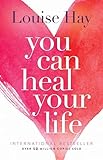
Editors Reads Verdict
You Can Heal Your Life is one of the best-selling self-help books of all time — a compassionate, if controversial, guide to self-love and mental reframing that has genuinely changed millions of lives regardless of its contested metaphysical claims.
What We Loved
- The emphasis on self-love and self-compassion is genuinely valuable and well-presented
- Hay's own story of healing adds authentic weight to her argument
- The affirmation practice, used consistently, produces measurable psychological benefit
- The compassionate, non-judgmental tone is unusual and welcome in self-help
Minor Drawbacks
- The claim that thoughts directly cause physical illness is not medically supported
- The metaphysical framework will be unpersuasive to secular or scientifically-minded readers
- Some of the body-mind correlations are speculative to the point of being harmful
Key Takeaways
- → Self-love is not narcissism but the prerequisite for treating others and yourself with genuine care
- → Negative beliefs about the self, formed in childhood, continue to shape adult experience
- → Affirmations work psychologically by gradually replacing habitual negative thought patterns
- → Forgiveness — of self and others — is not condoning but releasing
- → The body reflects the mind — stress, beliefs, and emotional states have physiological dimensions
| Author | Louise Hay |
|---|---|
| Publisher | Hay House |
| Pages | 226 |
| Published | January 1, 1984 |
| Language | English |
| Genre | Self-Help, Personal Development |
| Difficulty | Beginner |
| Best For | Readers open to a mind-body-spirit framework who are seeking tools for self-compassion, healing from difficult pasts, and building a more loving relationship with themselves. |
How You Can Heal Your Life Compares
You Can Heal Your Life at a glance against 3 similar books readers weigh alongside it.
| Book | Author | Rating | Best for |
|---|---|---|---|
| You Can Heal Your Life (this book) | Louise Hay | ★ 4.3 | Readers open to a mind-body-spirit framework who are seeking tools for |
| Ask and It Is Given | Esther Hicks and Jerry Hicks | ★ 4.2 | Readers drawn to spiritual self-help, the law of attraction, and emotional |
| Feel the Fear and Do It Anyway | Susan Jeffers | ★ 4.1 | Anyone struggling with fear, indecision, or anxiety who wants a practical, |
| The Seat of the Soul | Gary Zukav | ★ 4.3 | Spiritually oriented readers interested in a serious, intellectually structured |
The Book That Launched a Movement
Louise Hay self-published You Can Heal Your Life in 1984 after developing her philosophy through workshops she conducted for people living with AIDS in the early years of the epidemic. She had herself survived a cancer diagnosis using the methods she describes. The book has sold over fifty million copies and launched Hay House, now one of the world’s largest self-help publishers.
Its central argument is that our thoughts — particularly the beliefs we hold about ourselves — create our experiences. Limiting beliefs formed in childhood (“I’m not enough,” “I’m unlovable,” “I don’t deserve success”) continue to operate in adult life, creating the very circumstances that seem to confirm them. The solution is to identify and replace these beliefs with more supportive ones, primarily through the practice of affirmations.
The book became a cultural phenomenon after Hay appeared on both The Oprah Winfrey Show and Donahue in a single week in March 1988, sending it onto the New York Times bestseller list. It has since sold in the tens of millions — by various counts thirty-five to fifty million copies in more than thirty languages — making it one of the best-selling non-fiction books of all time and Hay one of the most successful women authors in publishing history.
The Self-Love Foundation
What distinguishes Hay’s approach from more transactional self-help is her insistence that self-love is the foundation, not an optional addition. You cannot genuinely improve your life while holding contempt for yourself — the self-contempt will undermine every effort. Learning to approve of and accept yourself, including the parts you have been taught to reject, is not the reward for improvement but its prerequisite.
The compassion with which Hay writes about this — including her own history of abuse, poverty, and self-hatred — gives the book an authenticity that purely instructional self-help lacks.
A Philosophy Forged in Hardship
Part of what lends the book its persuasive warmth is that Hay did not theorise self-love from a position of comfort; she arrived at it through survival. She wrote openly about a childhood marked by poverty, violence, and sexual abuse, a teenage pregnancy, and decades of corrosive self-hatred before she encountered New Thought ideas and began, slowly, to rebuild her relationship with herself. By her own account she later healed from a cancer diagnosis using the mental and emotional methods the book describes — a claim impossible to verify and one critics rightly treat with caution, but one that clearly shaped her conviction. That hard-won, lived quality runs through every chapter, and it is why the book reads less like a lecture than like counsel from someone who has been to the bottom and climbed back.
Mirror Work and Affirmations
Hay’s two signature practices are affirmations and “mirror work.” The core affirmation she returns to throughout — “I love and approve of myself” — is meant to be repeated, especially while looking directly into one’s own eyes in a mirror, an exercise many readers find startlingly difficult and, over time, genuinely moving. She pairs this with the willingness to “release the pattern” behind a problem, treating change as a gentle act of letting go rather than force. Stripped of metaphysics, these are recognisable cousins of techniques used in modern cognitive and self-compassion therapies: interrupting habitual self-critical thoughts and deliberately rehearsing kinder ones. Used consistently, they produce real psychological benefit, which is a large part of why the book has helped so many people regardless of what they make of its broader worldview.
The Hay Rides and a Compassionate Legacy
The book’s deepest moral credibility comes from its origins. In the mid-1980s, at the terrifying height of the AIDS crisis, when many people with the disease were shunned even by hospitals and families, Hay began hosting support groups for them — mostly gay men — in West Hollywood. These gatherings, affectionately known as “Hay Rides,” eventually drew more than eight hundred people at a time and offered comfort, dignity, and community to the dying when little else was on offer. Whatever one concludes about her theories, this was a genuine act of courage and care, and it is inseparable from the book that grew out of it.
The Controversy
The claim that specific thoughts cause specific physical illnesses — and the accompanying lists correlating diseases with mental states — is the book’s most contested element, and the criticism is serious. Proponents of evidence-based medicine have called the theories groundless, and Hay was sharply criticised for “blaming the victim”: for implying that people with AIDS, cancer, or other illnesses had in some sense caused their own suffering through poor mental attitude, and for suggesting a positive outlook could defeat AIDS without ever demonstrating a case in which it did. In its extreme form this framework can do real harm, adding guilt to the burden of the sick. Readers should embrace the book’s psychological and self-compassion dimensions while firmly rejecting its medical claims.
Verdict
You Can Heal Your Life is best read selectively. Its insistence that self-love is the foundation of a good life, its gentle affirmation and mirror practices, and the radical compassion of its tone are genuinely valuable and have changed millions of lives for the better. Its mind-causes-illness metaphysics is unsupported and, taken literally, potentially harmful. Hold those two truths at once — take the self-compassion, leave the pseudoscience — and it remains a landmark worth understanding.
Our rating: 4.3/5 — A landmark of self-help: genuinely compassionate, practically useful on the psychological level, and requiring critical engagement with its more extreme claims.
Frequently Asked Questions
What is "You Can Heal Your Life" about?
Louise Hay argues that our thoughts create our experiences — and that by changing our thinking patterns, particularly through loving the self, we can transform every area of our lives.
Who should read "You Can Heal Your Life"?
Readers open to a mind-body-spirit framework who are seeking tools for self-compassion, healing from difficult pasts, and building a more loving relationship with themselves.
What are the key takeaways from "You Can Heal Your Life"?
Self-love is not narcissism but the prerequisite for treating others and yourself with genuine care Negative beliefs about the self, formed in childhood, continue to shape adult experience Affirmations work psychologically by gradually replacing habitual negative thought patterns Forgiveness — of self and others — is not condoning but releasing The body reflects the mind — stress, beliefs, and emotional states have physiological dimensions
Is "You Can Heal Your Life" worth reading?
You Can Heal Your Life is one of the best-selling self-help books of all time — a compassionate, if controversial, guide to self-love and mental reframing that has genuinely changed millions of lives regardless of its contested metaphysical claims.
Ready to Read You Can Heal Your Life?
Check the current price on Amazon.
Check Price on Amazon (paid link)Prices and availability are subject to change. See Amazon for current price.
Review last updated: