Where to Start with Louise Hay: A Reading Guide
Where to start with Louise Hay — how to approach You Can Heal Your Life, her bestselling guide to self-love and affirmation practice, arguing that changing thought patterns is the foundation of healing and transformation in every area of life. A complete reading guide.
By Lena Fischer
Louise Hay (1926–2017) was an American motivational author, speaker, and founder of Hay House publishing who became one of the most influential figures in the self-help genre. She had a difficult early life — including an abusive childhood and a difficult marriage — and in her fifties she was diagnosed with cervical cancer, which she subsequently claimed to have healed through affirmation practice and changes in mental habits. You Can Heal Your Life (1984) was her central statement of the philosophy she had developed, and it found an enormous audience among people navigating illness, abuse, and life transformation. She founded Hay House in 1984 to publish the book herself, and it grew into one of the largest self-help and personal development publishers in the world.
Where to Start: You Can Heal Your Life (1984)
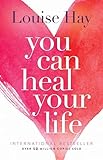
Hay published You Can Heal Your Life in 1984 after recovering from cervical cancer through what she described as emotional and mental work, and created a framework connecting thought patterns to physical illness that has sold over fifty million copies in the four decades since. You Can Heal Your Life opens with the foundational premise that structures everything that follows: the experiences we have in our lives are the outer manifestation of inner beliefs, and those beliefs can be changed. This is not a new idea — it is the New Thought tradition in which Hay was operating — but Hay presents it with a compassion and directness that distinguishes it from more didactic treatments.
The childhood belief formation argument is the book’s most psychologically grounded section. Hay argues that most core negative beliefs about the self are formed in childhood — in response to criticism, shame, abandonment, or the conditional withdrawal of love — and that these early beliefs then shape adult experience in ways that feel inevitable because they are so automatic. The woman who believes she is undeserving finds evidence for that belief everywhere; the man who expects to be abandoned selects partners and situations that confirm the expectation. The beliefs are not facts about the world; they are interpretive frameworks, and interpretive frameworks can be replaced.
The affirmation practice is the book’s practical prescription. Hay advocates the regular, consistent repetition of positive self-statements — “I am worthy of love,” “I approve of myself,” “I am healthy, whole, and complete” — not as magical incantations but as the means of replacing habitual negative internal commentary with something more constructive. The practice requires consistency and encounters the resistance of the existing negative belief, which will assert itself most loudly when challenged. Hay is specific about techniques for working with that resistance rather than being defeated by it.
The self-love framework is what distinguishes Hay from the positive-thinking tradition: she is not telling readers to believe that everything is good, but to start from a foundation of genuine self-love before attempting to change anything else. Self-love, in her framework, is not narcissism but the basic precondition for treating yourself with the care that makes genuine change possible.
Why You Can Heal Your Life Is the Ideal First Book
For a reader new to Louise Hay, You Can Heal Your Life is the ideal first book because it is her landmark work, one of the best-known books in the self-help and New Thought tradition, and the fullest expression of her central ideas about affirmations, self-love, and the power of thought. You Can Heal Your Life presents Hay’s belief that our thoughts and beliefs shape our experience and that, by changing them, especially through affirmations and self-love, we can transform our lives. As an entry point it is essential, for it is her defining book and the comprehensive statement of her philosophy. It welcomes the newcomer with its central ideas, its affirmations and exercises, and its warm, encouraging tone, drawing the reader into her distinctive approach. Readers are wise to engage critically, for the book makes claims, especially linking thoughts to physical illness and healing, that are not scientifically established and should not replace medical care. It is her most famous work and the one that best represents her ideas, so the new reader encounters Hay directly. For the newcomer drawn to her approach, then, You Can Heal Your Life is the natural starting point, best approached thoughtfully.
What to Expect as a New Reader
As a new reader, you can expect You Can Heal Your Life to be a warm, encouraging classic of the self-help and New Thought tradition. You can expect a central idea, that our thoughts and beliefs shape our experience and that changing them can transform our lives. You can expect a focus on affirmations and self-love, the practices Hay places at the heart of her approach. You can expect exercises and affirmations for the reader to practice. You can expect an encouraging, warm, and accessible tone. You can expect ideas linking mental and emotional patterns to physical health, a hallmark of her work. You should engage critically, recognizing that claims connecting thoughts to physical illness and healing are not scientifically established and should never replace professional medical care. Expect, in short, a warm, encouraging classic of the self-help tradition, an introduction to Hay’s approach best approached thoughtfully and critically.
Going Deeper After Your First Book
Once You Can Heal Your Life has introduced you to Hay’s approach, the reader who wishes to go deeper can explore her other books and the wider self-help and New Thought tradition to which her work belongs, continuing to read critically. Her many other writings extend her ideas about affirmations, self-love, and positive thinking, while the broad tradition of positive-thinking and self-help literature includes other influential authors the reader may explore thoughtfully. Reading more widely deepens your understanding of this influential strand of self-help, even as the thoughtful reader weighs its claims with appropriate skepticism, especially where they touch on health. The reader who finds value in Hay’s emphasis on self-love and positive thought can pursue it across her work while keeping a critical perspective and relying on professional care for health matters. Building your reading journey from You Can Heal Your Life is a matter of following its ideas into her other books and the wider tradition. The reader who begins here will have encountered a foundational, if contested, figure of modern self-help.
Reading Louise Hay
You Can Heal Your Life is Hay’s essential book. The Power Is Within You (1991) extends the framework and is the natural follow-on for readers who find the core argument transformative and want more depth.
For the full Louise Hay bibliography, reviews, and biography, visit the Louise Hay author page on Editors Reads.
Affiliate disclosure: Links to Amazon on this page are affiliate links. We earn a small commission at no extra cost to you.
Frequently Asked Questions
Where should I start with Louise Hay?
You Can Heal Your Life (1984) is Hay's essential book — one of the best-selling self-help books in history, with over fifty million copies sold. Hay was an American author and motivational speaker who overcame a difficult childhood and, she claimed, cured herself of cervical cancer through affirmation practice and self-love before writing the book. The core argument is that negative beliefs about the self, formed in childhood and reinforced through habitual thought, create the conditions for difficulty and illness in adult life — and that replacing those beliefs through consistent affirmation practice and genuine self-love produces transformation. The book is compassionate in tone, practical in its exercises, and contested in some of its medical claims.
What is You Can Heal Your Life about?
Hay's argument begins with the premise that every experience we have is the outward manifestation of our inner thoughts and beliefs. Childhood experiences — particularly those involving criticism, shame, or the withdrawal of love — create core negative beliefs about the self that then shape how we interpret subsequent experience, which relationships we enter, what patterns repeat, and what physical conditions develop. The path she proposes is consistent work on the core negative beliefs through affirmation — the deliberate, repeated statement of positive truths about the self — and through the cultivation of self-love as the foundation of everything else. The book includes a comprehensive list of mental patterns associated with specific physical conditions, which is its most controversial section.
How should I approach Hay's claim that thoughts cause illness?
The claim that specific thought patterns directly cause specific physical illnesses is not medically supported and should be read with caution. The broader argument — that chronic stress, negative self-belief, and suppressed emotion affect physical health — has meaningful support in psychoneuroimmunological research. The specific correlations Hay lists (e.g., specific joints corresponding to specific emotional conflicts) are speculative and can be harmful if taken literally by people with serious illnesses who interpret their condition as caused by insufficient self-love. Read the book for its genuine contributions — the emphasis on self-compassion and the practical affirmation exercises — and treat the specific mind-body correlations as provocative possibilities rather than established facts.
What should I read after You Can Heal Your Life?
After You Can Heal Your Life, Hay's follow-up books — including The Power Is Within You (1991) and Heart Thoughts (1990) — extend the affirmation and self-love framework in companion volumes. For the psychological underpinning of what Hay is describing, Kristin Neff's Self-Compassion: The Proven Power of Being Kind to Yourself covers the same self-love territory from a research perspective. Byron Katie's Loving What Is covers thought pattern examination with a more structured inquiry method. For the body-mind connection that Hay addresses, Bessel van der Kolk's The Body Keeps the Score provides a rigorous scientific framework for how chronic stress and trauma manifest physically.