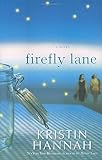
Editors Reads Verdict
Kristin Hannah's ode to female friendship spans three decades and every significant life transition, delivering the emotional breadth and honest complexity that makes the best women's fiction feel not like genre but like testimony.
What We Loved
- The thirty-year friendship is developed with genuine longitudinal depth
- Both Tully and Kate are fully individuated — neither serves merely as foil to the other
- Hannah captures the specific texture of female friendship with uncommon accuracy
- The novel's emotional climax is prepared across hundreds of pages and delivers accordingly
- The cultural markers of each decade are integrated naturally rather than deployed as nostalgia
Minor Drawbacks
- The novel's length means some middle sections lose momentum
- Tully's celebrity storyline occasionally feels less grounded than Kate's domestic narrative
- The betrayal setup may frustrate readers who want the friendship to be uncomplicated
Key Takeaways
- → The longest friendships survive not because they avoid conflict but because they survive it
- → Women's ambitions and women's domestic lives are not naturally opposed — but the culture treats them as if they are
- → Betrayal between friends is devastating precisely because the friendship made it possible
- → Grief changes friendship as surely as it changes everything else
- → The friend who knew you at your worst is your most honest mirror
| Author | Kristin Hannah |
|---|---|
| Publisher | St. Martin's Press |
| Pages | 496 |
| Published | January 1, 2008 |
| Language | English |
| Genre | Women's Fiction, Contemporary Fiction, Friendship Fiction |
| Difficulty | Beginner |
| Best For | Readers who love sweeping friendship narratives, particularly women's stories that span decades and examine how relationships evolve through life's major transitions. |
How Firefly Lane Compares
Firefly Lane at a glance against 3 similar books readers weigh alongside it.
| Book | Author | Rating | Best for |
|---|---|---|---|
| Firefly Lane (this book) | Kristin Hannah | ★ 4.3 | Readers who love sweeping friendship narratives, particularly women's stories |
| Daisy Jones and The Six | Taylor Jenkins Reid | ★ 4.3 | Readers who love music history, 1970s nostalgia, and character-driven fiction |
| Little Fires Everywhere | Celeste Ng | ★ 4.4 | Readers who enjoy literary fiction that examines race, class, and community |
| The Nightingale | Kristin Hannah | ★ 4.6 | Readers of women-centered historical fiction, World War II narratives, and |
Thirty Years on a Lane
Kristin Hannah’s most popular novel before The Nightingale is an ode to a specific kind of female friendship: the childhood bond that becomes the baseline against which all subsequent relationships are measured. Tully Hart and Kate Mularkey meet as teenagers across the lane from each other in Snohomish, Washington, and their friendship — built in the summer of 1974 over Supertramp albums and teenage secrets — sustains both of them through three decades of diverging lives.
Tully becomes the success story: a New York television journalist of national prominence, beautiful and famous and profoundly lonely. Kate takes the road less celebrated — marriage, children, suburban life, the invisible labor of keeping a family functioning. Hannah refuses the lazy reading of this binary: Tully’s ambition is not superior to Kate’s choice, and Kate’s contentment is not superior to Tully’s drive. The novel insists on the equal validity of both while honestly depicting what each costs.
The Texture of Female Friendship
What Hannah gets right, and what explains the novel’s devoted readership, is the specific texture of long female friendship. The way Tully and Kate talk to each other — the shorthand, the honesty that would be brutality in any other relationship, the shared references accumulated across decades — is rendered with documentary accuracy. These are women who have known each other long enough to be beyond performance with each other, and that quality of intimacy is the novel’s beating heart.
The Cultural Journey
Hannah takes Tully and Kate from the 1970s through the early 2000s, and the cultural markers of each decade — the music, the television, the political atmosphere, the available opportunities for women — are woven through the narrative without overwhelming it. The reader experiences thirty years of American women’s lives from the inside.
The Betrayal and Its Aftermath
The novel’s central tension — a betrayal that threatens the friendship at its most vulnerable — is built carefully enough that when it arrives, it feels both inevitable and crushing. Hannah manages the emotional aftermath with equal care.
Our rating: 4.3/5 — A sweeping, emotionally honest portrait of female friendship across three decades, written with the kind of intimacy that makes readers feel they are encountering remembered rather than invented lives.
Reading Guides
The 1970s Beginning
Tully and Kate first meet in the summer of 1974 across the lane from each other in a suburb of Snohomish, Washington. The cultural specificity of Hannah’s 1970s sequences is among the novel’s most carefully rendered achievements — the music (Supertramp, Led Zeppelin, the radio as cultural scripture), the fashion, the particular quality of American adolescence in a decade when the social rules that had organised the previous generation’s youth were dissolving without having been replaced by anything coherent.
Tully’s home life — her mother Cloud, a free-spirited woman whose freedom is really a form of abandonment — is the darkest element of the novel’s early sections and the one that most directly explains Tully’s adult hunger for recognition. Cloud is rendered with enough complexity that she is not simply a villain, but her failures as a mother are specific and lasting, and their consequences run through everything Tully does for the next thirty years.
Kate’s home is the counterpoint — the warmth, the present parents, the functional family that Tully instinctively attaches herself to and that Kate eventually comes to understand as her own source of strength rather than merely a contrast to Tully’s situation.
Television and Female Ambition
The television journalism sequences — Tully’s rise from local news through national prominence — are the novel’s most contemporary element and the one that ages most interestingly. Hannah’s depiction of the broadcast journalism world of the 1980s and 1990s: the specific obstacles facing women in the industry, the negotiation between femininity and authority that female anchors navigated constantly, the way success in that world required a particular kind of performance — is rendered with enough specificity to function as social history as well as character development.
Tully’s ambition is presented by Hannah as both genuine and damaging — real in the sense that she actually loves the work, damaging in the sense that it has served as a substitute for the intimacy she cannot maintain. This is not a simple critique of female ambition; it is a specific analysis of what Tully’s particular ambition costs her particular self.
Kate’s Invisible Labour
Kate’s domestic life — the marriage to Johnny, the children, the years of the invisible labour that keeps a family functioning — is depicted with equal respect and equal honesty. Hannah refuses the temptation to present Kate as the wise, grounded counterpart to Tully’s brilliance, as if stability were simply available to those who wanted it and ambition were simply a choice.
The marriage struggles. The children require things Kate did not know she would have to give. The years pass with the particular speed of years full of obligation and love in equal measure. And Kate’s love for Tully — the friendship that has been the one constant across all of it — is both her greatest comfort and, ultimately, the site of the betrayal that the novel has been building toward.
The Netflix Adaptation
Firefly Lane premiered on Netflix in January 2021, starring Katherine Heigl as Tully and Sarah Chalke as Kate. The series ran for two seasons, incorporating material from both Firefly Lane and its sequel Fly Away, and became one of Netflix’s more popular dramatic series. Hannah was involved as an executive producer.
The adaptation makes significant changes — compressing the timeline, altering some plot elements, adjusting secondary characters — but preserves the novel’s essential emotional architecture: the decades-long friendship, the class dynamic, the betrayal, and the ending that the television series eventually expanded rather than simply replicated.
The Friendship Novel as a Genre
Firefly Lane belongs to a specific and distinguished tradition of female friendship fiction — novels that take women’s friendships as seriously as romantic love, that document the specific forms of intimacy available between women who have known each other long enough to be beyond performance with each other. Elena Ferrante’s Neapolitan novels, Toni Morrison’s Sula, Ann Patchett’s Bel Canto — these are its peers in ambition if not in mode. Hannah writes more commercially than any of them, but the emotional honesty of Firefly Lane at its best belongs in that company.
Frequently Asked Questions
What is "Firefly Lane" about?
The thirty-year friendship between Tully Hart and Kate Mularkey — from their teenage years on Firefly Lane through marriages, children, careers, and a devastating betrayal.
Who should read "Firefly Lane"?
Readers who love sweeping friendship narratives, particularly women's stories that span decades and examine how relationships evolve through life's major transitions.
What are the key takeaways from "Firefly Lane"?
The longest friendships survive not because they avoid conflict but because they survive it Women's ambitions and women's domestic lives are not naturally opposed — but the culture treats them as if they are Betrayal between friends is devastating precisely because the friendship made it possible Grief changes friendship as surely as it changes everything else The friend who knew you at your worst is your most honest mirror
Is "Firefly Lane" worth reading?
Kristin Hannah's ode to female friendship spans three decades and every significant life transition, delivering the emotional breadth and honest complexity that makes the best women's fiction feel not like genre but like testimony.
Ready to Read Firefly Lane?
Check the current price on Amazon.
Check Price on Amazon (paid link)Prices and availability are subject to change. See Amazon for current price.
Review last updated: