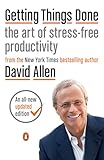
Editors Reads Verdict
GTD is the gold standard of personal productivity systems — comprehensive, logical, and battle-tested across two decades. The initial setup is demanding, but the mental clarity it creates is unmatched.
What We Loved
- Comprehensive system that handles work and personal life together
- The 'capture everything' principle genuinely reduces mental overhead
- The two-minute rule is immediately applicable and surprisingly powerful
- Revised 2015 edition updates examples for the digital age
Minor Drawbacks
- The system requires significant upfront time to implement correctly
- Can feel overwhelming for readers wanting a simple quick-start
- Weekly review discipline is hard to maintain long-term
Key Takeaways
- → Your mind is for having ideas, not holding them — capture everything externally
- → The two-minute rule: if it takes less than two minutes, do it now
- → Next actions must be concrete, physical, and specific
- → Context-based lists (at computer, on phone, errands) enable frictionless execution
- → Weekly review is the cornerstone practice that keeps the system alive
| Author | David Allen |
|---|---|
| Publisher | Penguin Books |
| Pages | 352 |
| Published | December 31, 2001 |
| Language | English |
| Genre | Productivity, Business, Self-Help |
| Difficulty | Intermediate |
| Best For | Knowledge workers, managers, and anyone overwhelmed by competing commitments who want a proven external system for managing all their obligations. |
How Getting Things Done Compares
Getting Things Done at a glance against 3 similar books readers weigh alongside it.
| Book | Author | Rating | Best for |
|---|---|---|---|
| Getting Things Done (this book) | David Allen | ★ 4.5 | Knowledge workers, managers, and anyone overwhelmed by competing commitments |
| Atomic Habits | James Clear | ★ 4.8 | Anyone who wants to build better habits, break bad ones, or improve personal |
| Deep Work | Cal Newport | ★ 4.7 | Knowledge workers, writers, programmers, academics, and anyone whose job |
| The ONE Thing | Gary Keller | ★ 4.6 | Entrepreneurs, knowledge workers, and anyone overwhelmed by competing |
The Productivity System That Spawned a Movement
David Allen published Getting Things Done in 2001, and it promptly became the most influential productivity book since time management emerged as a field. The GTD methodology has since spawned thousands of implementations, apps, templates, and online communities. Allen revised it in 2015 to incorporate digital tools, but the core principles remain unchanged — a sign of their durability.
The central insight is both obvious and profound: your mind is terrible at storing to-dos. Every open commitment you’re trying to remember in your head consumes cognitive bandwidth and generates low-level anxiety. GTD’s solution is to externalise everything into a trusted system so your mind can focus on thinking rather than remembering.
The Five Steps of GTD
Allen’s method breaks down into five stages: Capture (collect everything that has your attention), Clarify (decide what each item means and what to do about it), Organise (put things where they belong), Reflect (review regularly), and Engage (actually do the work).
The step most readers skip is Clarify — specifically, defining the very next physical action for every item on your list. “Work on project” is not an action. “Draft introduction paragraph for client report” is. This specificity is what prevents tasks from stalling.
The Two-Minute Rule and Context Lists
Two deceptively simple tools define the GTD experience in daily use. The two-minute rule — if a task takes less than two minutes to complete, do it immediately rather than filing it — prevents the accumulation of small undone items that clog your system and your mind.
Context-based lists (things you can only do at your computer, on the phone, in town, or at home) ensure that you’re always looking at a list of tasks you can actually execute given where you are and what resources you have. It sounds basic; in practice, it eliminates a significant source of decision fatigue.
The Weekly Review
Every GTD practitioner will tell you the same thing: the weekly review is the hardest habit to maintain and the most important. It involves clearing your inboxes, reviewing all your lists and projects, and ensuring your system reflects reality. Skip it for two weeks and the system degrades. Maintain it and it’s transformative.
Final Verdict
GTD is demanding to implement correctly, but it is arguably the most robust personal productivity system ever articulated. Even partial adoption — just capturing everything and defining next actions — will noticeably reduce mental clutter.
Our rating: 4.5/5 — The definitive system for anyone serious about stress-free, high-output work.
A System for Stress-Free Productivity
Getting Things Done is David Allen’s enormously influential productivity book, presenting a comprehensive system for managing tasks, commitments, and information that has become a touchstone of the personal-productivity movement. Allen’s central promise is “stress-free productivity,” achieved not by working harder but by establishing a trusted, external system that captures everything demanding our attention, freeing the mind from the burden of trying to remember and track it all. The method, widely known by its initials GTD, has attracted a devoted following and shaped how countless people, especially in knowledge work, approach the organization of their professional and personal lives.
Capturing Everything
The foundation of Allen’s system is the principle of capturing every task, idea, and commitment in a reliable external system rather than holding them in your head. He argues that the mind is for having ideas, not storing them, and that unrecorded obligations create a persistent, low-level anxiety. By collecting everything into trusted inboxes and lists, the GTD method aims to clear the mind of clutter and worry, allowing for greater focus and calm. This emphasis on getting things out of one’s head and into a system is the cornerstone of the approach.
The Core Workflow
GTD is built around a clear workflow for processing what one has captured: clarifying what each item is and whether it requires action, organizing actions into appropriate lists and contexts, regularly reviewing the system to keep it current, and engaging with the right tasks at the right time. Allen’s emphasis on identifying the concrete “next action” for any project is particularly influential, breaking down vague commitments into actionable steps. This systematic process for moving from a chaotic collection of inputs to clear, organized action is the heart of the method and the source of its effectiveness.
A Flexible, Tool-Agnostic Method
A notable strength of GTD is its flexibility and independence from any particular tool or technology. The system can be implemented with paper and folders, digital apps, or any combination, focusing on principles and habits rather than specific products. This adaptability has helped the method endure and spread, allowing individuals to tailor it to their own needs and preferences. Readers should know that fully implementing GTD requires genuine effort and discipline to establish and maintain, but its underlying principles can be valuable even when adopted partially.
A Lasting Influence
Getting Things Done has had an enormous and lasting influence on the productivity field, inspiring a dedicated community, countless apps, and a broader cultural conversation about managing the demands of modern work and life. Its core insights, capturing commitments externally, clarifying next actions, and regularly reviewing one’s system, have become widely accepted principles of personal organization. For anyone struggling to stay on top of a complex array of responsibilities and seeking a comprehensive, proven system for doing so, Getting Things Done remains a foundational and highly influential guide.
Reading Guides
Frequently Asked Questions
What is "Getting Things Done" about?
The definitive guide to stress-free productivity, introducing the GTD method for capturing, clarifying, organising, and engaging with all your commitments.
Who should read "Getting Things Done"?
Knowledge workers, managers, and anyone overwhelmed by competing commitments who want a proven external system for managing all their obligations.
What are the key takeaways from "Getting Things Done"?
Your mind is for having ideas, not holding them — capture everything externally The two-minute rule: if it takes less than two minutes, do it now Next actions must be concrete, physical, and specific Context-based lists (at computer, on phone, errands) enable frictionless execution Weekly review is the cornerstone practice that keeps the system alive
Is "Getting Things Done" worth reading?
GTD is the gold standard of personal productivity systems — comprehensive, logical, and battle-tested across two decades. The initial setup is demanding, but the mental clarity it creates is unmatched.
Ready to Read Getting Things Done?
Check the current price on Amazon.
Check Price on Amazon (paid link)Prices and availability are subject to change. See Amazon for current price.
Review last updated: