Where to Start with David Allen: A Reading Guide
Where to start with David Allen — how to approach Getting Things Done, his essential productivity system for stress-free work. A complete reading guide.
By Lena Fischer
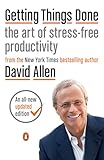
David Allen is an American productivity consultant and coach whose Getting Things Done (2001, revised 2015) introduced the GTD methodology — a comprehensive system for managing commitments, projects, and actions — that has become the most widely implemented personal productivity framework of the past two decades. Allen developed the methodology through decades of consulting with executives and organisations; the system’s durability reflects both its psychological insight and its adaptability across different work contexts and tools.
Where to Start: Getting Things Done (2001)
The essential Allen — and the gold standard of personal productivity systems. GTD’s founding psychological insight is that the human mind is designed for generating ideas, not storing them. When we use our minds as storage for unresolved commitments — things we told ourselves we’d do, decisions we haven’t made, projects in progress — we create a persistent low-level anxiety that Allen calls “open loops.” The loops draw cognitive resources even when you’re not consciously thinking about them. GTD closes the loops by moving them out of your mind and into a trusted external system.
The five-step methodology:
Capture — every commitment, idea, task, and potential action goes into an inbox (physical or digital). Nothing stays in your head. The discipline is completeness: the system only reduces anxiety if you trust that you’ve captured everything.
Clarify — process each item in the inbox. Is it actionable? If not, it’s reference material, someday/maybe material, or trash. If it is actionable, what is the next physical action required? This step is the system’s most important: most “tasks” in most people’s heads are actually projects (they require more than one step), and the failure to identify the actual next action is why they stall.
Organise — route each clarified item to its appropriate list: next actions (by context — calls to make, errands, computer tasks), projects (lists of outcomes requiring more than one action), waiting for (delegated items), calendar (time-specific items), and reference.
Reflect — weekly reviews maintain the system’s currency. Without regular review, the lists become outdated and the trust that makes the system work evaporates.
Engage — with the system maintained, you can engage with the work you choose to do with confidence that you’re doing the right thing. The “mind like water” state Allen describes — responsive but not reactive — is the product of a system you trust.
The initial setup is demanding. The payoff — the mental clarity that comes from a complete, current system — is, for most practitioners, worth the investment.
Why Getting Things Done Is the Ideal First Book
For a reader new to David Allen, Getting Things Done is the ideal and essential first book because it is his landmark work, one of the most influential productivity books ever written, and the fullest expression of his famous system for managing tasks and commitments. Getting Things Done presents Allen’s comprehensive method, often known by its initials, for capturing, organizing, and managing all of one’s tasks and commitments in a trusted system, freeing the mind from the burden of remembering and worrying and enabling focused, stress-free productivity. As an entry point, it is the essential and natural place to begin, for it is Allen’s landmark and defining work, the complete and authoritative account of his influential system. It welcomes the newcomer with its comprehensive method, its practical guidance, and its promise of stress-free productivity, offering a complete system for taking control of one’s tasks and commitments. It is his most important book and the one that best represents his method, so that the new reader encounters Allen’s complete system directly. For the newcomer, then, Getting Things Done is the natural and ideal starting point.
What to Expect as a New Reader
As a new reader, you can expect Getting Things Done to be a comprehensive, practical, and influential guide to productivity, presenting a complete system for managing tasks and commitments. You can expect Allen’s famous method, a systematic approach to capturing, organizing, and managing all of one’s tasks and commitments in a trusted external system rather than carrying them in one’s head. You can expect a focus on stress-free productivity, for Allen argues that capturing and organizing one’s commitments frees the mind from the burden of remembering and worrying, enabling focused and stress-free work. You can expect comprehensive and detailed guidance, for the book lays out the complete system, from capturing tasks to organizing, reviewing, and acting on them. You can expect a practical, actionable method that you can implement to take control of your tasks and commitments. Expect, in short, a comprehensive, practical, and influential guide to productivity, presenting a complete system for stress-free management of tasks and commitments, the essential introduction to Allen’s method.
Going Deeper After Your First Book
Once Getting Things Done has given you Allen’s complete productivity system, the reader who wishes to go deeper can explore his other work and the wider community and resources that have grown up around his influential method, applying and refining the system that his landmark book provides. His further work and the extensive resources surrounding his method offer additional guidance, refinements, and applications for putting the system into practice and adapting it to one’s own life and work. Reading and applying further deepens your engagement with Allen’s method, the systematic management of tasks and commitments for stress-free productivity. His central system runs through his work, and the reader who has implemented the method from Getting Things Done will find further guidance for refining and sustaining it in his other resources. Building your productivity journey from Getting Things Done is a matter of applying its system and pursuing its refinements through Allen’s further work. The reader who begins with Getting Things Done will have a complete and influential system for taking control of their tasks and achieving stress-free productivity.
Reading David Allen
Getting Things Done is Allen’s essential work. His follow-on Making It All Work (2008) covers the system’s application to broader life management. Both standalone; start with GTD.
For the full David Allen bibliography, reviews, and biography, visit the David Allen author page on Editors Reads.
Affiliate disclosure: Links to Amazon on this page are affiliate links. We earn a small commission at no extra cost to you.
Frequently Asked Questions
Where should I start with David Allen?
Getting Things Done (2001, revised 2015) is Allen's essential and definitive work — the source of the GTD productivity methodology that has influenced personal productivity practice for over two decades. The most comprehensive personal productivity system available; demanding to set up but produces mental clarity that users describe as transformative.
What is Getting Things Done about?
Getting Things Done proposes that stress and mental overwhelm come primarily from keeping open loops — unresolved commitments, undecided tasks, things you told yourself you'd do — in your head rather than in a trusted external system. The GTD methodology is a five-step process: Capture everything (remove it from your head into an external inbox); Clarify what each item means and what action it requires; Organise the results by context and project; Reflect regularly to ensure the system stays current; Engage with the work, trusting that you're doing the right thing.
Is GTD still relevant in the digital age?
The 2015 revised edition of Getting Things Done updated the examples and tool recommendations for the digital context. The underlying principles — the value of capturing everything outside your head, the clarification of next actions, the weekly review — are platform-independent and as applicable to digital workflows as to paper-based ones. Many practitioners implement GTD in digital tools (Notion, Todoist, Things, OmniFocus). The system's age is not a limitation; its comprehensiveness and the quality of its underlying psychological insight have sustained its relevance.
What should I read after Getting Things Done?
After Getting Things Done, Cal Newport's Deep Work covers the complementary skill of sustained focus — how to do the deep, cognitively demanding work that GTD helps you identify and schedule. James Clear's Atomic Habits covers the habit formation underlying consistent system maintenance. For digital-specific GTD implementations, Tiago Forte's Building a Second Brain covers how to apply the GTD principles to digital knowledge management.