Editors Reads Verdict
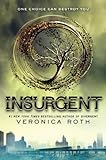
Insurgent is a propulsive middle entry that deepens Tris's psychological complexity and expands the Divergent world beyond the Dauntless compound, even if its plotting relies heavily on secrets withheld from both protagonist and reader. The ending revelation reframes the entire trilogy's premise.
What We Loved
- Tris's survivor's guilt and suicidal ideation are handled with rare honesty for YA
- The expansion into Amity, Candor, and Factionless society broadens the world meaningfully
- The ending revelation is genuinely surprising and recontextualizes everything that came before
- The Tris-Four relationship is tested in ways that feel realistic rather than manufactured
Minor Drawbacks
- The plot relies on characters withholding information in ways that strain credibility
- The action sequences blur together in the middle section
- Some faction leadership characterizations are underdeveloped
Key Takeaways
- → Survivor's guilt can manifest as self-destructive behavior that looks like bravery
- → Social systems designed to enforce identity ultimately suppress it
- → The truth withheld for supposedly protective reasons is still a kind of control
- → Grief does not resolve on a schedule that respects narrative momentum
- → Institutions often exist to serve purposes their members have forgotten
| Author | Veronica Roth |
|---|---|
| Publisher | Katherine Tegen Books |
| Pages | 525 |
| Published | May 1, 2012 |
| Language | English |
| Genre | Young Adult, Dystopian Fiction, Science Fiction |
| Difficulty | Beginner |
| Best For | Readers who completed Divergent and want to continue the series; YA dystopia fans interested in a protagonist whose trauma responses are psychologically realistic. |
How Insurgent Compares
Insurgent at a glance against 3 similar books readers weigh alongside it.
| Book | Author | Rating | Best for |
|---|---|---|---|
| Insurgent (this book) | Veronica Roth | ★ 4.0 | Readers who completed Divergent and want to continue the series |
| Allegiant | Veronica Roth | ★ 3.8 | Readers who committed to the Divergent trilogy and want its conclusion |
| Divergent | Veronica Roth | ★ 4.1 | YA readers who enjoyed The Hunger Games and enjoy dystopian fiction with |
| The Hunger Games | Suzanne Collins | ★ 4.5 | Young adult and adult readers who want dystopian fiction with genuine political |
Survival After the Attack
Insurgent picks up in the immediate aftermath of the Erudite attack that ended Divergent, and it does not let Tris recover. This is one of the novel’s distinguishing choices: rather than processing her grief and guilt and moving forward, Tris carries her losses into every chapter in ways that compromise her judgment, her relationships, and her will to live. For a YA novel, this is an unusually honest portrayal of what trauma actually looks like.
The plot moves through multiple faction headquarters as Tris and Four attempt to build an alliance against Jeanine Matthews and the Erudite, who are hunting Divergent individuals and consolidating power. The tour of factions — peace-dedicated Amity, truth-obsessed Candor, the Factionless masses living outside the system — is one of the novel’s genuine pleasures, expanding a world that in the first book was largely confined to Dauntless territory.
Tris and Four Under Pressure
The central relationship is tested in ways that feel organic rather than contrived. Tris keeps secrets from Four not out of coyness but out of shame and self-destructiveness; Four, carrying his own father-shaped damage, responds with a rigidity that is entirely consistent with his characterization. Their conflicts are not obstacles to their romance but expressions of who they each are under pressure.
The Secrets Problem
Insurgent’s plotting weakness is a reliance on characters withholding information — from each other, from the reader — to sustain tension that might otherwise resolve too quickly. This is a common middle-novel problem, and Roth does not fully escape it. The sensation of narrative momentum is sometimes replaced by the sensation of being deliberately kept in the dark.
The Ending That Changes Everything
The final revelation — that the faction system exists as an experiment, that the Divergent are its intended products, that beyond the city lies an outside world that has been watching — is genuine structural ambition. It reframes everything the reader thought the trilogy was about and sets up Allegiant to operate on a completely different scale.
Grief as the Engine
The boldest choice in Insurgent is its refusal to let Tris move on. Having killed a friend under duress and lost both parents in the events of Divergent, she spends the novel in the grip of survivor’s guilt so severe it becomes self-destructive — she takes reckless risks, courts her own death, and cannot bring herself to fire a gun after what she has done with one. For a blockbuster YA series, this is an unusually unflinching portrait of trauma, refusing the genre’s frequent tendency to reset its heroine to fighting form between installments. Roth lets the damage accumulate and shape every decision, and while some readers find the relentlessly grieving Tris harder company than the propulsive heroine of the first book, the choice gives the novel a psychological weight that distinguishes it from its peers.
A Relationship Under Strain
The romance between Tris and Four, established in Divergent, is tested here in ways that feel earned rather than manufactured. Tris keeps dangerous secrets — not out of the contrived miscommunication that powers lesser love triangles, but out of shame and a self-destructive instinct to protect Four by shutting him out; Four, carrying his own wounds from an abusive father and a complicated reunion with his mother, responds with a controlling rigidity entirely consistent with his character. Their conflicts are expressions of who they each are under unbearable pressure, and Roth deserves credit for letting the central couple genuinely struggle rather than coasting on their established chemistry. The result is one of the more honest depictions of how love strains under trauma in the dystopian-YA canon.
The Middle-Book Problem
Insurgent is not immune to the structural difficulties of the second installment in a trilogy. Much of its tension depends on characters withholding information — from one another and from the reader — to forestall resolutions that might otherwise arrive too soon, and at times the sensation of forward momentum is replaced by the sensation of being deliberately kept in the dark. The faction-hopping plot can feel like a tour designed to expand the world rather than a story driven by necessity. These are familiar middle-volume compromises, and Roth does not wholly escape them, but the expanded glimpses of Amity, Candor, and the factionless do enrich a world that the first book confined largely to Dauntless, and the political maneuvering lays necessary groundwork for the trilogy’s final act.
The Revelation That Resets Everything
Insurgent earns its place in the trilogy with one of YA’s more genuinely destabilizing endings. The discovery — that the entire faction system is a controlled experiment, that the Divergent are its intended outcome, and that an outside world beyond the city has been watching all along — reframes everything the reader believed the series was about. It transforms a story of internal factional conflict into something with far larger stakes, and it sets up Allegiant to operate on an entirely different scale, moving the action beyond the walls for the first time. Whether the third book successfully delivers on this expansion is debated, but the revelation itself is a real piece of structural ambition, and it lands with the force of a rug pulled out from under the reader at exactly the right moment.
Our rating: 4.0/5 — A psychologically complex middle entry that earns its place between Divergent and Allegiant through honest treatment of trauma and a revelation that genuinely expands the world’s stakes.
Reading Guides
Frequently Asked Questions
What is "Insurgent" about?
In the aftermath of the Erudite attack, Tris navigates shifting faction alliances, survivor's guilt, and a massive revelation about the true purpose of the faction system.
Who should read "Insurgent"?
Readers who completed Divergent and want to continue the series; YA dystopia fans interested in a protagonist whose trauma responses are psychologically realistic.
What are the key takeaways from "Insurgent"?
Survivor's guilt can manifest as self-destructive behavior that looks like bravery Social systems designed to enforce identity ultimately suppress it The truth withheld for supposedly protective reasons is still a kind of control Grief does not resolve on a schedule that respects narrative momentum Institutions often exist to serve purposes their members have forgotten
Is "Insurgent" worth reading?
Insurgent is a propulsive middle entry that deepens Tris's psychological complexity and expands the Divergent world beyond the Dauntless compound, even if its plotting relies heavily on secrets withheld from both protagonist and reader. The ending revelation reframes the entire trilogy's premise.
Ready to Read Insurgent?
Check the current price on Amazon.
Check Price on Amazon (paid link)Prices and availability are subject to change. See Amazon for current price.
Review last updated: