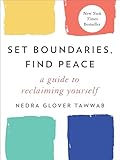
Editors Reads Verdict
Set Boundaries, Find Peace is the most practical and complete guide to boundary-setting available in popular self-help — Tawwab brings years of clinical experience to a topic that is frequently discussed but rarely addressed with this level of specificity and actionability. The book is particularly strong on the emotional obstacles to setting limits: the guilt, the fear of conflict, the confusion between boundaries and punishment.
What We Loved
- Tawwab addresses boundaries in every domain — family, friendships, work, romantic relationships, social media
- The book is remarkably specific: it includes language, scripts, and scenarios rather than vague advice
- The clinical voice is grounded without being cold — Tawwab is warm and non-judgmental throughout
- The chapters on guilt and conflict avoidance as obstacles to boundary-setting are particularly incisive
Minor Drawbacks
- Some readers may want more on the interpersonal dynamics that arise when boundaries are first introduced
- The tone is consistently calm and rational in ways that may understate how emotionally difficult this work is
- Readers dealing with personality disorders or severe family dysfunction may need clinical support beyond what the book provides
Key Takeaways
- → Boundaries are not walls — they are clearly communicated limits that protect your wellbeing and preserve relationships
- → Most boundary violations are not malicious — people often don't know your limits until you state them
- → Guilt when setting boundaries is normal and does not mean you are doing something wrong
- → Porous, rigid, and healthy boundaries are three distinct patterns, each with different costs and benefits
- → Consistency is the hardest and most important part of maintaining boundaries once set
| Author | Nedra Glover Tawwab |
|---|---|
| Publisher | TarcherPerigee |
| Pages | 256 |
| Published | March 16, 2021 |
| Language | English |
| Genre | Psychology, Self-Help, Relationships |
| Difficulty | Beginner |
| Best For | Anyone who struggles to say no, feels chronically overwhelmed by others' needs, or wants a practical framework for healthier relationships across all areas of life. |
How Set Boundaries, Find Peace Compares
Set Boundaries, Find Peace at a glance against 3 similar books readers weigh alongside it.
| Book | Author | Rating | Best for |
|---|---|---|---|
| Set Boundaries, Find Peace (this book) | Nedra Glover Tawwab | ★ 4.5 | Anyone who struggles to say no, feels chronically overwhelmed by others' needs, |
| Adult Children of Emotionally Immature Parents | Lindsay C. Gibson | ★ 4.6 | Adults who grew up with parents who were physically present but emotionally |
| Emotional Agility | Susan David | ★ 4.3 | Anyone who struggles with difficult emotions, tends to suppress or ruminate, or |
| Maybe You Should Talk to Someone | Lori Gottlieb | ★ 4.6 | Anyone curious about how therapy actually works, considering starting therapy, |
The Word Everyone Uses, The Skill Nobody Teaches
“Boundaries” has become one of the most common words in contemporary self-help vocabulary — and one of the most misunderstood. Nedra Glover Tawwab, a licensed therapist with more than a decade of clinical experience and a massive following on Instagram, wrote Set Boundaries, Find Peace to give the concept the specificity and practicality it usually lacks. The result is the most useful book on the subject available.
Tawwab’s opening move is definitional: boundaries are not walls, punishment, or rejection. They are clearly communicated expectations about how you need to be treated and what you will and won’t do. They are relational tools, not weapons. This reframing — boundaries as information rather than aggression — is one the book returns to throughout.
Across Every Domain of Life
One of the book’s distinguishing strengths is its scope. Most self-help books about boundaries address one or two domains — family, or the workplace. Tawwab covers all of them: parents, siblings, friendships, romantic partners, coworkers, bosses, social media, and even your relationship with yourself. Each chapter is specific enough to feel immediately applicable rather than generically inspirational.
The chapters on family boundaries are particularly strong. Tawwab is a Black woman writing for a broad audience, and she is attentive to the specific cultural pressures — around family obligation, loyalty, and deference — that can make boundary-setting feel like betrayal rather than self-care. She names these pressures without dismissing them, and she offers tools for navigating them rather than simply insisting you should.
The Emotional Obstacles
Where the book really earns its place is in its treatment of the internal barriers to boundary-setting. Most people know, in the abstract, that they should probably say no more often. Tawwab addresses why they don’t: guilt, fear of conflict, enmeshment, people-pleasing as an adaptation, the belief that limits are selfish. These chapters are the most therapeutically rich in the book, and they will be the most useful for readers who already know they need boundaries but can’t seem to set them.
The section on porous, rigid, and healthy boundaries as distinct patterns — with descriptions of how each manifests in different relationships — is particularly clarifying. Recognizing your own default pattern is the first step toward changing it.
Practical, Specific, and Worth Returning To
Set Boundaries, Find Peace is not a book you read once and absorb completely. It is a reference, a companion to the ongoing work of learning to take your own needs seriously in a world that frequently rewards you for ignoring them. Tawwab has written something both clinically grounded and personally generous — a book that treats its readers as intelligent adults who need tools, not just inspiration.
From Instagram Therapist to Bestselling Author
Part of what makes Set Boundaries, Find Peace distinctive is the path its author took to writing it. Tawwab built an enormous audience by answering relationship questions in short, plainspoken posts on social media, where her direct, jargon-free approach to therapeutic ideas reached far beyond the consulting room. The book carries that sensibility onto the page: it is structured for accessibility, broken into digestible chapters, and consistently oriented toward what a reader can actually say and do rather than toward abstract theory. That digital origin also explains the book’s commercial reach — it became a major bestseller and helped push the language of boundaries further into mainstream conversation — and it informs the practical, scripted style that sets it apart from more academic treatments of the same material.
Tawwab followed it with Drama Free, which narrows the focus to family relationships and dysfunction, extending the project begun here. Read together, the two books form a coherent body of work on the same underlying problem: how to stay in relationship with people without losing yourself in the process.
What Sets the Book Apart From the Crowd
The self-help shelf is crowded with books that invoke boundaries as a buzzword while offering little guidance on the actual mechanics of setting one. Tawwab’s book earns its standing by being relentlessly concrete. She supplies sample language for difficult conversations, walks through realistic scenarios, and distinguishes carefully between the three patterns — porous, rigid, and healthy — that boundaries tend to take, so that readers can diagnose their own default before trying to change it. Just as valuable is her attention to the internal obstacles: the guilt, the fear of conflict, the people-pleasing reflexes, and the enmeshment that make people who intellectually understand boundaries unable to enforce them. By treating these emotional barriers as the real work, she addresses the gap where most boundary advice fails.
Her perspective as a Black woman writing for a broad readership adds a dimension that comparable books often miss. She is alert to the specific cultural weight placed on family loyalty, obligation, and deference, and she neither dismisses those values nor treats boundary-setting as a simple matter of individual assertion. Instead she offers ways to honour relationships while still protecting one’s wellbeing — a more nuanced position than the genre’s frequent default of “just say no.”
Who Should Read It and Its Limits
This is an ideal book for anyone who struggles to say no, feels chronically depleted by other people’s demands, or wants a practical framework for healthier relationships across every domain of life. It works best treated as a reference and companion to ongoing practice rather than a one-time read. The chief caveats are tonal and clinical: Tawwab’s consistently calm, rational voice can understate how emotionally wrenching this work feels in the moment, and readers contending with severe family dysfunction, abuse, or personality disorders will likely need the support of a therapist alongside the book’s tools. Within those limits, it remains the most useful and humane general guide to boundary-setting currently available.
Our rating: 4.5/5 — The most practical, comprehensive, and clinically grounded guide to boundary-setting in the self-help canon, written by a therapist who clearly understands what actually prevents people from doing this work.
Frequently Asked Questions
What is "Set Boundaries, Find Peace" about?
Licensed therapist Nedra Glover Tawwab provides a comprehensive, practical guide to identifying, setting, and maintaining healthy boundaries in every area of life.
Who should read "Set Boundaries, Find Peace"?
Anyone who struggles to say no, feels chronically overwhelmed by others' needs, or wants a practical framework for healthier relationships across all areas of life.
What are the key takeaways from "Set Boundaries, Find Peace"?
Boundaries are not walls — they are clearly communicated limits that protect your wellbeing and preserve relationships Most boundary violations are not malicious — people often don't know your limits until you state them Guilt when setting boundaries is normal and does not mean you are doing something wrong Porous, rigid, and healthy boundaries are three distinct patterns, each with different costs and benefits Consistency is the hardest and most important part of maintaining boundaries once set
Is "Set Boundaries, Find Peace" worth reading?
Set Boundaries, Find Peace is the most practical and complete guide to boundary-setting available in popular self-help — Tawwab brings years of clinical experience to a topic that is frequently discussed but rarely addressed with this level of specificity and actionability. The book is particularly strong on the emotional obstacles to setting limits: the guilt, the fear of conflict, the confusion between boundaries and punishment.
Ready to Read Set Boundaries, Find Peace?
Check the current price on Amazon.
Check Price on Amazon (paid link)Prices and availability are subject to change. See Amazon for current price.
Review last updated: