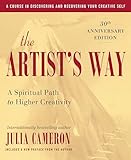
Editors Reads Verdict
Cameron's creativity program has launched more creative careers than perhaps any book written in the last fifty years. The morning pages practice alone is worth the commitment, and the framework around creative blockage and recovery is genuinely wise.
What We Loved
- Morning pages is one of the most effective creative unblocking practices known
- Cameron understands creative self-sabotage from personal experience
- The twelve-week structure provides genuine accountability
- Helped launch countless creative careers since 1992
Minor Drawbacks
- The spiritual framework (God as a creative force) will not resonate with all readers
- Some exercises feel repetitive across the twelve weeks
- The commitments are significant — morning pages plus weekly dates is a real time investment
Key Takeaways
- → Creativity is not a talent but a muscle that atrophies when not used
- → Morning pages clear the mental clutter that blocks creative access
- → Creative blocks are usually forms of fear disguised as practical concerns
- → The inner critic must be identified and separated from genuine creative judgment
- → Permission to create — given to oneself — is the necessary first step
| Author | Julia Cameron |
|---|---|
| Publisher | TarcherPerigee |
| Pages | 256 |
| Published | March 4, 1992 |
| Language | English |
| Genre | Self-Help, Creativity |
| Difficulty | Beginner |
| Best For | Anyone who identifies as a blocked creative; writers, artists, musicians, and career changers. |
How The Artist's Way Compares
The Artist's Way at a glance against 3 similar books readers weigh alongside it.
| Book | Author | Rating | Best for |
|---|---|---|---|
| The Artist's Way (this book) | Julia Cameron | ★ 4.4 | Anyone who identifies as a blocked creative |
| Big Magic | Elizabeth Gilbert | ★ 4.2 | Creative people wrestling with fear, perfectionism, or the belief that they |
| Bird by Bird | Anne Lamott | ★ 4.5 | Writers of all levels seeking permission and practical guidance, and anyone who |
| The War of Art | Steven Pressfield | ★ 4.4 | Writers, artists, entrepreneurs, and anyone who chronically starts creative |
The Two Practices
Julia Cameron’s twelve-week creativity recovery program rests on two pillars. The first is Morning Pages: three pages of longhand stream-of-consciousness writing every morning, first thing, before any media, conversation, or engagement with the day. The pages are not meant to be good. They are not meant to be kept. They are a daily drain of mental clutter — the anxiety, the self-criticism, the to-do lists — that otherwise blocks creative access throughout the day. The second is the Artist’s Date: once a week, a solo excursion to do something interesting, unusual, or pleasurable — a museum, a hardware store, a new neighborhood — that feeds the creative imagination.
Creative Recovery
Cameron frames the book as a recovery program for people who have lost access to their creativity — not because creativity left, but because it was trained away. She argues that most adults arrive at midlife with specific memories of creative suppression: a teacher who mocked a drawing, a parent who discouraged a musical ambition, a peer who laughed at a poem. These experiences teach us that our creative attempts are inadequate, and we stop attempting them. The book’s task is to rebuild the internal permission structure that those experiences damaged.
The Blocked Creative
Cameron’s understanding of creative blockage is sophisticated and specific. She distinguishes between artistic types: the Shadow Artist (who entered an adjacent field — criticism, curation, administration — because the direct creative path felt too risky); the Blurted Creative (who crashes into creative work in bursts and then burns out); the Blocked Creative (who has entirely convinced themselves they have no creative capacity). Each requires different attention, and Cameron addresses them with genuine therapeutic precision.
Why It Works
The genius of The Artist’s Way is that it bypasses the question most creativity advice gets stuck on — how to make better work — and addresses the deeper obstacle that actually stops people: the fear, shame, and self-criticism that prevent them from making anything at all. Cameron understood, decades before it became a wellness commonplace, that the blank page is rarely a problem of technique and almost always a problem of permission. Morning pages work not because they produce good writing (they usually don’t) but because they externalize the anxious inner monologue, draining off the resistance before the day’s real work begins. The Artist’s Date works because play, not pressure, is what refills the creative well. By treating creative blockage as an emotional and even spiritual condition rather than a skills gap, Cameron meets the blocked artist where the wound actually is — and that diagnostic accuracy is the source of the book’s remarkable, lasting effectiveness.
The Twelve-Week Journey
Beyond its two core practices, The Artist’s Way is structured as a genuine course, with each of its twelve weeks devoted to “recovering” a different aspect of the creative self — a sense of safety, of identity, of power, of integrity, of possibility, of abundance, and so on. Each chapter pairs an essay with a set of tasks and a weekly “check-in,” building a cumulative arc that moves the reader from unblocking through to sustained creative practice. The accountability of this structure is part of why the book works where looser advice fails: it asks for a concrete, escalating commitment over a defined period, and many people run through it in groups or “clusters” for mutual support. Cameron, herself a writer and filmmaker who came to the program through her own recovery from addiction and creative paralysis, designed it to be done rather than merely read, and readers who treat it as a workbook rather than a text get far more from it.
The Spiritual Question
The book’s most divisive element is its frankly spiritual framing. Cameron treats creativity as a kind of spiritual energy, speaks of God or a “Great Creator” as the source artists tap into, and leans on ideas like synchronicity — the notion that taking creative risks summons unexpected help from the universe. For some readers this language is inspiring and gives the work its depth; for others, particularly the secular or scientifically minded, it is off-putting New Age woo that they must mentally translate or skip past. Cameron is accommodating on this point, inviting readers to substitute their own understanding of a higher power or simply read “creative energy” where she writes “God.” The practical techniques function perfectly well stripped of the theology, but it is worth knowing the spiritual register is pervasive rather than incidental.
An Enduring Legacy
Published in 1992, The Artist’s Way has sold millions of copies and guided more than three decades of creative recovery, and its influence runs through an astonishing roster of working artists. Figures from Elizabeth Gilbert and Reese Witherspoon to Alicia Keys, Pete Townshend, and countless writers, painters, and musicians have credited it — or the morning pages habit specifically — with unblocking their work, and the practice has migrated well beyond the arts into general productivity and wellness culture. Crucially, the morning pages technique, separated from Cameron’s framework, aligns with independent research on expressive writing (notably James Pennebaker’s work) showing measurable benefits for mood, clarity, and problem-solving. Whatever one makes of Cameron’s theology, the practices have been validated by both decades of testimony and a body of psychological research.
Verdict
The Artist’s Way is, by a wide margin, the most influential creativity-recovery program ever written, and the reason is its refusal to treat creativity as a gift you either have or lack. Cameron reframes it as a muscle, a birthright, and a practice — something that can be recovered by anyone willing to do the daily work of clearing mental clutter and feeding the imagination. The real commitment it asks (daily pages plus weekly excursions) is significant, the spiritual language won’t suit everyone, and some exercises grow repetitive across twelve weeks. But for a blocked writer, painter, or anyone who has quietly buried a creative ambition, few books have a better track record of actually getting people making again.
Our rating: 4.4/5 — The most practically effective creativity recovery program ever published, built on two simple practices with thirty years of results behind them.
Frequently Asked Questions
What is "The Artist's Way" about?
A twelve-week program for recovering and developing creativity through two core practices: Morning Pages (three pages of stream-of-consciousness writing each morning) and the Artist's Date (a weekly solo creative excursion).
Who should read "The Artist's Way"?
Anyone who identifies as a blocked creative; writers, artists, musicians, and career changers.
What are the key takeaways from "The Artist's Way"?
Creativity is not a talent but a muscle that atrophies when not used Morning pages clear the mental clutter that blocks creative access Creative blocks are usually forms of fear disguised as practical concerns The inner critic must be identified and separated from genuine creative judgment Permission to create — given to oneself — is the necessary first step
Is "The Artist's Way" worth reading?
Cameron's creativity program has launched more creative careers than perhaps any book written in the last fifty years. The morning pages practice alone is worth the commitment, and the framework around creative blockage and recovery is genuinely wise.
Ready to Read The Artist's Way?
Check the current price on Amazon.
Check Price on Amazon (paid link)Prices and availability are subject to change. See Amazon for current price.
Review last updated: