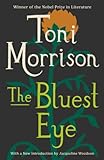
Editors Reads Verdict
Toni Morrison's debut novel is a devastating, formally daring examination of internalized racism and the violence done to Black children by a culture that refuses to reflect their beauty back to them. It remains one of American literature's most important and painful novels, fifty years after publication.
What We Loved
- Morrison's prose is at its most formally inventive, fracturing perspective to mirror Pecola's fragmentation
- The critique of internalized racism is precise, unsparing, and remains absolutely current
- The supporting cast — particularly Claudia — provides perspective that prevents the novel from being merely tragic
- The subverted Dick-and-Jane opening is one of American literature's most powerful formal choices
Minor Drawbacks
- The novel's darkness is unrelenting — there is no consolation, only witness
- Some readers find the narrative structure initially disorienting
- The depictions of sexual abuse are graphic and disturbing, as they should be — but should be entered advisedly
Key Takeaways
- → Internalized racism is a violence inflicted on children long before they have the language to name it
- → White beauty standards communicated through culture destroy Black children's sense of worth
- → Community can be complicit in the destruction of its most vulnerable members
- → The desire to be seen as beautiful is not vanity — it is the desire to be recognized as fully human
- → Witnessing a person's destruction without being able to prevent it is its own form of moral injury
| Author | Toni Morrison |
|---|---|
| Publisher | Vintage |
| Pages | 206 |
| Published | November 1, 1970 |
| Language | English |
| Genre | Literary Fiction, Historical Fiction, American Literature |
| Difficulty | Advanced |
| Best For | Readers of serious literary fiction; those interested in race, beauty standards, and American history through the lens of one of America's greatest novelists. |
How The Bluest Eye Compares
The Bluest Eye at a glance against 3 similar books readers weigh alongside it.
| Book | Author | Rating | Best for |
|---|---|---|---|
| The Bluest Eye (this book) | Toni Morrison | ★ 4.3 | Readers of serious literary fiction |
| Beloved | Toni Morrison | ★ 4.5 | Serious readers of literary fiction with the patience for challenging, |
| The Color Purple | Alice Walker | ★ 4.7 | Readers who want powerful, voice-driven fiction about female experience and |
| Their Eyes Were Watching God | Zora Neale Hurston | ★ 4.7 | Every reader who values great prose and psychological depth — and particularly |
A Novel Built on Wreckage
Toni Morrison’s debut novel announces itself as a masterwork from its opening formal disruption: the Dick-and-Jane primer, reproduced normally, then compressed, then stripped of spacing until it becomes unreadable — language destroying itself the way the culture it represents destroys Black children who try to see themselves in it.
Pecola Breedlove, eleven years old in 1940s Lorain, Ohio, believes with absolute sincerity that if she had blue eyes — the eyes of Shirley Temple, of the white baby dolls given to Black girls for Christmas, of everything the culture defines as beautiful — her life would be different. Her parents fight. Her father drinks. The neighborhood sees her as ugly. She has absorbed the culture’s verdict on herself and is praying for the one alteration that would change it.
Morrison’s Formal Architecture
The Bluest Eye is narrated primarily by Claudia MacTeer, Pecola’s contemporary and neighbor — a choice that gives the novel a witnessing consciousness rather than making the reader inhabit Pecola’s interiority directly. Morrison understands that the most ethical position in relation to a person’s destruction is adjacent, not inside: we watch what happens to Pecola through the eyes of someone who can neither prevent it nor fully understand it.
The novel fractures its chronology, interrupts its narrative with historical and analytical passages about the beauty standard’s mechanics, and deploys multiple voices including one — the disassociated second self — that signals Pecola’s final psychological break. The form enacts the content.
The Argument About Beauty
Morrison is precise about how the violence works: it is not individual cruelty (though there is that) but systematic. The Mary Jane candy wrapper with its blue-eyed girl. The Shirley Temple movies. The white baby dolls. The Dick-and-Jane reader that opens the novel. Each is a small instruction in who is considered beautiful and who is not, accumulated by a child who has not been equipped to resist them.
What Claudia Knows
Claudia MacTeer’s voice provides the novel’s moral compass — and its most honest admission. Claudia resists the white-beauty ideology instinctively as a child, dismembering her white baby dolls, unable to see what is supposed to be admirable in Shirley Temple. But she also admits she was eventually seduced by it, like everyone else. The resistance is possible; it is also precarious.
Our rating: 4.3/5 — One of American literature’s most formally brilliant and morally urgent novels, demanding in its darkness and precise in its argument — essential reading from a writer who had everything to say from her very first book.
Reading Guides
- Books Like Beloved: Historical Fiction About Trauma, Memory, and Survival
- Books Like The Underground Railroad: Slavery, Freedom, and the Impossible Journey North
Morrison’s Career in Context
Toni Morrison published The Bluest Eye in 1970 while working as an editor at Random House, a position she held for nearly two decades while simultaneously producing some of the most important fiction in American literary history. She edited significant works by Black American writers including Toni Cade Bambara and Angela Davis, championing voices she believed the mainstream publishing industry would otherwise ignore. The editorial career and the writing career were not separate: Morrison understood the publishing system from the inside, understood what it valued and what it discarded, and wrote in direct response to that understanding.
The Bluest Eye was her first novel, published when she was thirty-nine. It was not an immediate commercial success — that would come with Song of Solomon in 1977 — but it established the concerns that would run through everything she wrote afterward: the specific psychological violence of a culture that refuses to reflect certain people’s beauty back to them, the internalized racism that makes communities complicit in their own members’ destruction, the capacity of formal experimentation to say things that conventional prose could not.
The novel has been consistently challenged and banned in American schools since its publication, most often on the grounds of its depictions of sexual abuse and its language. Morrison consistently defended it. The banning is, in its way, a confirmation of the novel’s argument: the same culture that taught Pecola to hate her own face also prefers not to look at what that teaching produces.
Morrison’s Awards and Recognition
Morrison won the Nobel Prize in Literature in 1993, becoming the first African-American woman to receive the prize. The Nobel Committee cited her “visionary force and poetic import.” She won the Pulitzer Prize for Fiction in 1988 for Beloved. Song of Solomon won the National Book Critics Circle Award in 1977, and Sula was a finalist for the National Book Award in 1974.
She received the Presidential Medal of Freedom in 2012, awarded by President Barack Obama. She was named one of Time magazine’s 100 most influential people multiple times. She died on August 5, 2019, at the age of eighty-eight.
The Dick-and-Jane Primer as Structural Argument
The formal choice that opens The Bluest Eye — the Dick-and-Jane reader reproduced three times, each time more compressed and stripped until the text becomes unreadable — is not decoration but methodology. Morrison is showing the reader, before the novel proper begins, what the culture does to language when it tries to apply its categories to lives they do not fit. The Dick-and-Jane primer is a document of white middle-class domestic normality deployed in schools as the universal template for American childhood. Its gradual dissolution in Morrison’s opening pages is the novel’s first act of witness: this is what happens to children for whom the template does not apply.
The structural argument the novel makes — that form and content must be inseparable, that the way a story is told is always also part of what the story is saying — runs through Morrison’s entire career and is already fully present in her debut.
Frequently Asked Questions
What is "The Bluest Eye" about?
In 1940s Ohio, a young Black girl named Pecola Breedlove prays for blue eyes, believing beauty — as defined by the white standards she has absorbed — is the one thing that could save her from her world's cruelties.
Who should read "The Bluest Eye"?
Readers of serious literary fiction; those interested in race, beauty standards, and American history through the lens of one of America's greatest novelists.
What are the key takeaways from "The Bluest Eye"?
Internalized racism is a violence inflicted on children long before they have the language to name it White beauty standards communicated through culture destroy Black children's sense of worth Community can be complicit in the destruction of its most vulnerable members The desire to be seen as beautiful is not vanity — it is the desire to be recognized as fully human Witnessing a person's destruction without being able to prevent it is its own form of moral injury
Is "The Bluest Eye" worth reading?
Toni Morrison's debut novel is a devastating, formally daring examination of internalized racism and the violence done to Black children by a culture that refuses to reflect their beauty back to them. It remains one of American literature's most important and painful novels, fifty years after publication.
Ready to Read The Bluest Eye?
Check the current price on Amazon.
Check Price on Amazon (paid link)Prices and availability are subject to change. See Amazon for current price.
Review last updated: