Toni Morrison Books in Order: Complete Bibliography and Best Starting Points (2026)
Toni Morrison wrote eleven novels over five decades, winning the Pulitzer Prize and the Nobel Prize in Literature. This guide covers her complete bibliography, the best reading order, and where to start.

Toni Morrison published her first novel in 1970, when she was thirty-nine years old and working as an editor at Random House while raising two sons. She would go on to write ten more novels over the next four and a half decades, win the Pulitzer Prize and the Nobel Prize in Literature, and reshape what American fiction — and Black American fiction in particular — could do. She died in August 2019. Her books are more widely read now than when she was alive.
The reading order question is genuinely interesting in Morrison’s case because her novels are, on the surface, standalone: no characters cross from one book to another, no plot threads require prior knowledge. But reading her in sequence reveals something that isn’t obvious from inside any single novel — the deliberate, decade-by-decade deepening of her formal ambitions. The Bluest Eye is a compressed, crystalline debut. Beloved is a cathedral. The distance between them is the distance of a writer who knew exactly what she was doing and kept pushing until she got to the most difficult version of the truth she could find.
This guide covers where to start, how to read the major works, and which novels reward which kind of reader.
All Toni Morrison Novels in Order
| # | Title | Year | Award / Note |
|---|---|---|---|
| 1 | The Bluest Eye | 1970 | Debut novel |
| 2 | Sula | 1973 | National Book Award finalist |
| 3 | Song of Solomon | 1977 | National Book Critics Circle Award |
| 4 | Tar Baby | 1981 | — |
| 5 | Beloved | 1987 | Pulitzer Prize for Fiction |
| 6 | Jazz | 1992 | Part of the trilogy |
| 7 | Paradise | 1997 | Part of the trilogy |
| 8 | Love | 2003 | — |
| 9 | A Mercy | 2008 | — |
| 10 | Home | 2012 | — |
| 11 | God Help the Child | 2015 | Final novel |
Best starting point: Beloved for readers who want her at full power; Song of Solomon for those who want to build up to it.
Where to Start: The Essential Question
Morrison’s novels are not easy books. She does not hold your hand. She drops you into a community, a moment, a consciousness, and expects you to find your footing — a technique she described as trusting the reader absolutely. The question of where to start is really the question of how much difficulty you want to absorb before the rewards become clear.
If you want to start with her greatest book
Start with Beloved.
Published in 1987, Beloved is based on the true story of Margaret Garner, an enslaved woman who killed her infant daughter rather than allow her to be returned to slavery after the family escaped to Ohio. Morrison’s novel imagines the aftermath: Sethe, years after the killing, lives in a house haunted by the ghost of the child she killed. When a young woman calling herself Beloved arrives at the house, the past refuses to stay buried.
Beloved won the Pulitzer Prize in 1988 and has become the primary text through which Morrison’s genius is understood. It is not a comfortable novel. The violence is not softened. The supernatural is not explained away. The prose shifts registers without warning — from lyrical interiority to fragmented stream of consciousness to plain declarative sentences that hit like physical blows. But the cumulative effect is unlike anything else in American literature: it is a novel about trauma, memory, and love that earns every word of its reputation.
First-time readers should know that the novel rewards rereading enormously. Much of what Morrison embeds in the language only becomes visible the second time through.
If you want a more accessible entry point
Start with Song of Solomon.
Song of Solomon (1977) is the novel that made Morrison famous, and it remains arguably her most purely pleasurable book to read. It follows Milkman Dead, a young Black man growing up in Michigan in the 1940s and 1950s, whose journey toward self-knowledge eventually becomes a quest narrative — part family history, part mythology, part American road story. The novel has a more conventional arc than Beloved, and Morrison’s mythic imagination is on full display without the weight of Beloved’s subject matter pressing on every line.
The National Book Critics Circle Award it won in 1978 was the recognition that positioned Morrison as a major American writer. It is the right starting point for readers who suspect they’ll love Morrison but want to build up gradually.
The Early Novels: Where It Begins
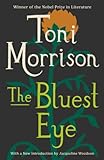
The Bluest Eye (1970)
Morrison’s debut is a short, devastating novel about Pecola Breedlove, a young Black girl in 1940s Ohio who prays every night for blue eyes, having absorbed the message — from her family, her school, her culture — that she is ugly and unworthy. Narrated by a childhood friend looking back on events she only partially understood, the novel unfolds like a tragedy whose conclusion is announced on the first page.
The Bluest Eye is remarkable for a debut. Morrison was already doing things with narrative structure and communal voice that most novelists never attempt. It is also a deeply painful book — the violence against Pecola is not metaphorical — and some readers find it the most disturbing thing Morrison wrote. Read it early in your Morrison journey if you want to trace the full arc of her development.
Sula (1973)
Sula is the Morrison novel that most rewards readers who want to understand her feminism and her understanding of female friendship. It follows two Black women in a fictional Ohio community called the Bottom from the 1920s through the 1960s: Nel, who chooses respectability and community; and Sula, who rejects all of it, departing for a decade and returning as something the community cannot categorise.
Morrison said she wrote Sula because she wanted to write about a female character who behaved with the freedom that male literary characters take for granted — without redemption arcs, without the narrative punishment that fiction typically visits on women who refuse to conform. The novel is short enough to read in a long afternoon and dense enough to think about for years.
The Mature Work: The Slavery Trilogy
Beloved (1987)
Already covered above as the recommended starting point. It is worth adding that Beloved is one of the small number of American novels — alongside Moby-Dick, The Sound and the Fury, Blood Meridian — that can reasonably be called a supreme achievement in the form. It did not win the National Book Award or the National Book Critics Circle Award the year it was published, a slight that provoked a public letter of protest signed by forty-eight Black writers, including Maya Angelou. It won the Pulitzer the following year.
Jazz (1992)
Jazz takes Morrison’s formal experimentation furthest. Set in Harlem during the Jazz Age of the 1920s, the novel is narrated by a voice that behaves like a jazz improvisation — announcing themes, developing them, contradicting itself, circling back. A man shoots his young lover at her own funeral. His wife, who tries to slash the dead girl’s face, comes instead to mourn her. The novel is about desire, violence, and the city — about what Harlem meant in that particular decade to the millions of Black Americans who had migrated north.
Jazz is the most technically unusual novel in Morrison’s bibliography and the most divisive among readers. Those who surrender to its rhythms find it beautiful; those who want narrative footing find it frustrating. Read it after Beloved, not before.
Paradise (1997)
Paradise closes the trilogy by moving to an all-Black Oklahoma town in 1976 and the assault on a nearby house inhabited by a group of women. The novel opens with one of the most discussed first lines in contemporary fiction: “They shoot the white girl first.” Morrison never identifies which of the women is white. The question of race — who is excluded even within an all-Black utopia, who gets to define community — is the novel’s central concern.
The Later Novels
Love (2003), A Mercy (2008), Home (2012), and God Help the Child (2015) are all excellent, though critics generally consider them less imposing than the central trilogy. A Mercy, a short novel set in seventeenth-century colonial America about the relationships between an enslaved woman, her daughter, and their master, is perhaps the strongest of the four — a kind of prequel in spirit to Beloved, reaching even further back to trace how American slavery began. God Help the Child, her final novel, is set in contemporary America and is her most direct engagement with colorism — the skin-color hierarchy within Black communities that The Bluest Eye had touched on forty-five years earlier.
A Suggested Reading Path
If you want to read Morrison in a sequence that builds naturally:
- Song of Solomon — most accessible, full of pleasure
- The Bluest Eye — go back to the beginning, now that you’re oriented
- Sula — short, brilliant, thematically essential
- Beloved — the masterwork, now fully earned
- Jazz — the trilogy’s experimental middle
- A Mercy — the late-career return to slavery’s origins
The remaining novels can be read in any order around and between these.
Morrison and the Nobel Prize
The Nobel Committee awarded Morrison the prize in 1993 with a citation that praised her for giving “life to an essential aspect of American reality.” In her Nobel lecture, delivered in Stockholm, Morrison spoke about language itself — about the difference between a living language and a dead one, between language used to oppress and language used to liberate. It is one of the great Nobel lectures in the prize’s history and worth reading alongside the novels.
She was sixty-two when she won the prize. She had six more novels in her, and she spent the intervening years teaching at Princeton, writing libretti, speaking everywhere about the obligations of writers and the necessity of literature. When she died in 2019, the tributes that poured in — from Barack Obama, from Zadie Smith, from writers on every continent — were less like condolences than like acknowledgments of a loss that literature itself would have to absorb.
Her novels are the answer to that loss. Read them.
Affiliate disclosure: Links on this site are affiliate links. We earn a small commission at no extra cost to you. This does not influence our editorial recommendations.
Frequently Asked Questions
What is the best Toni Morrison book to start with?
The two best entry points are Beloved and Song of Solomon. Beloved is her masterwork — the Pulitzer Prize-winning novel about a formerly enslaved woman haunted by the ghost of her dead daughter — and it rewards even first-time readers who approach it with patience. Song of Solomon is slightly more accessible, with a more conventional narrative arc, and many readers find it the more immediately pleasurable read. Both are the right answer depending on your tolerance for difficulty.
Do Toni Morrison's novels need to be read in order?
No. Morrison's novels are entirely standalone — no characters recur across books, and each novel constructs its own world from scratch. Reading in publication order reveals the arc of her ambitions as a writer, but there is no narrative continuity to miss. You can begin anywhere in her bibliography without losing anything.
What is the slavery trilogy by Toni Morrison?
Beloved (1987), Jazz (1992), and Paradise (1997) are sometimes called Morrison's 'slavery trilogy' or 'trilogy of memory,' though Morrison herself was cautious about the label. All three novels are concerned with the long aftermath of American slavery — its violence, its ruptures of memory, its effects on Black community and identity — and they share a spiritual and formal ambition that sets them apart from her earlier work. Beloved is the essential starting point; Jazz and Paradise reward readers already comfortable with her style.
Did Toni Morrison win the Nobel Prize?
Yes. Toni Morrison was awarded the Nobel Prize in Literature in 1993, becoming the first Black American woman to receive the prize. The Swedish Academy cited her work as giving 'life to an essential aspect of American reality' in its announcement. She had won the Pulitzer Prize for Fiction six years earlier, in 1988, for Beloved. She remains one of the few American novelists to have won both prizes.