Kazuo Ishiguro Books in Order: Complete Bibliography & Best Starting Points (2026)
Kazuo Ishiguro has written eight novels of extraordinary precision, earning the Booker Prize and the Nobel Prize in Literature. This guide covers his complete bibliography, the best books to start with, and the themes that connect his work.

Kazuo Ishiguro was born in Nagasaki in 1954 and moved to England at the age of five. He writes in English about Japan, about England, about dystopian futures, about Arthurian legend — about almost anything, it seems, except the obvious subjects a writer with his biography might be expected to address. What connects his novels is not geography or period but method: a particular kind of narrator who tells you, with great precision, something other than what they mean. The reader’s work is to understand the gap.
This technique — often called “the unreliable narrator” in undergraduate courses, though that phrase doesn’t quite capture what Ishiguro is doing — is the engine of everything he has written. His narrators do not lie to the reader. They lie to themselves, and they do it with such systematic completeness that the reader must reconstruct the truth from what the narrators cannot bring themselves to say. The grief that Stevens cannot name in The Remains of the Day. The fate that the clones of Never Let Me Go cannot fully accept. The memory that the characters of The Buried Giant are not sure they want to recover. All of it sits beneath the surface of beautifully controlled prose, and all of it is devastating.
This guide covers his complete bibliography, where to start, and what to expect from each novel.
Kazuo Ishiguro’s Complete Bibliography in Order
| # | Title | Year | Award / Note |
|---|---|---|---|
| 1 | A Pale View of Hills | 1982 | Winifred Holtby Memorial Prize; debut |
| 2 | An Artist of the Floating World | 1986 | Whitbread Book of the Year |
| 3 | The Remains of the Day | 1989 | Booker Prize; Merchant Ivory film |
| 4 | The Unconsoled | 1995 | Kafka Prize; divisive and experimental |
| 5 | When We Were Orphans | 2000 | Booker Prize shortlist |
| 6 | Never Let Me Go | 2005 | Time magazine’s best novel of the year |
| 7 | Nocturnes: Five Stories of Music and Nightfall | 2009 | Short fiction collection |
| 8 | The Buried Giant | 2015 | |
| 9 | Klara and the Sun | 2021 | Nobel laureate’s most recent novel |
Best starting point: The Remains of the Day or Never Let Me Go, depending on your preference for historical fiction or speculative fiction.
Where to Start: Two Clear Answers
The masterwork: The Remains of the Day
The Remains of the Day (1989) is Ishiguro’s most perfectly realised novel, and the book that established his international reputation. It follows Stevens, a butler at Darlington Hall, as he takes a motoring holiday through the English countryside in the late 1950s. He is visiting Miss Kenton, a former housekeeper with whom he may or may not have been in love. In the course of the drive, he reconstructs his memories of his years of service to Lord Darlington — a man who, Stevens gradually concedes, was a Nazi sympathiser.
The novel is, on the surface, a meditation on Englishness, service, and dignity. Underneath it is one of the most excruciating studies of self-repression in literary fiction. Stevens is a man who has organised his entire identity around the idea that a great butler subordinates personal feeling to professional excellence — and who has, in doing so, sacrificed every human relationship that might have given his life meaning. He does not know this. He cannot admit it. The reader watches him inch toward the truth and retreat from it, over and over, until a conversation on a pier in the final pages that is among the most quietly shattering scenes Ishiguro ever wrote.
The Merchant Ivory film adaptation, starring Anthony Hopkins and Emma Thompson, is excellent — but read the novel first. Much of what the novel does happens in the gap between what Stevens says and what he means, and that gap is language.
The emotionally devastating alternative: Never Let Me Go
Never Let Me Go (2005) is narrated by Kathy H., who looks back on her childhood at Hailsham, an English boarding school. The novel is told in the same self-deceiving mode as The Remains of the Day, but with a speculative fiction premise: the children of Hailsham are clones, raised to donate their organs until they die. This information is disclosed gradually, almost casually, and the horror of the novel lies in watching the characters accept their fate — in the way they absorb the knowledge of what they are and choose, nonetheless, to continue living as fully as they can.
Never Let Me Go divides readers between those who find it unbearably sad and those who find it too cold. It is, in fact, both: that coldness is the point. The clones have been conditioned to accept their situation, and the novel’s prose enacts that conditioning. It is an attack on the reader’s own complicity — in a society that treats certain lives as expendable — delivered with the most refined literary technique.
It is also the Ishiguro novel most likely to make you cry.
The Early Novels: Japan Through an English Lens
Ishiguro’s first two novels are set in Japan but narrated in the same controlled, retrospective English prose as everything that followed. They are often read as early studies for The Remains of the Day — exploring the same themes of memory, complicity, and self-justification in a different cultural register.
A Pale View of Hills (1982)
The debut novel follows Etsuko, a Japanese woman now living in England, who recalls her life in postwar Nagasaki as she mourns the suicide of her elder daughter. The relationship between her present grief and her Nagasaki memories is deliberately ambiguous — Ishiguro never fully explains the connection, and what is left unsaid constitutes the novel’s real argument. It is a quiet, assured debut, and it introduces every technique he would use for the next forty years in miniature.
An Artist of the Floating World (1986)
Masuji Ono is an elderly Japanese painter who was, before and during the Second World War, a propagandist for Japanese imperialism. Now, in the postwar years, he is navigating his reduced status and attempting to find a narrative of his life that he can live with. The novel is about collaboration, self-justification, and the human need to believe that one acted correctly.
It is a warmer book than most of Ishiguro — Ono is not unsympathetic, and his self-deceptions are comprehensible — and it won the Whitbread Book of the Year in 1986. It also contains many of the elements that would be perfected in The Remains of the Day: the retrospective narration, the gradual revelation of culpability, the character who has built an identity on something that cannot be sustained.
The Difficult Middle: The Unconsoled
The Unconsoled (1995) is the Ishiguro that divides serious readers. It was his fourth novel, and it was explicitly experimental: five hundred pages following a concert pianist named Ryder through a Central European city where the logic of dreams applies. Conversations go on for forty pages. Ryder finds himself in rooms he has no reason to be in. The city rearranges itself. Other characters turn out to be versions of people from his past. Nothing resolves.
The Kafka Prize comparison is apt — the novel has been compared to Kafka’s The Castle more than anything else, and the comparison holds up. It is about incompleteness, about the impossibility of fulfilling professional obligations while simultaneously being present to the people who love you. It is also, frankly, a demanding reading experience that can feel like it is testing the reader’s patience rather than rewarding it.
Do not start here. Come back to it after you have read at least three other Ishiguro novels. By then, you will understand what he is attempting, and the novel will be more interesting than exhausting.
When We Were Orphans: Ishiguro in Genre Mode
When We Were Orphans (2000) is his most genre-adjacent novel — a detective story set in 1930s London and Shanghai. Christopher Banks is a celebrated English detective who returns to Shanghai to find the parents who disappeared when he was a child. The novel is unusual in Ishiguro’s body of work because the narrator’s self-deceptions become increasingly obvious to the reader in ways that approach comedy: Banks insists on the significance of his own investigation long after the reader can see that he is operating on a fantasy.
It is not as perfectly controlled as The Remains of the Day or Never Let Me Go, and it is the Booker shortlisted novel that some critics found the weakest of his major works. But it is interesting precisely because of its excess — Ishiguro pushes the unreliable narrator technique to a more visible extreme, and the effect is unsettling in its own way. Recommended for readers who already love his work and want to understand its range.
The Buried Giant: Ishiguro and Collective Memory
The Buried Giant (2015) was Ishiguro’s first novel in a decade, and it surprised readers expecting something like his previous work. Set in post-Arthurian Britain — a world of Britons and Saxons living in an uncertain peace — it follows an elderly couple, Axl and Beatrice, who set out to visit their son in a nearby village. Almost everyone in the land has lost their memory; a mist of forgetting has descended. As the couple travels, they encounter a warrior, a monk, and an old knight named Wistan, and the question of what the mist is concealing becomes increasingly urgent.
The Buried Giant is a novel about the relationship between collective memory and collective peace. Are there things communities need to forget in order to coexist? What happens when those things are remembered? The Arthurian frame is used to explore a question that is clearly contemporary — about genocide, about reconciliation, about whether forgiveness requires truth — with characteristic indirection.
Some readers found the genre elements (ogres, a pixie, a dragon named Querig) jarring in an Ishiguro novel. They are not: they are the necessary condition for what the novel is doing. The fantastical is the frame through which Ishiguro asks a question too large to ask directly.
Klara and the Sun: The Nobel Laureate’s Latest
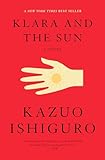
Klara and the Sun (2021) is Ishiguro’s most recent novel and, in some ways, his most transparent. Narrated by Klara, an Artificial Friend — a solar-powered robot designed to be a companion to children — the novel takes Ishiguro’s signature technique of the self-deceiving narrator and applies it to a narrator who cannot fully understand her own limitations. Klara observes human behaviour with scrupulous attention and tries to model it; her errors of interpretation are the novel’s central drama.
The speculative premise — a near-future society in which genetic enhancement of children has become common, and in which AF companions are purchased for lonely teenagers — serves the same function as the clone premise in Never Let Me Go: it is a way of examining what we actually value, what we are willing to sacrifice, and what we tell ourselves about those choices.
It is not as devastating as Never Let Me Go, but it is warmer, and in certain passages — particularly the scenes involving Klara’s solar worship — it achieves something genuinely unexpected: a novel about artificial intelligence that is actually about love.
The Nobel Prize and Ishiguro’s Standing
The Nobel Prize in Literature was awarded to Ishiguro in 2017. The Swedish Academy described his novels as works of “great emotional force” that “uncover the abyss beneath our illusory sense of connection with the world.” It was, by that point, one of the least surprising Nobel Prizes in recent memory: Ishiguro had been on the shortlist in the minds of critics for years.
What is worth noting about his Nobel is what it recognised. The citation does not mention any particular novel’s plot or technique; it describes a moral preoccupation — the gap between how we understand our lives and what our lives actually were. This is Ishiguro’s subject, and it is remarkable how consistently he has returned to it across nine very different books, in nine very different settings, without once repeating himself.
A Suggested Reading Order
For readers who want to approach Ishiguro systematically:
- The Remains of the Day — the masterwork; begin here
- Never Let Me Go — the most emotionally direct novel; read it second
- An Artist of the Floating World — the early Japanese novel closest to the major works
- When We Were Orphans — the most unusual of the major novels
- The Buried Giant — the most ambitious recent novel
- Klara and the Sun — the most recent; warm and precise
- The Unconsoled — come here last; it will reward you when you know what he is doing
Affiliate disclosure: Links on this site are affiliate links. We earn a small commission at no extra cost to you. This does not influence our editorial recommendations.
Frequently Asked Questions
What is the best Kazuo Ishiguro book to start with?
The Remains of the Day is the best starting point — it is Ishiguro's most perfectly crafted novel, the book that defined his reputation, and a flawless introduction to his central themes of self-deception, regret, and the stories we tell ourselves about the lives we've lived. Never Let Me Go is the second-best entry point, particularly for readers who want something more emotionally immediate. Both can be read without any prior knowledge of Ishiguro's work.
Do Kazuo Ishiguro's novels need to be read in order?
No. Ishiguro's novels are entirely standalone, with no shared characters or narrative connections. Each novel constructs its own world — feudal Japan, post-war England, a dystopian boarding school, Arthurian Britain — and can be read in any sequence. Reading in publication order does, however, reveal the development of his preoccupations with memory, repression, and self-delusion across different settings and forms.
Why did Kazuo Ishiguro win the Nobel Prize in Literature?
Kazuo Ishiguro was awarded the Nobel Prize in Literature in 2017. The Swedish Academy described him as a writer who 'in novels of great emotional force, has uncovered the abyss beneath our illusory sense of connection with the world.' He was particularly cited for The Remains of the Day and Never Let Me Go, though his entire body of work contributed to the prize. He was the third British-born Nobel laureate in literature, after William Golding and Harold Pinter.
Is The Unconsoled by Ishiguro worth reading?
The Unconsoled (1995) is Ishiguro's most divisive novel and the one most likely to frustrate new readers. Its 500-page narrative follows a concert pianist through a Central European city in a dreamlike, logic-defying sequence of events where conversations extend endlessly and rooms open into impossible spaces. Some critics consider it his most ambitious achievement; others find it exhausting. It is not a starting point, but readers who love his work and are interested in literary experimentation will find it fascinating.